Europe’s Silent Crisis: Why the Continent’s Dying Soil is Its Most Overlooked Strategic Vulnerability
GENEVA/PARIS — When European policymakers gather to debate the continent’s strategic autonomy, the conversation invariably drifts toward the technological battlegrounds of the twenty-first century. Leaders lock horns over semiconductors, advanced batteries, rare earth elements, and clean hydrogen—sectors where foreign rivals wield dominant market power or threaten supply chain chokepoints.
Yet, nestled beneath these high-stakes geopolitical anxieties lies a foundational asset that cannot be outsourced, stockpiled, or replicated elsewhere: Europe’s soil.
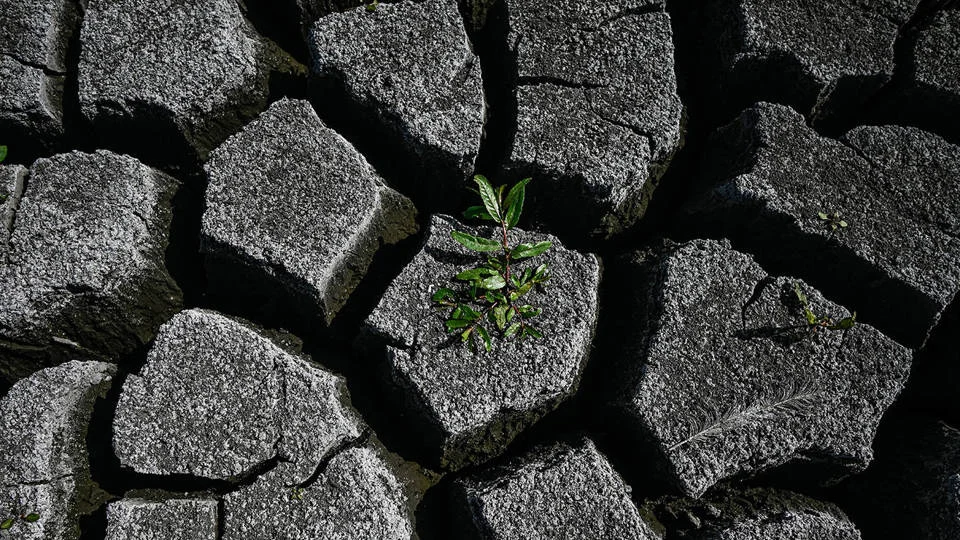
While trade wars and industrial policies dominate headlines, Europe’s agricultural earth is quietly dying. Experts, economists, and industry leaders warn that decades of intensive agricultural pressure, climate stress, and a systemic failure to value ecological health have left 60% to 70% of European Union soils in an unhealthy state.
Despite the mounting human and economic toll—estimated to surpass €50 billion ($58 billion) annually in degradation costs—the continent has yet to recognize soil as a critical strategic asset on par with energy grids or digital infrastructure. With regulatory windows opening at both the EU and international levels, business leaders and environmental advocates are pushing for a sweeping paradigm shift: an overarching framework that integrates soil health into national economic accounting and financially empowers farmers to restore the earth beneath their feet.
Main Facts
The core of the European soil crisis is rooted in a fundamental disconnect between ecological reality and economic accounting. Soil is not merely dirt or a passive component of the landscape; it is a complex, living infrastructure that acts as the bedrock of the continent’s food systems, generating roughly 95% of the food consumed globally.
Beyond food production, European soils serve as massive terrestrial carbon sinks, holding an estimated 75 billion tons of organic carbon—several times the amount stored in the living biomass of all European forests combined. Furthermore, healthy, porous topsoil functions as a natural sponge, acting as a vital buffer against increasingly destructive droughts and floods.
However, the current trajectory is unsustainable. The European Commission estimates that up to 70% of the EU’s land is degraded. Because fertile topsoil forms at a glacial pace—requiring up to a thousand years to build a mere few centimeters—this loss is effectively irreversible on human timescales.
The economic fallout is staggering. When a country’s soil ecosystem collapses, traditional gross domestic product (GDP) metrics barely register the loss, masking a profound depletion of national wealth. This mirrors Europe’s painful lesson during the 2022 energy crisis, when the sudden cutoff of Russian gas forced governments to spend roughly €500 billion to cushion citizens and industries from soaring energy prices. Unlike a geopolitical adversary weaponizing natural gas overnight, soil degradation is a slow-motion, self-inflicted crisis that policymakers have routinely sidelined because it lacks an immediate, dramatic trigger.
Chronology
The mounting urgency surrounding European soil policy is the culmination of a decade-long regulatory evolution, marked by gradual advancements offset by persistent institutional fragmentation.
- 2015–2020: Growing scientific consensus highlights the rapid acceleration of topsoil erosion and organic carbon loss across Southern and Central Europe, driven by intensive monoculture and chemical-heavy farming practices.
- November 2024: The European Union takes a major technical step by adopting rules requiring member states to compile accounts for seven specific ecosystem services, though critical soil-based functions like water retention remain marginalized.
- December 2024: The landmark Soil Monitoring Law enters into force. This legislation establishes a common framework across the bloc for assessing carbon content, erosion rates, biological activity, and water infiltration capacity.
- July 2025: The European Commission adopts new certification methodologies under the Carbon Removal and Carbon Farming (CRCF) regulation, paving the way for farmers to access financial rewards for verifiable soil outcomes.
- August 2025: The 17th Conference of the Parties (COP17) to the United Nations Convention to Combat Desertification convenes in Ulaanbaatar, Mongolia. While nations agree to mobilize new funding for land restoration, the conference fails to establish a binding global framework on drought resilience.
- Late 2025 (Expected): The European Commission is slated to release its new framework for European climate resilience and risk management, presenting a critical opportunity to unify disparate environmental policies under a single economic banner.
- October & November 2025: Upcoming international summits—including the UN Biodiversity Conference in Yerevan, Armenia, and the UN Climate Change Conference in Antalya, Turkey—provide international stages for Europe to advocate for global soil alliances.
Supporting Data
The scale of Europe’s soil degradation is quantified by a growing body of scientific research and economic assessments:
- 95%: The percentage of global food production that relies directly on healthy soil systems, according to the Food and Agriculture Organization (FAO).
- 75 Billion Tons: The estimated amount of carbon stored within European soils, dwarfing the carbon locked in the living biomass of the continent’s forests.
- 60% to 70%: The proportion of EU soils currently classified as unhealthy by the European Commission, suffering from compaction, nutrient depletion, contamination, and erosion.
- €50 Billion ($58 Billion): The conservative annual economic cost of soil degradation in the European Union, driven by reduced agricultural yields, increased flood damage, and water treatment expenses.
- €500 Billion: The capital deployed by European governments to shield citizens from the 2022 energy shock—serving as a stark historical parallel for the hidden costs of unaccounted-for systemic dependencies.
Official Responses and Stakeholder Perspectives
The debate over how to manage Europe’s land has triggered intense discussions among policymakers, agricultural unions, and corporate sustainability leaders.
The European Commission has pointed to the Soil Monitoring Law and the newly minted carbon farming certification methodologies as proof that the bloc possesses the necessary legislative toolkits. Proponents argue these measures lay the groundwork for transparent monitoring. However, critics and agricultural stakeholders note a glaring structural flaw: the EU’s flagship Common Agricultural Policy (CAP) continues to subsidize baseline sustainable practices rather than tying financial payouts directly to verifiable improvements in soil health and water retention.
A coalition of business leaders, investors, and agricultural advisers across European value chains has stepped forward to challenge the status quo. In a joint advisory, they argue that the upcoming European climate resilience and risk management framework must enforce three non-negotiable commitments:
- Expand Ecosystem Accounting: Mandate the inclusion of ecosystem services provided by healthy soil—specifically water retention—into national economic accounts.
- Broaden Outcome-Based Rewards: Extend financial incentives beyond carbon sequestration to encompass broader soil health metrics, ensuring farmers and land managers profit from measurable ecological results.
- Align Public Support and Investment: Ensure that environmental indicators guide public subsidies and institutional investment decisions, mirroring how carbon metrics currently dictate corporate and state financing strategies.
Skeptics within fiscal conservative circles frequently argue that Europe’s fragile post-pandemic and inflation-hit economies cannot afford ambitious new agricultural subsidies or regulatory compliance burdens. Yet, progressive economists counter that "dead soil" functions as a regressive, hidden tax. Left unaddressed, collapsing soil health directly drives up food prices, deepens supply chain volatility, and leaves vulnerable populations disproportionately exposed to climate-induced catastrophes.
Implications
The implications of Europe’s inaction extend far beyond the continent’s agricultural belt, touching upon macroeconomic stability, social equity, and global environmental leadership.
Economic and Social Fallout
Failing to price soil health perpetuates a dangerous economic illusion. When topsoil erodes and water retention fails, agricultural yields drop while input costs for fertilizers and irrigation soar. These costs inevitably trickle down to consumers through inflated grocery prices. Because lower-income households spend a larger share of their income on food, unmitigated soil degradation acts as a regressive tax, punishing the most vulnerable citizens while intensifying the destructive impacts of summer heatwaves, droughts, and floods.
Geopolitical and Global Dimensions
While Europe wrestles with internal policy fragmentation, nations in the Global South—particularly producers of globally traded commodities like coffee, cocoa, and fruit—are increasingly treating soil health as a vital national security and trade asset.
Europe has a historic opportunity to lead by example. By championing a coordinated "soil alliance" at upcoming global summits in Armenia and Turkey, the EU can align international trade standards with ecological restoration. Without a unified front, however, global efforts will remain fractured, leaving the international community ill-equipped to combat desertification and food insecurity.
A Legacy Without a Testament
As the French poet René Char famously wrote, “Our inheritance was left to us by no testament.” Soil is passed down silently from one generation to the next, yet it remains missing from the ledger books of modern capitalism.
For decades, European economic policy has obsessively counted only what it extracts and produces, ignoring the vital foundation it possesses. Unless policymakers abandon the fiction that soil degradation carries no real cost, the slow, silent death of Europe’s earth will continue unchecked—undermining the continent’s prosperity, security, and future survival.