The New Era of Personal Computing: Apple Launches Siri AI to Redefine User Interaction
By PYMNTS | September 14, 2026
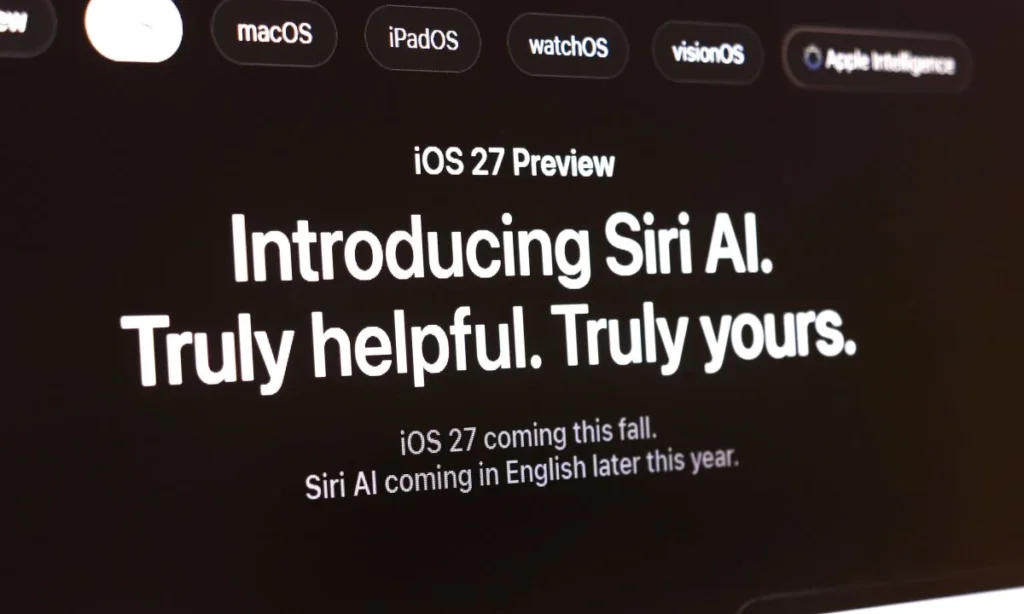
In a move that signals a seismic shift in the personal computing landscape, Apple officially launched its highly anticipated "Siri AI" on Monday, September 14, 2026. Built upon the foundation of Apple Intelligence, the reimagined digital assistant represents the company’s most aggressive move to date in the generative artificial intelligence race. By integrating deep personal context, real-time web awareness, and granular control over systemwide applications, Apple is aiming to transition Siri from a simple command-response tool into a proactive, omnipresent digital concierge.
However, the rollout is not global. As Apple navigates the complex regulatory environments of the European Union and China, the debut serves as a reminder that the future of AI is as much a legal and geopolitical challenge as it is a technological one.
The Core Transformation: What Siri AI Brings to the Table
The "new" Siri is not merely an update; it is a fundamental architectural overhaul. According to Apple’s official press release, the assistant now possesses "onscreen awareness," meaning it can understand and interact with the content currently displayed on a user’s device.
Key Functional Upgrades:
- Contextual Intelligence: Siri AI can now parse data across messages, emails, photos, and calendar entries to provide answers that are hyper-personalized. If a user asks, "When does my flight land?" the assistant no longer needs a specific flight number; it can pull the information directly from a confirmation email.
- Systemwide App Actions: The assistant now has the authority to execute commands across various apps. Whether it is editing a photo, summarizing a lengthy document, or organizing files, Siri AI acts as an orchestrator for the user’s digital workspace.
- Visual and Web Intelligence: Beyond the user’s own data, Siri AI has been trained to synthesize information from across the web, allowing it to act as an on-demand research assistant. It can also analyze visual content, answering complex questions about photos or documents shown on the screen.
- Natural Language Precision: The engine behind Siri AI is designed for higher precision in transcription, allowing it to capture spontaneous thoughts as polished, coherent text.
Beyond the assistant itself, the rollout includes the "Image Playground," a tool capable of generating photorealistic imagery, and advanced browsing tools for Safari that intelligently summarize articles and highlight key points for the user.
Chronology: From Rumors to Reality
The journey to the September 14, 2026, launch has been a two-year marathon of engineering and strategic positioning.
- 2024-2025: Throughout the preceding years, Apple faced mounting pressure from shareholders and competitors who argued the company was falling behind in the AI arms race. While OpenAI, Google, and Microsoft were dominating headlines with LLM (Large Language Model) breakthroughs, Apple remained characteristically quiet.
- June 2026: Regulatory tensions flared when Apple confirmed it would not be able to launch its AI suite in the European Union. The company cited concerns over the Digital Markets Act (DMA) and its potential impact on privacy and security, marking a significant hurdle for the company’s global strategy.
- September 9, 2026: Apple intensified its marketing campaign, framing the company’s unique advantage as its "vertical integration." By controlling the hardware, the operating system, and the encrypted data on the device, Apple positioned itself as the only company capable of delivering AI that is both powerful and inherently private.
- September 14, 2026: Official release of Siri AI in beta, initially for English-speaking markets.
The Vertical Integration Argument: Privacy as a Competitive Moat
Apple’s primary thesis for its AI success is its "closed-loop" ecosystem. While competitors rely on cloud-heavy processing that often necessitates moving user data to external servers, Apple has emphasized that its AI architecture prioritizes on-device processing.
This approach is designed to mitigate the risks associated with data privacy. By keeping personal context—such as private messages and health data—local to the device, Apple hopes to alleviate the "creep factor" that has historically plagued generative AI platforms.
Analysts suggest that this strategy serves a dual purpose: it protects the user, but it also creates a massive competitive moat. If a user’s AI is only truly "smart" when it has access to their private calendar, photos, and emails, that user is unlikely to switch to a competitor’s hardware. Apple is effectively betting that consumer trust in its privacy standards will be the deciding factor in the AI era.
Regulatory Headwinds: The EU and China Conundrums
Despite the technological achievement, the launch is marred by significant regional exclusions. Apple has confirmed that the full suite of Siri AI features will not be available in the European Union for users on iOS, iPadOS, or WatchOS at launch.
The EU Standoff
The dispute centers on regulatory requirements that Apple believes compromise its privacy and security standards. Apple’s official stance remains that it is "working hard to find a path forward," yet the stalemate highlights the growing friction between Big Tech’s move toward integrated AI and the EU’s strict regulatory oversight regarding data interoperability and digital competition.
The China Challenge
Similarly, the feature set is unavailable in China. Apple’s statement was brief, noting that the company is "working through regulatory requirements." In China, AI technology is subject to strict domestic vetting processes, and foreign companies must often navigate complex licensing and censorship frameworks to gain approval.
Implications for the Future of Personal Computing
The debut of Siri AI represents a pivot point for the smartphone industry. As the hardware cycle matures and consumer upgrades slow down, AI has become the primary driver for future growth.
1. The Death of the "App" Silo?
With Siri AI’s ability to pull information from across the system, the traditional way users interact with apps may change. Instead of opening an email app, then a calendar app, then a note-taking app, users will simply talk to Siri. This threatens the visibility of individual apps and could force developers to rethink how they build software for the Apple ecosystem.
2. The New Professional Standard
For enterprise users, the ability to surface information from across messages and emails in real-time is a productivity multiplier. The shift toward "intelligent browsing" and "photorealistic generation" will likely transform creative industries, making Apple devices the default workstation for AI-augmented professionals.
3. The Trust Premium
As the industry moves toward 2027, the battle will be between "open-ended" AI that can do anything but potentially compromise privacy, and "integrated" AI that is limited by the walled garden but offers a safer, more cohesive experience. Apple is firmly staking its future on the latter.
Looking Ahead: Expanding the Footprint
While the current launch is limited to English, Apple has a clear roadmap for expansion. The company plans to bring support for French, Japanese, Korean, Portuguese, and Spanish by October 2026. This staggered release suggests that Apple is taking a measured approach, prioritizing the stability and accuracy of the model before scaling globally.
As the beta progresses, the tech industry will be watching closely for two things: the reliability of Siri AI’s answers—specifically in avoiding the "hallucinations" that have plagued other generative models—and the consumer adoption rate in the face of the missing features in key markets like the EU and China.
For Apple, the launch of Siri AI is more than just a software update; it is a declaration of intent. The company is betting that in a world of infinite information, the most valuable tool is one that understands the user better than they understand themselves, all while keeping that knowledge locked securely within their pocket. Whether this strategy will be enough to overcome the geopolitical barriers of 2026 remains the defining question for Apple’s next decade.