The Illusion of Infallibility: How Elizabeth Holmes Hoodwinked the World’s Smartest Elite

October 27, 2026
By Ben Carlson (Enriched and Expanded Edition)
Main Facts
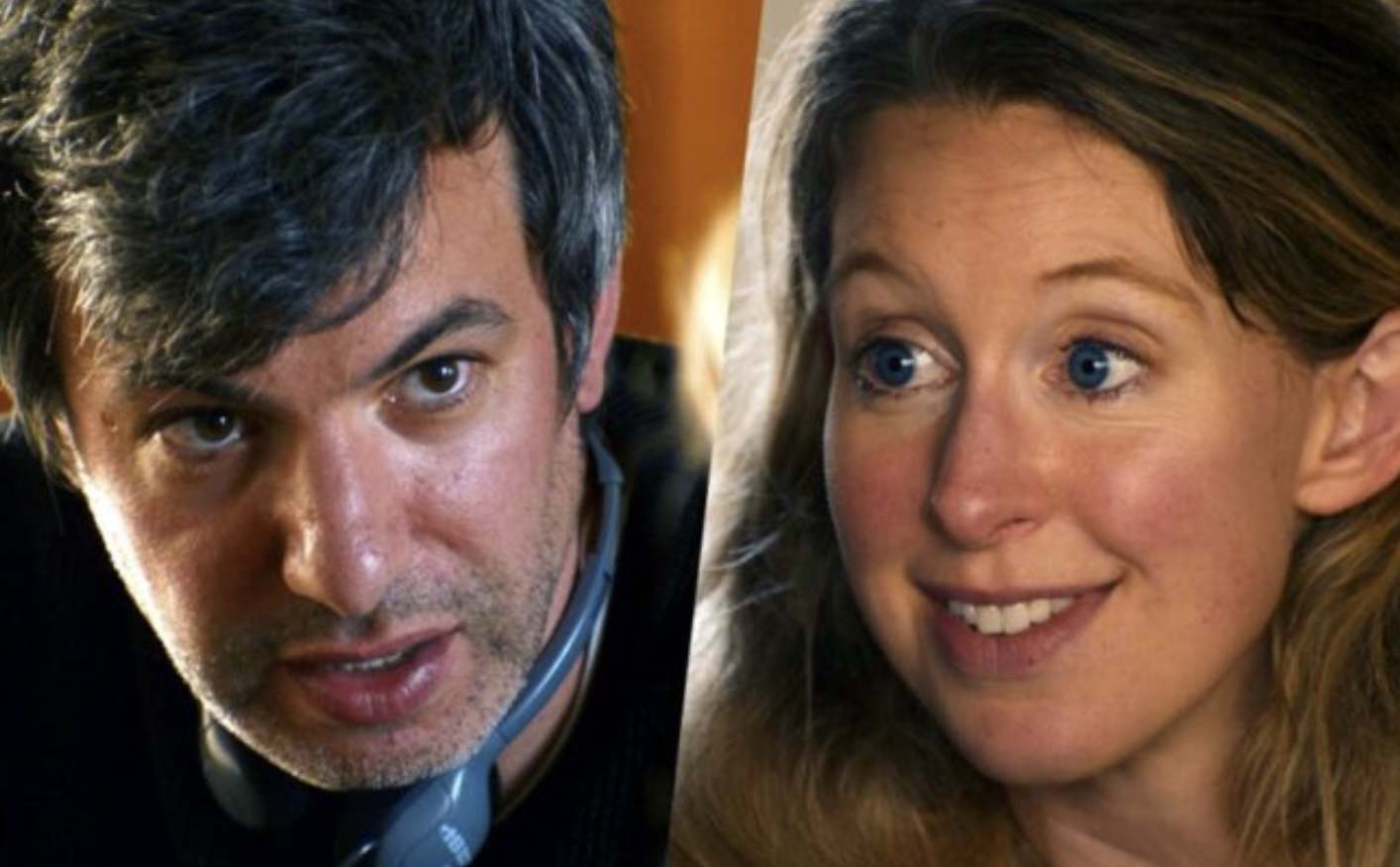
The cultural fascination with Elizabeth Holmes and the monumental collapse of her blood-testing startup, Theranos, has surged back into the public eye with Nathan Fielder’s acclaimed new documentary feature, You Can See Everything. While the film has sparked a fresh wave of critical analysis regarding the modern penchant for tech-world hucksterism, it also serves as an uncomfortable mirror for the global financial elite.
At its core, the Theranos saga remains the premier cautionary tale of the 21st century. Founded by a 19-year-old Stanford dropout who famously engineered a deeper vocal register and promised "the most important thing humanity has ever built," Theranos was built on a singular, staggering fabrication: that a desktop machine named the "Edison" could run comprehensive diagnostic panels from a mere pinprick of blood.
In reality, the devices did not work. The company relied on commercially available, traditional machines to manipulate results, and its laboratories were routinely staged to deceive visiting dignitaries, regulators, and deep-pocketed investors. Yet, before the house of cards collapsed, Holmes successfully raised over $900 million from a roster of billionaires, institutional heavyweights, and political icons.
The central paradox illuminated by the Theranos disaster—and revisited as market optimism fuels fresh rounds of speculative overconfidence—is simple: How did so many brilliant, wealthy, and well-connected individuals fall for an obvious fraud?
Chronology of a Con: From Stanford Drop-Out to Corporate Titan
- 2003: At age 19, Elizabeth Holmes drops out of Stanford University’s School of Engineering to found Real-Time Cures, later rebranded as Theranos (a portmanteau of "therapy" and "nanotechnology").
- 2004–2010: Operating largely in stealth mode, Holmes secures early angel funding by leaning on family connections and charismatic pitches, positioning herself as the female Steve Jobs.
- 2013–2014: Theranos breaks cover, launching a high-profile retail partnership with Walgreens to offer blood tests directly to consumers. Media outlets hail Holmes as the world’s youngest self-made female billionaire, valuing the private company at a staggering $9 billion.
- 2015:
- July: Then-Vice President Joe Biden visits a staged Theranos laboratory, praising it as "the laboratory of the future."
- October: Investigative journalist John Carreyrou publishes a blockbuster exposé in The Wall Street Journal, revealing that Theranos’s proprietary technology does not work and that the company relies on standard commercial machines.
- 2016–2018: Regulatory agencies, including the Centers for Medicare & Medicaid Services (CMS) and the U.S. Securities and Exchange Commission (SEC), launch investigations. Theranos voids two years of blood test results, voids its partnership with Walgreens, and ultimately dissolves in late 2018.
- 2021–2022: Following a high-profile federal criminal trial, Holmes is convicted of wire fraud and conspiracy, subsequently sentenced to over 11 years in federal prison.
- 2026: Nathan Fielder releases You Can See Everything, reigniting cultural discourse around the psychological mechanisms of corporate deception and elite gullibility.
Supporting Data: The Cost of Overconfidence
The financial toll of the Theranos fraud is well-documented, reading like a ledger of the world’s most elite fortunes and institutional portfolios. The capital lost by sophisticated investors underscores a profound disconnect between net worth and investment acumen:
- $150 Million: Lost by the Walton family, heirs to the Walmart empire.
- $125 Million: Invested—and subsequently written down to $1—by media mogul Rupert Murdoch, driven largely by personal conviction rather than due diligence.
- $100 Million: Lost by the family of Betsy DeVos, former U.S. Education Secretary under the Trump administration.
- $9 Billion: The peak private market valuation of Theranos at its height, which pegged Holmes’s paper net worth at $5 billion.
- Institutional Blindness: Partner Fund Management, a prominent hedge fund, poured massive capital into Theranos at peak valuation, failing to perform independent technological verification.
Official Responses and Institutional Complicity
What made Theranos nearly impregnable to early criticism was not merely Holmes’s charisma, but the formidable human shield she erected around herself: her Board of Directors.
Holmes packed her board with some of the most towering, respected figures in modern American military and diplomatic history. The roster included:
- George Shultz, former U.S. Secretary of State (hailed for helping win the Cold War).
- Jim Mattis and William Perry, former U.S. Secretaries of Defense.
- Henry Kissinger, former U.S. Secretary of State.
- Gary Roughead, retired U.S. Navy Admiral.
To prospective investors, the presence of these establishment titans served as the ultimate heuristic. Investors reasoned: If statesmen who guarded the nuclear codes and managed global geopolitics trust this young woman, the technology must be legitimate.
This created a dangerous feedback loop of herding behavior. When high-status individuals invest, others follow blindly, outsourcing their critical thinking to the perceived authority of the group. As George Shultz famously anointed Holmes, comparing her directly to technological demigods like Steve Jobs and Bill Gates, institutional skepticism evaporated entirely.
Psychological Implications: Why Smart People Make Dumb Money Decisions
The Theranos phenomenon challenges the comforting egalitarian myth that financial ruin is reserved for the financially illiterate or the naive. In reality, intelligence, high income, prestigious university degrees, and elite job titles do not inoculate individuals against poor financial decision-making; in many cases, they exacerbate the risk.
1. The Trap of Personalized Success
In his book What I Learned Losing a Million Dollars, author Brendan Moynihan profiles commodities trader Jim Paul, who watched a massive windfall evaporate because success had warped his internal psychology. Moynihan noted that successful people frequently fall into the trap of personalizing their successes.
When individuals achieve elite status—whether through founding a tech unicorn, building a media empire, or inheriting a dynasty—they begin to attribute every positive outcome entirely to their own superior intellect. They forget the roles played by timing, macroeconomics, luck, or structural privilege. Consequently, they assume that their mere involvement in an enterprise guarantees its validity.
2. The Danger of Overconfidence
Intelligence is a cognitive asset, but in financial contexts, it can easily become a liability. Highly intelligent people possess advanced mental firepower, which they frequently deploy not to uncover objective truths, but to rationalize their pre-existing desires. If a smart investor wants to believe a disruptive healthcare narrative, their intellect enables them to construct elaborate justifications for ignoring red flags.
3. The Blind Spot Bias
Psychological research confirms that human beings are plagued by dozens of cognitive biases, but none is more insidious than the blind spot bias—the persistent illusion that we are immune to the biases affecting everyone else.
Pioneering cognitive researchers Richard West, Russell Meserve, and Keith Stanovich conducted extensive empirical studies examining this phenomenon. Their findings were striking: higher cognitive ability did not attenuate metacognitive bias. In fact, people with superior cognitive capabilities proved to be even more adept at self-deception. Furthermore, individuals who were explicitly aware of their own biases were fundamentally no better at overcoming them.
This explains why elite investors fell prey to Elizabeth Holmes. Their heightened intelligence provided them with sophisticated mechanisms to rationalize the lack of technical data, dismissing whistleblowers and skeptical journalists as narrow-minded critics who simply "didn’t vision the future."
Conclusion: Lessons for the Next Boom Cycle
As financial markets experience new waves of innovation and speculative fervor—frequently driven by paradigm-shifting technologies like artificial intelligence and biotech—the lessons of Theranos remain urgently relevant.
Confidence naturally expands alongside financial markets in boom times. When capital is abundant, hucksters find fertile ground, and elite investors are uniquely vulnerable to the seduction of grandiose narratives. The Theranos saga is not merely a story about one fraudulent company or a charismatic criminal; it is a permanent reminder that human psychology remains fixed, and that brilliance is no match for unbridled self-deception when the powerful decide they want to believe a fairy tale.