The AI Infrastructure Reckoning: Assessing the Sustainability of the Trillion-Dollar Buildout
By PYMNTS | October 7, 2026
As the global economy navigates the mid-point of the decade, the massive, capital-intensive buildout of artificial intelligence infrastructure is reaching a pivotal inflection point. According to a comprehensive report released Wednesday (Oct. 7) by Citi Wealth, the AI investment cycle is no longer operating on the unchecked optimism that characterized its inception. Instead, it is entering a period of "greater scrutiny," tempered by the harsh realities of higher interest rates, ballooning infrastructure costs, and an increasingly complex regulatory landscape.
While the "noise" surrounding AI continues to dominate headlines, institutional investors are pivoting from blind enthusiasm to a granular assessment of value. The fundamental question now facing the market is whether the current spending frenzy is a precursor to a transformative industrial revolution or a localized bubble destined for a painful correction.
The Current State of the AI Infrastructure Buildout
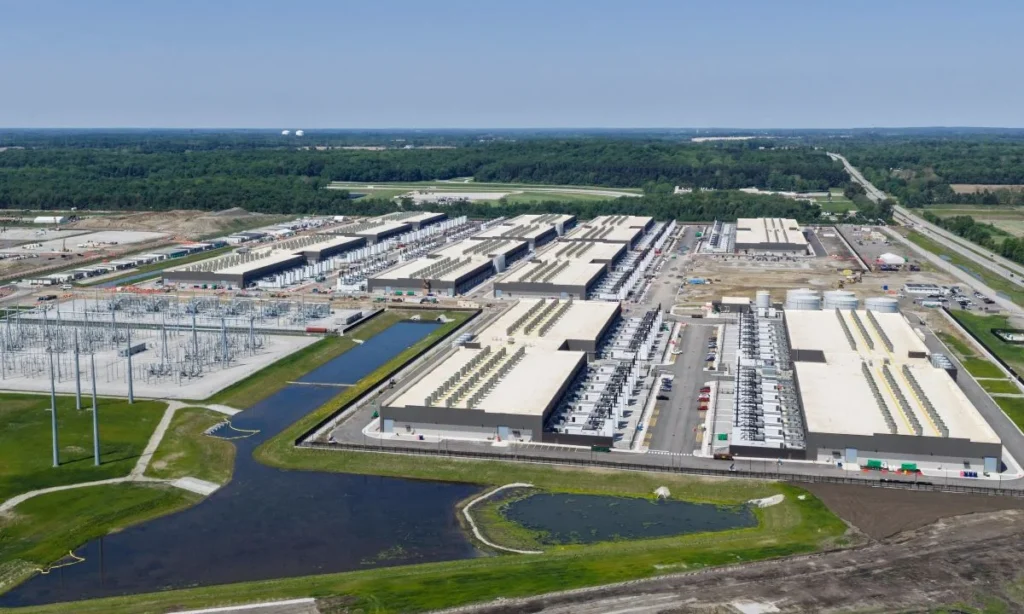
Citi Wealth’s assessment suggests that the AI revolution is currently in its "early-to-middle stages." This classification is significant: it implies that while the foundational layers—the data centers, the power grids, and the specialized semiconductor foundries—are being laid, the actual economic utility and revenue-generating applications are still maturing.
However, this transition is not occurring in a vacuum. Several headwinds have emerged to challenge the pace of investment:
- The Cost of Capital: Higher interest rates have made the financing of massive, multi-billion-dollar data centers more expensive, squeezing the margins of companies reliant on debt-fueled expansion.
- Model Proliferation: The rise of highly capable "open-weight" models is democratizing access to AI, potentially commoditizing the software layer and forcing companies to compete more aggressively on infrastructure efficiency rather than proprietary model architecture.
- Regulatory Friction: Global governments are sharpening their focus on data privacy, energy consumption, and the competitive dominance of "hyperscalers," adding layers of compliance costs to every new project.
Despite these pressures, the underlying metrics of demand remain robust. Semiconductor demand consistently outpaces supply, U.S. core capital goods orders saw a notable uptick in the first half of the year, and AI-related exports continue to act as a primary growth engine for technological hubs like South Korea and Taiwan.
Chronology: From Euphoria to Critical Appraisal
The trajectory of the AI investment cycle can be mapped through a series of key milestones that define the transition from speculative growth to analytical skepticism.
- 2023 – Early 2024 (The Euphoria Phase): The initial realization of Large Language Model (LLM) capabilities triggered a massive capital shift. Tech giants raced to secure H100-class chips, and venture capital flooded into generative AI startups, creating a "gold rush" mentality.
- Late 2024 – 2025 (The Infrastructure Buildout): Focus shifted toward the physical requirements of AI. The market began to price in the extreme electricity needs, cooling requirements, and real estate footprints of hyperscale data centers.
- July 2026 (The Warning Signs): The Bank for International Settlements (BIS) published a report highlighting the dangers of excessive AI debt. Their analysis suggested that if the current rate of investment is not met with commensurate productivity gains, the boom could trigger a "bust" reminiscent of historical economic cycles.
- July 2026 (Treasury Concerns): Reports surfaced regarding a draft document from the U.S. Department of the Treasury. This report warned of potential economic shockwaves if the AI sector were to repeat the patterns of the dotcom bubble, citing systemic risks to the broader financial system.
- October 2026 (The Scrutiny Phase): With the release of the Citi Wealth report, the market is officially in a phase of institutional re-evaluation, where the durability of semiconductor margins and the sustainability of AI spending are being stress-tested against preliminary earnings data.
Supporting Data: Why the Market is Watching Samsung
The immediate test of the AI market’s durability is arriving in the form of Samsung Electronics’ preliminary third-quarter results, scheduled for release Thursday (Oct. 8). Analysts are scrutinizing these figures for signs of "cooling" demand in the memory chip sector.
For the past two years, the AI boom has been fueled by a desperate need for High Bandwidth Memory (HBM) chips. However, recent data suggests that while the shortage of these critical components is expected to persist into 2027, the rate of price appreciation for these products slowed significantly in the third quarter. This deceleration is leading to widespread investor concern that the "super-cycle" in memory chip margins may have peaked. If Samsung’s earnings confirm that demand is flattening or that costs are eroding margins, it could serve as a bellwether for the entire semiconductor supply chain.
Institutional Perspectives and Strategic Allocations
Despite the warnings, institutional players like Citi Wealth maintain a balanced, albeit cautious, optimism regarding the "hyperscalers."
"We continue to favor diversified semiconductor exposure as a core holding and a key pillar of our U.S. large cap overweight," Citi noted in its report. The bank argues that companies that have achieved vertical integration—controlling the stack from the chip level to the LLM and the data center infrastructure—are best positioned to survive a potential downturn. These firms have established a "competitive advantage" that smaller players, who are reliant on third-party infrastructure and fluctuating chip prices, simply cannot match.
The strategy here is clear: consolidate positions in the "Big Tech" firms that have the balance sheets to absorb high interest rates and the technical expertise to optimize AI workloads, while trimming exposure to peripheral players that are more vulnerable to a cyclical downturn.
Implications: The Ghost of 2000
The primary concern among policymakers, specifically those at the Treasury and the BIS, is the potential for an "AI bubble" to trigger an economic shockwave. The comparison to the dotcom bubble of 25 years ago is instructive but carries caveats.
The Dotcom Comparison
In the late 1990s, companies were valued on "eyeballs" and speculative future revenue. Today’s AI giants, by contrast, are among the most profitable, cash-rich entities in the history of global capitalism. They are not merely promising future value; they are deploying infrastructure to solve tangible problems in logistics, healthcare, and finance.
The Structural Risks
However, the risk is not necessarily in the technology itself, but in the debt and capital allocation used to build it. If a significant portion of the global economy’s capital is tied up in redundant data centers that fail to deliver the expected ROI, the resulting write-downs could lead to a liquidity crunch.
The BIS warning serves as a reminder that history is littered with technological revolutions that created immense long-term value, but only after a short-term period of intense pain and market correction. The "boom-to-bust" scenario suggested by the BIS would likely involve a sharp correction in equity markets as investors realize that the "AI-driven productivity boom" will take longer to manifest than the initial capital expenditures suggested.
Looking Ahead: 2027 and Beyond
As the industry moves toward the end of 2026, the narrative is shifting from "how much can we spend?" to "how much can we earn?"
The upcoming weeks, dominated by earnings reports from the semiconductor industry and major cloud providers, will be critical. If these companies can demonstrate that their infrastructure investments are translating into scalable revenue, the "scrutiny" mentioned by Citi Wealth will likely evolve into a new, more sustainable growth trajectory. If, however, the data points to diminishing returns on capital, the market will likely enter a period of defensive consolidation.
The AI buildout is far from over, but the era of "growth at any cost" is clearly drawing to a close. For investors, policymakers, and the public, the next twelve months will be the true test of whether artificial intelligence is the engine of a new economic era or merely the latest, most expensive lesson in the history of market cycles.
Ultimately, the sustainability of the AI boom hinges on the ability of the private sector to bridge the gap between the massive upfront investment in silicon and the long-term, tangible economic output that the technology promises to deliver. The "growing noise" mentioned by Citi is not just background static—it is the sound of a market attempting to find its footing on a new, uncharted landscape.