Beyond National Borders: Why the Western Indian Ocean Needs Transnational Finance to Save Its Marine Ecosystems
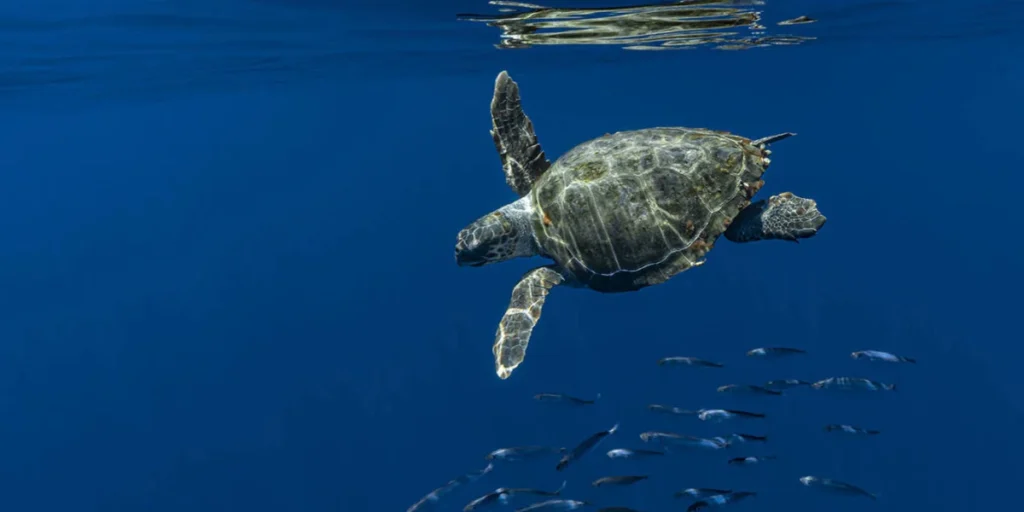
VICTORIA, SEYCHELLES — Every year, sea turtles return to the sun-bleached beaches of northern KwaZulu-Natal in South Africa—the exact coastal cradle where they began life. Once they slip back into the surf, however, their paths diverge wildly. Some journey north through the swirling, nutrient-rich currents of the Mozambique Channel, utilizing the delicate coastal habitats off Mozambique and Madagascar, while others venture deep into the broader expanse of the open Indian Ocean.
South Africa can fiercely protect its nesting beaches through rigorous patrols and environmental laws, but no single nation can safeguard an animal’s entire migratory cycle.
This journey encapsulates the quintessential dilemma of modern marine conservation. While strong, proactive domestic policy remains indispensable, protecting highly migratory species, interconnected habitats, and transboundary ecosystems requires unprecedented levels of international cooperation. More importantly, it requires financial architecture capable of matching the biological reality of the ocean: money that can move as freely and purposefully as the wildlife it aims to protect.
1. Main Facts: The Transboundary Imperative of the Western Indian Ocean
The Western Indian Ocean (WIO) region—encompassing island nations like Seychelles, Comoros, and Madagascar, alongside mainland coastal states such as South Africa, Mozambique, and Tanzania—is an ecological powerhouse. For the approximately 60 million people living within 100 kilometers (62 miles) of its coastline, the stakes of marine conservation are immediate and deeply personal.
Healthy marine ecosystems underpin food security, local livelihoods, international trade, and thriving tourism sectors. Furthermore, they serve as vital natural bulwarks against increasingly destructive tropical storms driven by global climate change. They are, in essence, the foundational infrastructure of the sustainable "blue economies" that these nations are racing to build.
Yet, the value of the WIO extends far beyond regional borders. The region’s vast mangrove forests and dense seagrass meadows function as critical global carbon sinks, trapping greenhouse gases. Its vibrant coral reefs sustain priceless marine biodiversity, and its waters harbor iconic migratory species that connect local shores to the global marine commons.
Protecting these ecosystems is undeniably a regional responsibility, but it is also a vital global interest. Despite this, regional leaders are not waiting for external powers to define their environmental destinies. Countries like Seychelles have proven that ambitious conservation goals can be successfully integrated into national development plans through marine spatial planning and innovative domestic finance tools. Similar strategies are now taking root across the WIO, each tailored to unique national priorities.
2. Chronology: Evolution of Regional Ocean Governance
The path toward integrated, transnational marine management in the Western Indian Ocean is built on decades of incremental diplomatic and regulatory milestones:
- 1985 (The Nairobi Convention): Governments across the region establish the Nairobi Convention under the United Nations Environment Programme (UNEP), creating a formal legal framework for the protection, management, and development of the marine and coastal environment of the Western Indian Ocean region.
- The Decades of National Implementation: Individual member states experiment with localized marine protected areas (MPAs), fisheries management reforms, and ecotourism initiatives. However, fragmented national funding cycles often leave critical cross-border migratory corridors and shared fish stocks underfunded.
- Recent Years (The Regional Ocean Governance Strategy): Recognizing the limitations of isolated national efforts, contracting parties to the Nairobi Convention commit to deeper integration, ultimately adopting the Regional Ocean Governance Strategy. This framework establishes the official mandate for unified governance and sustainable blue economy development.
- The Present (COP12 Horizon): As the region prepares for the Twelfth Conference of the Parties to the Nairobi Convention (COP12)—marking 40 years of regional cooperation—governments are shifting focus from political commitment to actionable, long-term financing mechanisms, spearheaded by plans for a Regional Conservation Trust Fund (RCTF).
3. Supporting Data: The High Stakes of Marine Conservation
The biological and economic metrics defining the Western Indian Ocean underscore the urgency of coordinated action:
- Population Pressure: Roughly 60 million people live within a 100-kilometer strip of the WIO coastline, placing immense anthropogenic pressure on nearshore fisheries and habitats.
- The 30×30 Target: Achieving the global and regional objective of protecting 30% of marine and coastal areas by 2030 requires massive investments in science-backed management, monitoring, enforcement, and community-led sustainable livelihoods—far beyond the scope of traditional government budgets.
- Local Success Metrics: Community-led conservation demonstrates tangible economic returns. In Anjouan, Comoros, women from three coastal villages established a temporary fishing closure on part of their local reef after learning best practices from counterparts in Madagascar and Zanzibar. When the area was reopened, the average weight of harvested octopuses had doubled, proving that knowledge-sharing yields direct socioeconomic dividends.
- The Funding Gap: Traditional conservation grants typically operate on strict three-to-five-year project cycles. However, ecological realities do not align with bureaucratic timelines: coral reefs take decades to recover from bleaching events, and pelagic fisheries do not replenish in sync with donor fiscal years.
4. Official Responses and Grassroots Leadership
Regional leaders emphasize that the momentum for ocean conservation must remain homegrown, even as international partnerships are welcomed to scale up the effort.
Grassroots Innovation Crosses Borders
Conservation in the WIO is increasingly driven by coastal communities rather than top-down mandates. The success of the temporary octopus fishery closures in Comoros, modeled after successful initiatives in Madagascar and Zanzibar, highlights the power of horizontal learning. When local resource users are empowered with knowledge and autonomy, ecological restoration follows. However, sustaining these local triumphs requires financial systems that back community leadership and long-term ecosystem management.
The Vision for a Regional Conservation Trust Fund (RCTF)
Recognizing that no single national fund can address cross-border challenges like marine pollution, illegal transboundary fishing, and greening maritime transport, WIO governments are actively designing the Western Indian Ocean Regional Conservation Trust Fund (RCTF).
Consultations involving national governments, regional conservation NGOs, and financial institutions are already underway. Crucially, the RCTF is not intended to compete with existing national funds or development banks. Instead, it is engineered to fill specific structural gaps, mobilizing and deploying sustained capital exclusively where cross-border cooperation adds clear, measurable value.
5. Implications: Financing a Connected Ocean
As the landmark Agreement on the Conservation and Sustainable Use of Marine Biological Diversity of Areas beyond National Jurisdiction (BBNJ Agreement) officially enters into force, new legal and operational horizons are opening for conservation beyond territorial waters. The WIO region must position itself to actively shape how this global agreement is implemented locally.
When government ministers and delegates gather next week for COP12 of the Nairobi Convention, they will celebrate four decades of regional cooperation. Yet, the gathering must transcend commemoration. The central task before the delegates is to formally authorize a government-led next phase for the RCTF, clearly defining its operational scope, governance safeguards, and integration with existing regional bodies.
International donors and financial partners are being offered a distinct opportunity: rather than funding isolated, short-term projects that vanish when grants expire, international capital can help build a regionally owned, permanent financial architecture. This approach moves beyond traditional aid, investing directly in the WIO region’s intrinsic capacity to lead its own conservation destiny.
Ultimately, the Western Indian Ocean functions as one deeply interconnected biophysical system. Securing its long-term future demands a financial commitment that mirrors the distance marine species travel, the ecological linkages habitats sustain, and the unwavering ambition that regional nations are bringing to the negotiating table.