The Gathering Storm: Why China Faces a Convergence of Economic and Political Crises
NEW DELHI — Modern history is often defined by its inflection points—sudden, systemic shocks that upend conventional wisdom and redraw the geopolitical map. Over the past two decades, the global community has staggered from one profound crisis to another: the devastating geopolitical fallout of the 2000s Iraq War, the seismic tremor of the 2008 Global Financial Crisis, the once-in-a-century devastation of the COVID-19 pandemic, and the erratic, isolationist policy shifts of an unpredictable American political administration that strained decades-old alliances. Today, the world is embroiled in a volatile multi-theater landscape marked by grinding attrition in Ukraine and escalating flashpoints involving Iran and the broader Middle East.
Yet, even as policymakers and markets grapple with these immediate conflagrations, a far more monumental vulnerability is quietly compounding out of sight. A political and economic "perfect storm" is rapidly gathering momentum over Beijing.
While international diplomats and financial institutions largely avoid public speculation about the internal stability of the world’s second-largest economy, a rigorous analysis of prevailing structural trends tells a sobering story. If current trajectories persist, the Chinese state risks stumbling into a profound political succession crisis, a chronically anemic domestic economy, and a severe depletion of the fiscal resources required to maintain internal social control and project geopolitical power abroad.
The convergence of these systemic failures would not merely alter Beijing’s domestic landscape; it would trigger far-reaching global repercussions, fundamentally rewriting the rules of the twenty-first-century international order.
The Anatomy of the Crisis: Main Facts
To understand the scale of the potential fallout, one must examine the foundational pillars currently straining under the weight of decades of unsustainable economic models and rigid political centralization.
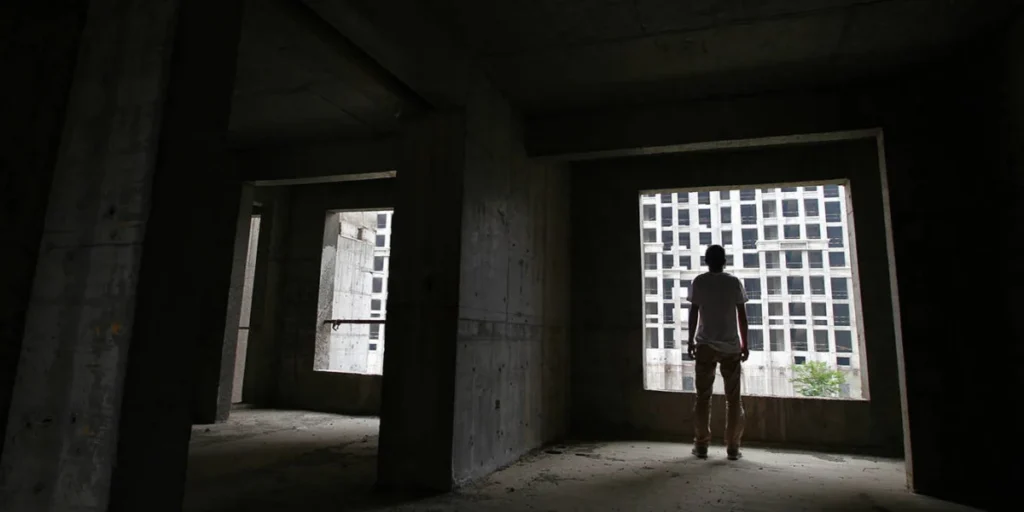
At the heart of China’s vulnerability is a multi-dimensional structural slowdown. For over thirty years, China served as the undisputed engine of global growth, fueled by rapid industrialization, cheap labor, state-directed credit, and an unprecedented real estate boom. However, that growth model has reached its exhaustion point. The property sector—which historically accounted for nearly 30 percent of China’s economic activity through direct and indirect linkages—remains mired in a protracted, unresolved debt crisis. Major developers continue to grapple with insolvency, while ghost cities and unfinished housing projects stand as stark monuments to overinvestment and speculative excess.
Compounding this economic malaise is an unprecedented demographic cliff. Decades of the One-Child Policy, combined with the soaring modern costs of living and education, have engineered a demographic contraction. China’s population is aging at a historically unprecedented pace, with the workforce shrinking annually while the cohort of retirees balloons. Beijing faces the agonizing prospect of "getting old before it gets rich," undermining the foundational social contract that has sustained Communist Party rule for decades: steady improvements in living standards traded in exchange for political acquiescence.
Simultaneously, the political architecture of the nation has undergone a profound centralization of power. The erosion of collective leadership norms, the elimination of presidential term limits, and the absolute consolidation of authority under Xi Jinping have eliminated institutional safety valves. While strongman politics can project immediate stability and decisive policy execution, it inherently creates a brittle governance structure. Succession mechanisms, once institutionalized to ensure smooth transitions of power, have been cast aside. This vacuum sets the stage for a high-stakes, unpredictable succession crisis whenever the leadership question inevitably resurfaces.
Finally, these domestic economic and political constraints severely restrict Beijing’s fiscal capacity. As local governments drown in hidden debt from infrastructure projects that yield little to no economic return, and as tax revenues shrink alongside the industrial slowdown, the central and local states find themselves starved of the resources necessary to simultaneously manage domestic social unrest, fund an aging populace, and sustain aggressive military modernization and external projection through initiatives like the Belt and Road.
A Timeline of Structural Decay: Chronology
The unfolding crisis is not the result of a sudden shock, but rather the cumulative outcome of policy decisions, systemic imbalances, and geopolitical friction spanning over a decade.
- 2012–2015 (The Turning Point): Following the global financial crisis, Beijing unleashes an unprecedented credit-fueled stimulus package, largely funneled through local government financing vehicles (LGFVs) and the real estate sector. While this cushioned China from the 2008 downturn, it structurally locked the economy into an addiction to debt and property speculation. During this period, political centralization begins in earnest, steadily reversing the market-oriented reforms of the previous three decades.
- 2018–2020 (Trade Friction and the Pandemic): The initiation of the U.S.-China trade war exposes the vulnerabilities of China’s export-led model and its heavy reliance on Western technology chains, prompting Beijing to pivot toward a strategy of "dual circulation" emphasizing self-reliance. This is swiftly followed by the COVID-19 pandemic. While China initially bounces back through aggressive industrial production, the subsequent implementation of rigid, prolonged "Zero-COVID" lockdowns severely damages consumer confidence and fractures supply chain trust.
- 2021–2022 (The Real Estate Reckoning): The regulatory crackdown on the real estate sector—epitomized by the introduction of the "three red lines" policy designed to curb developer leverage—triggers a liquidity freeze across the property market. Giants like Evergrande default, exposing the vast, systemic interconnections between developers, shadow banking, and local government land sales. At the 20th National Congress of the Chinese Communist Party in late 2022, absolute consolidation of power is finalized, sidelining reform-minded technocrats.
- 2023–2025 (The Deflationary Spiral and Loss of Confidence): Rather than experiencing a robust post-pandemic rebound, the Chinese economy slips into a persistent deflationary trap. Weak domestic demand, youth unemployment rates so high that the government temporarily suspends data publication, and capital flight plague the market. Industrial overcapacity sparks fierce trade retaliations from both the United States and the European Union, who accuse Beijing of dumping subsidized green tech and manufacturing goods onto global markets.
- 2026 and Beyond (The Convergence): As demographic pressures intensify and local government debt reaches a breaking point, the structural contradictions of the Chinese state converge. The lack of institutionalized succession planning collides with mounting societal discontent over economic stagnation, creating the conditions for the modern era’s most volatile geopolitical risk.
Empirical Indicators: Supporting Data
The narrative of decline is substantiated by a wealth of empirical data compiled by international financial institutions, economic think tanks, and demographic agencies.
- Debt-to-GDP Ratios: According to estimates by the Bank for International Settlements (BIS) and domestic financial trackers, China’s total debt-to-GDP ratio—encompassing household, corporate, and government sectors—has skyrocketed past 300 percent. This places China among the most heavily indebted major economies in the world, with a debt accumulation speed that outpaces even that of the United States prior to 2008.
- Demographic Decline: National Bureau of Statistics figures confirm that China’s total population has entered a structural decline. In recent years, deaths have consistently outpaced births, and the working-age population (ages 15–64) has shrunk by tens of millions. Projections indicate that by 2050, nearly 35 percent of China’s population will be aged 60 or older, placing an unbearable strain on pension funds and healthcare systems.
- Local Government Financial Strain: Land sales, which historically constituted up to 40 percent of local government revenue, have plummeted by over 50 percent from their peak years. Off-balance-sheet debt via Local Government Financing Vehicles (LGFVs) is estimated to exceed $9 trillion to $13 trillion, representing a ticking time bomb for the domestic banking sector.
- Youth Unemployment: Prior to the suspension and restructuring of official reporting methodologies, China’s youth unemployment rate for those aged 16–24 breached 21.3 percent in mid-2023. Even with adjusted metrics, the mismatch between millions of university graduates entering the workforce and an economy shifting away from high-value tech and services toward low-margin manufacturing has left an entire generation disillusioned.
Official Responses and Counterarguments
Predictably, Beijing vehemently rejects the framing of an impending "perfect storm," dismissing such analyses as Western pessimism, economic containment strategies, or ideological narratives designed to undermine confidence in the socialist market economy.
The Official Narrative from Beijing
Chinese state media and leadership forums consistently emphasize the concept of "Xie Jin Ping Thought on Socialism with Chinese Characteristics for a New Era," maintaining that the country is undergoing a necessary, high-quality economic transition. Official spokespersons argue that:
- Industrial Upgrading is Succeeding: Beijing points to its dominance in the global green transition—specifically electric vehicles (EVs), lithium-ion batteries, and photovoltaic solar technology (the "New Three" growth engines)—as proof that industrial policy is successfully shifting the economy away from speculative real estate toward advanced manufacturing and high-tech innovation.
- Resilience and State Capacity: Chinese officials regularly assert that the authoritarian nature of their governance model is precisely its greatest strength. Unlike democratic nations bogged down by political polarization and short-term electoral cycles, the Chinese Communist Party possesses the top-down authority to marshal national resources, enforce long-term strategic plans, and swiftly correct market anomalies.
- Managed De-risking: Regarding local government debt, Beijing points to various debt-swap programs and central bank liquidity injections designed to restructure municipal liabilities smoothly without triggering a systemic financial meltdown.
Critical Counter-Assessments
Independent economists and political scientists argue that these official responses miss the forest for the trees. While China undeniably maintains world-class manufacturing capabilities in green technology, these sectors alone cannot absorb the tens of millions of workers displaced by the construction and property downturn. Furthermore, aggressive overcapacity in these green tech sectors has triggered severe international pushback, leading to steep tariffs and trade barriers from Washington, Brussels, and developing economies alike, thereby restricting export-driven salvation.
Crucially, critics contend that top-down state intervention can mitigate short-term liquidity crunches, but it cannot override basic economic laws. By substituting real estate investment with industrial overproduction without concurrently boosting household disposable income and domestic consumption, Beijing is merely kicking the structural can down the road while exacerbating global trade tensions.
Global Repercussions: Implications
The prospect of a weakened, internally distracted, or politically unstable China carries profound implications for the global economy, international security, and geopolitical stability.
1. Global Economic Shockwaves
Because China accounts for roughly 17 to 18 percent of global GDP and has been the primary driver of international commodity demand for two decades, a prolonged Chinese economic stagnation—or "Japanification"—will reverberate across global markets.
- Commodity Exporters: Developing nations in Latin America, Africa, and Southeast Asia that rely heavily on Chinese demand for copper, iron ore, oil, and agricultural products will face severe fiscal contractions.
- Multinational Corporate Strategy: Global corporations that spent decades treating China as both an irreplaceable manufacturing hub and an ever-expanding consumer market are already accelerating "China+1" diversification strategies, rewiring global supply chains toward nations like India, Vietnam, and Mexico.
2. Geopolitical Volatility: The "Cornered Bear" Risk
Perhaps the most alarming implication of a domestic political and economic crisis in China is how it might influence foreign policy. Historical precedent suggests that authoritarian regimes facing severe internal legitimacy deficits and economic stagnation frequently resort to external nationalism to rally domestic support and deflect blame.
- Cross-Strait Tensions: The risk of aggressive military posturing or even kinetic action in the Taiwan Strait could increase if Beijing calculates that a closing window of opportunity exists before its demographic and economic decline permanently erodes its relative military capabilities.
- Indo-Pacific Security Architecture: Regional powers—including India, Japan, Australia, and ASEAN nations—will likely intensify security cooperation, intelligence sharing, and naval patrols to hedge against potential Chinese unpredictability, solidifying a fragmented, multipolar security dilemma across Asia.
3. Ideological Contest and the Global Narrative
For years, Beijing aggressively marketed its governance model as a superior, efficient alternative to Western liberal democracy. A systemic economic and political failure in China would deal a severe blow to the credibility of state-capitalist authoritarianism globally. It would signal to developing nations that while centralized power can engineer rapid initial catch-up growth, it ultimately struggles with the complex, organic adjustments required of advanced, post-industrial societies.
Conclusion
The convergence of economic exhaustion, demographic decline, and political brittleness means that China is entering its most delicate and perilous phase since the reform and opening-up era began in the late 1970s.
While predicting the exact timeline or trigger of a systemic crisis remains an exercise in speculation, ignoring the structural warning signs is a luxury the international community cannot afford. Whether this gathering storm results in a managed, graceful descent or a chaotic, disruptive fracture, its shockwaves will reverberate across every corner of the globe. For policymakers, investors, and diplomats worldwide, the imperative of the coming decade will be navigating the turbulence of a changing superpower without losing sight of the broader, fragile global order it helps sustain.