The Coming "Once-in-a-Generation" Opportunity: Navigating the Multifamily Real Estate Crisis
The commercial real estate sector, particularly the multifamily housing market, is currently traversing a period of profound instability. As investors grapple with high interest rates, shifting demographic trends, and a massive supply-demand mismatch, many industry experts are characterizing the current climate as a "four-way traffic collision."
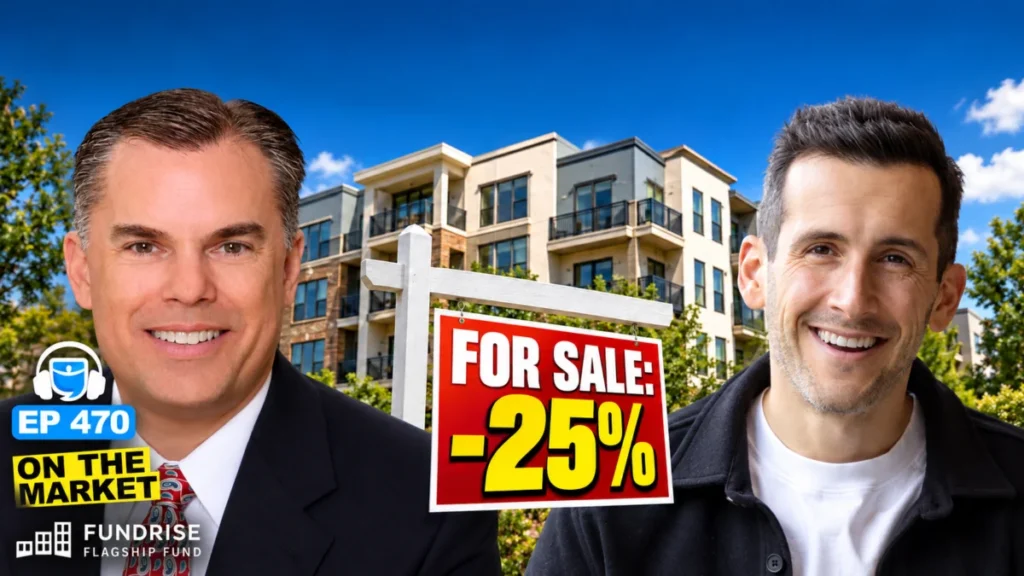
Dave Meyer, host of the On the Market podcast, recently sat down with veteran investor Brian Burke to analyze the mounting distress in the commercial space. The consensus is stark: the market is currently experiencing a "boiled frog" scenario where years of unsustainable exuberance are finally manifesting as a full-blown correction. For those with the capital and the patience, this downturn may represent a defining investment window—one that could mirror the post-2008 recovery for years to come.
The Perfect Storm: A Chronology of the Multifamily Correction
To understand how the multifamily market reached this precipice, one must look back at the economic conditions that defined the post-pandemic era.
The Era of "Green Lights"
For several years, the multifamily sector operated under a set of seemingly perfect conditions. Interest rates were at historic lows, allowing for aggressive borrowing and high valuations. Rent growth was rampant, occupancy rates were robust, and capital was cheap. During this period, investors and developers operated with what many now call "irrational exuberance." They purchased assets at peak prices, often ignoring fundamental financial ratios in favor of growth projections that failed to account for a change in the interest rate environment.
The Collision
The market began to fracture as several critical components of the real estate engine simultaneously stalled:
- Cap Rate Decompression: As treasury yields rose, the math behind four and five percent cap rates stopped making sense. Investors could no longer justify buying property when risk-free government bonds offered superior, safer returns.
- The Debt Trap: Many investors relied on floating-rate debt during the boom years. When the Federal Reserve raised rates to combat inflation, the cost of servicing that debt skyrocketed.
- The Refinance Wall: Borrowers hoping to pivot from expensive, short-term floating debt into long-term fixed debt were met with a harsh reality: the 10-year bond yield had surged, making long-term financing prohibitively expensive.
Supporting Data: Why the Fundamentals Have Eroded
The crisis is not merely a byproduct of central bank policy; it is fundamentally tied to an underlying shift in supply and demand.
Demographic Headwinds
Brian Burke points out a critical, often overlooked demographic reality: the primary target demographic for apartment rentals—the 18-to-30 age cohort—is facing a future of diminishing supply. Birth rates have been in decline for 18 years, meaning the pool of potential new renters is shrinking.
Simultaneously, population growth has hit historic lows. While international migration provided a brief buffer in 2023 and 2024, projections for 2025 and 2026 indicate a sharp decline. When these demographic constraints are paired with the massive wave of new construction that hit markets like Austin and Denver, the result is a massive supply-demand dislocation.
The "Negative Leverage" Problem
A primary indicator of the current market "suck" is the prevalence of negative leverage. In commercial real estate, profit is generated by the spread between the cost of borrowing and the yield (cap rate) of the property. When the interest rate exceeds the cap rate, the investor is essentially losing money on every dollar borrowed. According to Burke, no rational investor should be purchasing assets under these conditions, yet the market is still littered with properties being offered at unsustainable pricing because sellers are clinging to valuations from five years ago.
Official Perspectives: The "Boiled Frog" Reality
When asked about the current state of the multifamily market, Burke—a seasoned expert in the field—offered a blunt assessment. He describes the situation as a "complete disaster" that has been brewing for years.
"It’s the old proverbial frog boiling in the pot," Burke explained. "At first, it doesn’t really feel like anything. But now the water is starting to boil over, and people are finally realizing that we have a real problem."
The sentiment across the industry has shifted from denial to a begrudging acceptance of the "new normal." Investors who were previously waiting for the Federal Reserve to "save" the market are now realizing that the Fed does not control the 10-year bond—the primary driver of long-term debt costs. This realization has forced a change in strategy: the focus has moved from rapid growth to survival and preparation for a long-term bottoming process.
Strategic Implications: How to Capitalize on the Chaos
Despite the doom and gloom, both Meyer and Burke agree that this period of distress is, for the prepared investor, an immense opportunity. However, they warn against the urge to "catch a falling knife."
The "Wait and See" Approach
Burke suggests that there is no need for investors to rush into the market. Based on historical data, including the 1980s tax law changes and the 2008 financial crisis, double-digit declines in commercial real estate often lead to a multi-year trough followed by a decade-long bull run.
"You don’t have to get in at the very bottom," Burke noted. "You can wait for the evidence to show that the bottom is behind us and still capture the upside of a decade-long cycle."
The New Playbook for Success
For those looking to enter the market over the next two to three years, the following strategies are essential:
- Relationship-Driven Sourcing: Distressed assets are rarely found on the MLS or public listing sites. Investors should align themselves with property management companies that work with lenders and asset managers. These managers are often the first to know which properties are heading toward receivership.
- Access to Capital: Lenders and banks prioritize speed and certainty. A buyer who has already secured capital—or who has soft commitments from investors that exceed the required equity—will always win out over a buyer who is still "shopping" for funds.
- Positive Leverage: When evaluating deals, investors should target at least 200 basis points of positive leverage. If the cost of capital is 7%, the property should be producing a 9% cap rate.
- Agnostic Underwriting: Investors should stop betting on interest rates falling. Instead, they should underwrite deals based on current, or even higher, rates. If the deal works in a high-rate environment, it becomes a home run if rates eventually drop.
Conclusion: The Long-Haul Opportunity
The current multifamily market is not for the faint of heart. It requires a disciplined approach, a focus on fundamentals, and the patience to wait for the "chaos" to fully manifest as opportunity. As Brian Burke aptly summarized, "Chaos breeds opportunity. And the more chaos you have, the more opportunity there will be."
For those currently in the market, the advice is clear: stop trying to force growth in a stagnant environment. Instead, use this time to build your systems, nurture your relationships with brokers and property managers, and prepare your capital stack. By the time 2027 and 2028 arrive, the investors who spent these years preparing will be in a position to acquire institutional-quality assets at valuations that may not be seen again for a generation.