As global financial markets push deeper into the fourth quarter of 2026, analysts and investors are grappling with an unprecedented confluence of extreme market concentration, massive corporate AI expenditures, and stark divergences between economic growth and asset performance.
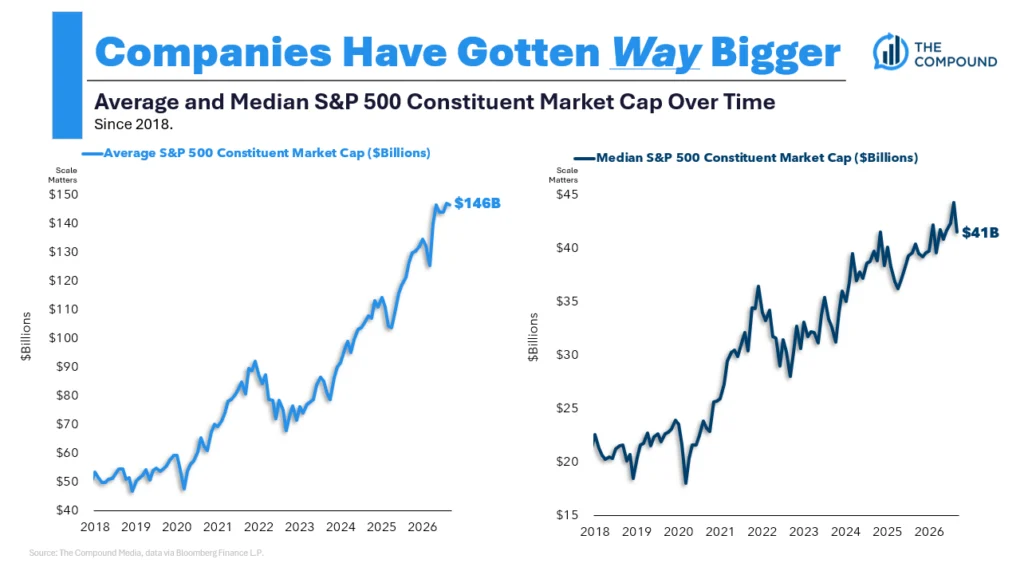
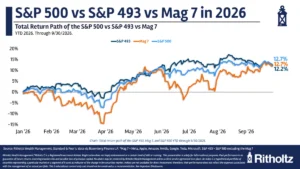
Recent market commentary highlights a striking reality: the S&P 500 is currently experiencing a level of concentration previously unseen in financial history. According to recent data shared by market analysts, the sheer market capitalization of the top five companies in the S&P 500 now equals the combined value of the bottom 434 stocks in the index. This historic skew has fractured traditional market breadth indicators, creating a two-tiered reality where a handful of mega-cap giants dictate the broader trajectory of headline indices.
Simultaneously, the corporate world is doubling down on high-stakes technological bets. Notably, Meta’s leadership recently pulled back the curtain on a staggering $100 billion gamble to build frontier artificial intelligence models. While the long-term payoff remains speculative, the immediate financial stakes have prompted frank internal warnings about the potential downside of miscalculated technological deployment.
Beyond domestic equities, macroeconomic strategists are re-evaluating long-term global trends. A prominent divergence continues to define international finance: while economies like China have outpaced the United States in broad economic growth metrics since 2004, American financial assets have vastly outperformed their Chinese counterparts across nearly every measurable category.
Chronology: Key Developments Driving the Market Narrative
To understand how modern markets arrived at this juncture, it is helpful to trace the sequence of events and discussions dominating financial circles in early October 2026:
Early October 2026: Market breadth anomalies capture the attention of quantitative analysts. Observers note that standard technical indicators are heavily distorted due to the unprecedented dominance of top-tier mega-cap equities.
October 8, 2026: Discussions regarding structural fiscal pressures come to the forefront. Economic commentators highlight crowding-out effects in public and private capital allocation, drawing intense debate across digital financial forums.
October 9, 2026: Global asset comparisons spark renewed debate. New comparative analyses from firms like Egan-Jones circulate widely, illustrating the widening gap between macroeconomic GDP growth in emerging markets (particularly China) and the superior performance of U.S. financial assets over the past two decades.
October 12, 2026: Corporate capital expenditures reach a fever pitch. Details emerge surrounding Meta’s $100 billion AI infrastructure pivot, accompanied by candid admissions from executive leadership regarding the existential financial risks should the gamble fail to yield commercial returns.
Mid-October 2026: Practical implementations of artificial intelligence dominate small-to-midsize business discourse, with documented cases of firms leveraging AI-driven workflows to generate substantial short-term revenue gains within weeks.
Supporting Data: The Numbers Behind the Trends
An evaluation of current market architecture reveals several critical data points illustrating the concentration risk and global economic divergences currently shaping investor strategies:
Index Concentration Ratios: The top five constituents of the S&P 500 hold a combined market valuation roughly equal to the bottom 434 companies within the 500-stock index. This extreme divergence explains why traditional market breadth indicators frequently send conflicting signals to portfolio managers.
Two Decades of Global Asset Divergence: Data tracking economic output from 2004 onward demonstrates that China’s aggregate economic growth has outpaced that of the United States across numerous fundamental metrics. However, total return metrics for U.S. equities and financial instruments have consistently outperformed Chinese equivalents over the same twenty-year horizon, underscoring the distinction between national economic expansion and shareholder value creation.
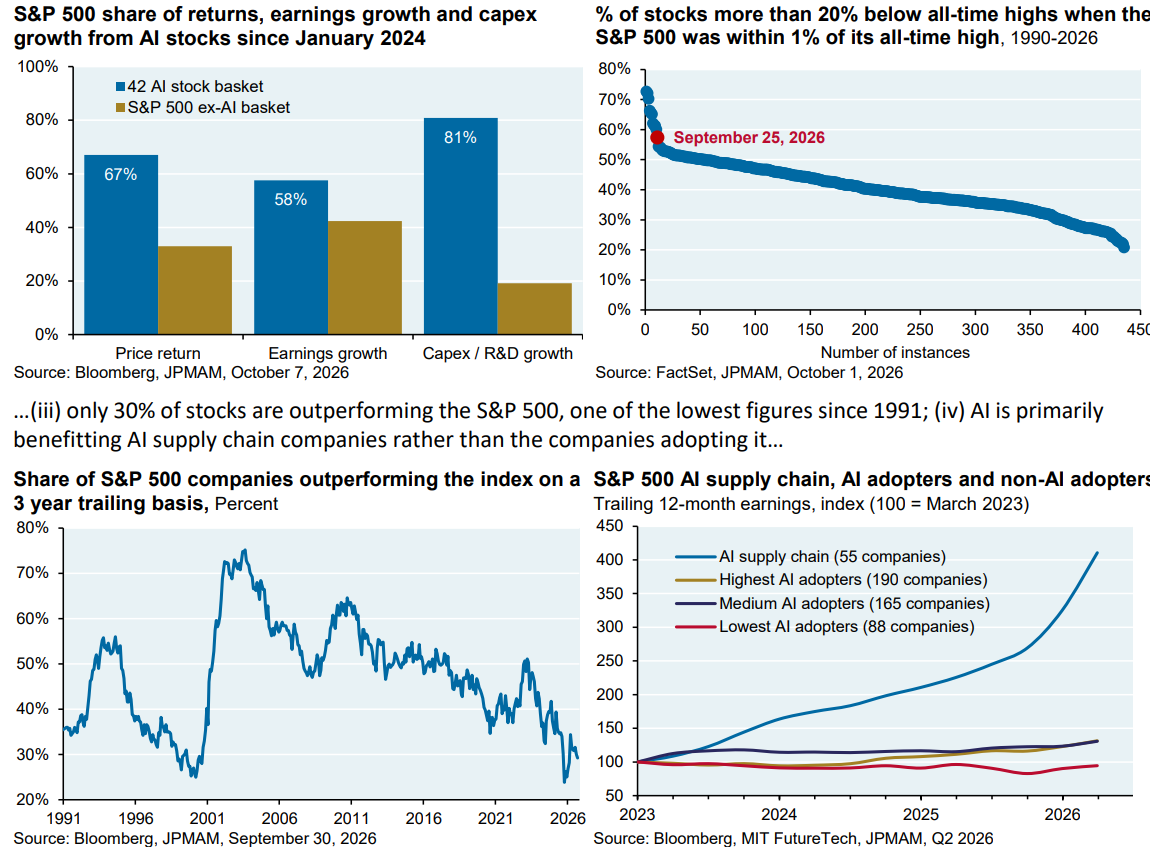
The Scale of AI Capital Expenditures: Frontier model development has evolved into a hundred-billion-dollar enterprise. Companies committing capital to next-generation AI infrastructure are operating on razor-thin margins for error, where underperformance threatens not just quarterly earnings, but long-term corporate solvency.
Official Responses and Executive Perspectives
The sheer scale of capital being deployed into artificial intelligence—and the risks associated with market concentration—has elicited direct commentary from corporate executives and economic policymakers alike.
Addressing the risks of Meta’s monumental infrastructure push, Chief Financial Officer Susan Li offered a sobering assessment of the financial exposure involved in building frontier AI models. During internal and public-facing dialogues regarding the firm’s strategic direction, Li remarked:
"I just want to tell you if this doesn’t work, this is going to be really, really bad. It’s going to be very, very bad in financial terms… It’s like, it has to [work]."
This candid acknowledgment highlights the high-wire act currently being performed by Silicon Valley giants. While shareholders have largely rewarded aggressive AI investments over the past several years, the sheer magnitude of the outlays means that any stumble in monetization could trigger severe market corrections.
On the macroeconomic front, policy experts have raised flags regarding capital allocation dynamics. Economists analyzing modern fiscal and monetary policy environments point to distinct "crowding out" phenomena, where massive capital absorption by dominant sectors alters borrowing costs and resource availability for the broader economy.
Implications: What This Means for Investors and the Broader Economy
The intersection of extreme market concentration, aggressive corporate spending, and global asset divergence carries profound implications for institutional investors, financial advisors, and retail market participants:
1. The Illusion of Diversification
For index investors, the heavy concentration of S&P 500 market capitalization in just a handful of companies means that standard diversified portfolios may be far more exposed to single-sector shocks—specifically technology and AI infrastructure—than historical norms suggest. A downturn in the top five holdings can disproportionately drag down passive portfolios that rely on market-cap weighting.
2. High-Stakes Corporate Strategy
The era of "move fast and break things" has matured into an era of "spend billions and hope it scales." As corporations commit nine-figure sums to artificial intelligence, the margin for operational error has shrunk dramatically. Investors must closely scrutinize the return on investment (ROI) metrics of tech heavyweights to ensure that capital expenditures are translating into tangible top-line growth rather than diminishing returns.
3. Economic Growth vs. Financial Returns
The ongoing disconnect between China’s rapid GDP growth and the superior performance of U.S. financial assets serves as a vital reminder to global allocators: a country’s economic growth rate does not automatically equate to stellar stock market returns. Factors such as shareholder friendliness, corporate governance, regulatory stability, and capital allocation policies often play a far more decisive role in determining long-term asset performance than raw economic output.
4. Technological Integration and Productivity
On a microeconomic level, early adopters leveraging AI integrated with shifts in human behavior are demonstrating the potential for rapid revenue generation. As these tools transition from experimental novelties to core operational drivers, businesses that successfully harness AI to enhance top-line growth will likely decouple from those struggling with administrative inefficiencies.
Disclaimer: Nothing in this article constitutes investment advice, performance data, or any recommendation that any particular security, portfolio of securities, transaction, or investment strategy is suitable for any specific person. Investing in speculative securities involves the risk of loss.