The Phoenix Pivot: Why Uber and Waymo Are Quietly Ending Their Original Robotaxi Experiment
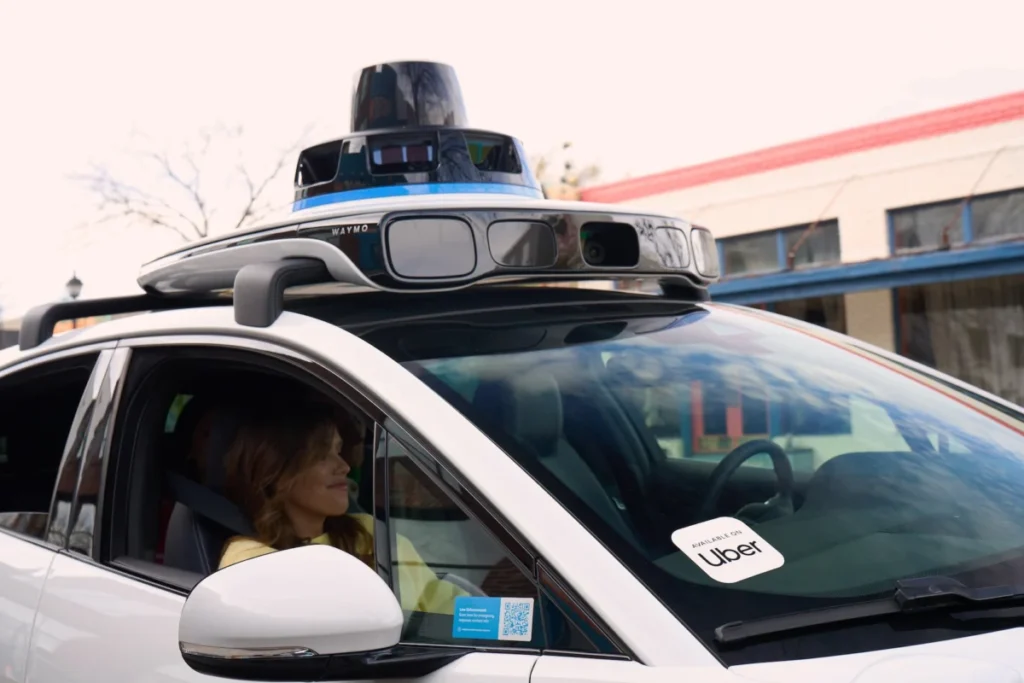
In a move that signals the rapid maturation—and shifting priorities—of the autonomous vehicle (AV) industry, the long-standing partnership between Waymo and Uber in Phoenix, Arizona, has officially come to an end. After nearly three years of integration, the ride-hailing giant and the Alphabet-owned autonomous pioneer have ceased offering Waymo robotaxi rides via the Uber app in the city, marking the conclusion of a pilot program that once served as a bold experiment in coopetition.
While the discontinuation was finalized quietly back in May, the news has only recently surfaced as eagle-eyed users noticed the sudden absence of Waymo vehicles from the Uber interface. For both companies, this represents a tactical retreat from a localized pilot in favor of broader, more aggressive expansion strategies that see them increasingly moving toward a direct collision course in the global robotaxi market.
A Chronology of Collaboration and Divergence
To understand the weight of this split, one must look back to the industry climate of 2023. At the time, the mere prospect of an Uber-Waymo partnership felt like a geopolitical thaw between rival superpowers. The two companies had emerged from a high-profile, acrimonious legal battle in 2018—a trade secrets lawsuit that had defined the early era of self-driving development.
The 2023 Genesis
When the companies announced their intent to collaborate in Phoenix, it was viewed as a pragmatic necessity. Waymo needed the massive, pre-existing demand of the Uber platform to scale its ridership, while Uber needed to secure a path toward an autonomous future to avoid being rendered obsolete by its own suppliers. The Phoenix pilot, while intentionally limited to roughly a dozen vehicles, served as the proof-of-concept for this hybrid model.
The Scaling Phase
Throughout 2024 and 2025, the relationship evolved. While the Phoenix program remained a static, small-scale test, the two companies expanded their footprint elsewhere. They successfully scaled operations in Austin and Atlanta, where Waymo vehicles are now a staple on the Uber platform. By mid-2026, the strategy had shifted from "testing the waters" in Phoenix to "scaling the model" in other major metropolitan hubs.
The May 2026 Sunset
The quiet wind-down of the Phoenix pilot in May 2026 coincides with a major turning point for Waymo: the deployment of its new "Ojai" robotaxi. Built by Zeekr, these vehicles are designed specifically for the rigors of commercial operation. As Waymo integrates these newer, more efficient units into its core fleet, it has opted to consolidate its Phoenix operations entirely within its proprietary app, effectively reclaiming the user experience and the data generated by those rides.
Supporting Data: The Scale of the Shift
The termination of the Phoenix pilot is not a sign of failure, but rather a reflection of the sheer scale Waymo has achieved. The company currently operates in 11 major U.S. metro areas and is in the process of launching in approximately 20 additional cities this year. With a fleet that has grown to an estimated 4,000 vehicles, Waymo is now facilitating more than 500,000 trips every week.
In contrast, the Phoenix pilot was always a boutique operation. By limiting the program to a dozen vehicles, the companies were essentially running a controlled laboratory. The data gathered from those "hundreds of thousands of trips" has already been synthesized and applied to the broader network.
Uber’s own growth in the AV space has been equally aggressive. Since the Phoenix pilot began, Uber has inked partnerships with numerous autonomous technology providers, moving away from a single-source dependency on Waymo. By diversifying its roster of AV partners, Uber is positioning itself as a "universal platform" for autonomy, rather than a secondary storefront for a single operator.
Official Perspectives: Aligning Narratives
Despite the end of the collaboration in Arizona, both firms are framing the split as a "productive success" that served its intended purpose.
Waymo’s Stance
In a statement to TechCrunch, a Waymo spokesperson emphasized that the vehicles previously utilized in the Uber pilot have been seamlessly reabsorbed into the primary Waymo fleet. "This was a productive pilot that paved the way for future expansions and partnerships across the globe," the company noted. Waymo highlighted that it remains deeply committed to the Phoenix ecosystem, citing its ongoing integration with public transit provider Via and its autonomous delivery initiatives with DoorDash as evidence that the company is moving toward a more diversified, multimodal service model.
Uber’s Stance
Uber echoed this sentiment, framing Phoenix as an essential learning environment. "Phoenix was our first pilot market… it was an intentionally limited deployment," an Uber representative explained. The company highlighted that the lessons learned in Phoenix were the catalyst for their much larger, more successful deployments in Austin and Atlanta, where the company now manages hundreds of AVs. Uber’s narrative is clear: they have graduated from the pilot phase and are now focused on massive, city-wide integration.
Implications: The Looming Robotaxi Showdown
The closure of the Phoenix pilot is a microcosm of a much larger, global trend: the era of "gentlemanly" partnerships is giving way to a period of intense, direct competition.
The London Conflict
Perhaps the most significant indicator of the current state of affairs is the impending showdown in London. Both Uber and Waymo are preparing for a battle for the British capital’s autonomous market. In this context, the two companies are no longer collaborators testing a prototype; they are direct rivals vying for market share, regulatory approval, and consumer loyalty.
The "Universal Platform" Strategy
For Uber, the implication of ending the Phoenix partnership is clear: the company is no longer content to be a mere conduit for Waymo’s technology. By welcoming other AV developers onto its network, Uber is building a "robotaxi aggregator" model. This strategy protects Uber from the risk of being beholden to a single autonomous provider, ensuring that as the technology matures, Uber remains the primary interface through which consumers hail their rides.
The Future of Proprietary Apps
For Waymo, the move back to a proprietary, app-first experience in Phoenix signals confidence. When a company is in the "growth at all costs" phase, it relies on third-party platforms to acquire users. When a company reaches the "market dominance" phase—as Waymo has in Phoenix—it seeks to own the customer relationship, the branding, and the data. By forcing users back to the Waymo app, the company is betting that its brand equity in Phoenix is now strong enough to sustain demand without the "Uber" crutch.
Conclusion
The end of the Uber-Waymo partnership in Phoenix is a milestone in the history of autonomous transport. It marks the transition from the "experimental era"—where tech giants had to hold hands to navigate the regulatory and technical hurdles of the early 2020s—to the "competitive era," where scale, efficiency, and brand loyalty will determine the winners.
While the Phoenix pilot was small in terms of vehicle count, its impact on the industry’s strategy was outsized. It provided the blueprint for how a legacy ride-hail giant and a silicon-valley pioneer could work together. Now, as they prepare for the next phase of the autonomous revolution—marked by larger fleets, faster deployment, and direct competition in global markets like London—the two companies are moving forward, not as partners, but as the architects of a new, fiercely contested transportation landscape. The Phoenix pilot did its job; it taught them how to drive, and now, they are racing each other to the finish line.