Bearing Witness from the Rubble: The Final Testimony of Mohammed Abu Lebda
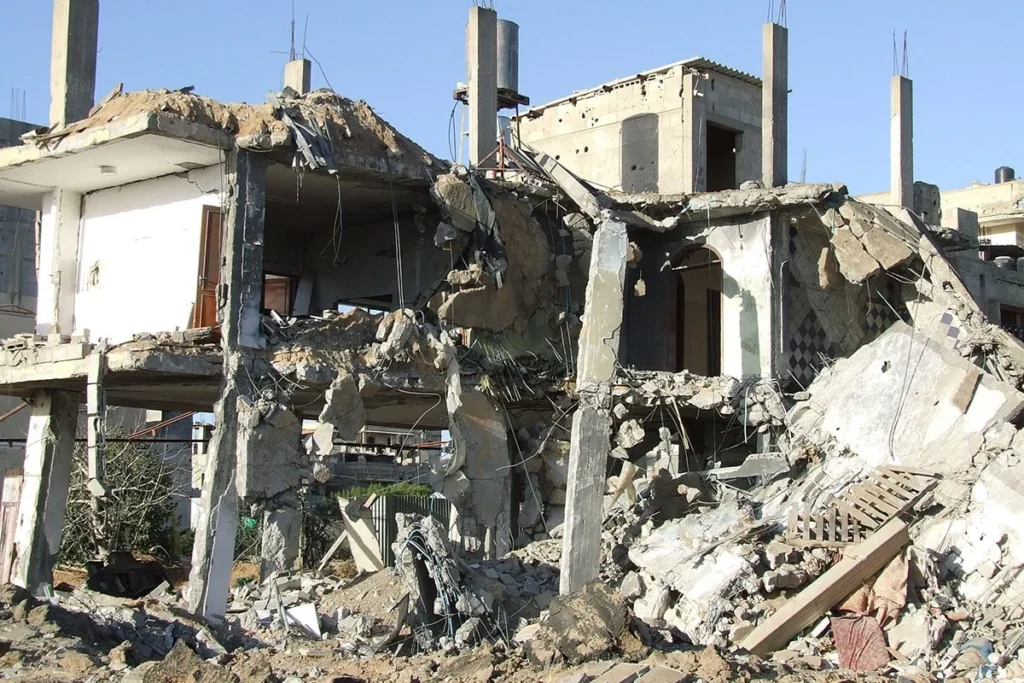
In the landscape of modern conflict, where the scale of human suffering often risks being reduced to statistics, the voice of the individual is frequently the first casualty. For Mohammed Abu Lebda, a young Palestinian poet and translator residing in the decimated city of Rafah, the act of writing has become a desperate, final endeavor to assert his humanity against the backdrop of an existential crisis.
Published by Nonprofit Quarterly (NPQ) as part of their "#WeTheCivic: America 250" series, Abu Lebda’s recent letter serves as a haunting reminder of the disconnect between global policy and the lived reality of those trapped in the Gaza conflict. Facilitated by poet and author Yahia Lababidi, the publication of this correspondence is not merely an act of journalism; it is a deliberate effort to prevent a voice from being extinguished by silence.
The Chronology of a Disappearing World
The relationship between Lababidi and Abu Lebda spans over two and a half years, beginning when the young Palestinian reached out to share his literary aspirations. What began as an intellectual connection between two writers soon evolved into a harrowing chronicle of survival.
- Early Correspondence: Abu Lebda, a gifted translator and poet in his twenties, first initiated contact, sharing his aspirations for a life of quiet normalcy.
- The Onset of War: As conflict intensified in Rafah, the correspondence shifted from literary exchange to survival updates. Abu Lebda shared voice notes recorded in the dark and videos documenting the destruction of his neighborhood.
- The Preservation of Art: Fearing his own imminent death, Abu Lebda entrusted Lababidi with Pillow for a Severed Head, a 109-page manuscript of poetry. The work, described by Lababidi as a blend of "prayer and grief, dreams and the silence of God," acts as a repository for a life under siege.
- The Final Plea: Recently, Abu Lebda informed Lababidi that he was drafting a final letter to the world. Acknowledging that his mental health had deteriorated significantly, he described this letter as an attempt to "leave a trace of his existence" before the silence of the conflict became absolute.
A Letter to the World: The Existential Crisis of the Individual
The letter, penned by Abu Lebda from the center of the conflict zone, strips away the veneer of geopolitical discourse to reveal the raw, physical reality of life under bombardment. His words provide a harrowing insight into the psychological erosion caused by persistent, indiscriminate violence.
"I am dying in slow motion, and I am watching it happen," Abu Lebda writes. "I am not dead so that my soul may rest, nor am I truly alive; I am merely a helpless spectator, standing frozen, watching my own gradual erosion."
Abu Lebda’s testimony highlights the loss of agency that defines his experience. He describes a life where his choices, his geography, and his future have been systematically dismantled. He recounts the terror of watching his family, his anchors to the world, face an inevitable danger that he is powerless to mitigate. This, he argues, is the ultimate dehumanization: the transition from a human being with dreams to a "delayed number in the ledger of a merciless war."
Supporting Data: The Humanitarian Toll in Rafah
The context of Abu Lebda’s writing is the catastrophic humanitarian situation in Rafah. Once a sanctuary for displaced civilians, the city has faced sustained military pressure, resulting in widespread infrastructure collapse and the systematic displacement of its population.
- Infrastructure Collapse: Reports indicate that a vast majority of civilian housing in Rafah has been rendered uninhabitable. The "rubble" Abu Lebda mentions is not a metaphor; it is the physical landscape of the city.
- Psychological Trauma: According to the World Health Organization (WHO) and various NGOs, the population in Gaza—particularly the youth—is suffering from an unprecedented mental health crisis. Symptoms of acute stress disorder, complex PTSD, and severe depression are widespread, with little to no access to psychiatric or psychological support services.
- The Silence of Infrastructure: The destruction of basic utilities—electricity, internet, and sanitation—has effectively severed the connection between Gazans and the outside world, creating the "silence" that Abu Lebda fears so deeply.
Official Responses and the Role of Philanthropy
The publication of this letter by Nonprofit Quarterly raises significant questions regarding the role of American philanthropy and foreign policy. Editor-in-Chief Sara Hudson emphasizes that democratic values are "not self-executing." They require accountability for actions taken in the name of the public, particularly when those actions are funded by tax dollars.
Critics of current U.S. policy argue that the flow of military aid to the region directly facilitates the conditions described by Abu Lebda. Organizations such as "Funders for Palestine" have repeatedly called for an examination of how charitable foundations and government policy intersect with the narrative power—or the silencing—of Palestinian voices.
The editorial stance of NPQ is that "bearing witness is not a passive act." By publishing Abu Lebda, they are challenging the media and the philanthropic sector to move beyond the traditional "tragedy" narrative and toward a model of accountability that insists on the right of the marginalized to be heard and remembered.
The Implications: A Call to Civic Responsibility
The implications of Mohammed Abu Lebda’s letter are twofold: they reflect both an immediate moral crisis and a long-term challenge to the integrity of global civic life.
1. The Erosion of Empathy
When individuals like Abu Lebda are forced to write letters to the world to prove their own existence, it signals a systemic failure of global empathy. The "spectator seat" culture, where the world watches the extinction of a city through screens, risks normalizing violence to the point where the loss of human life is treated as an inevitable, if regrettable, data point.
2. The Responsibility of the Press
The journalistic imperative to "bear witness" is challenged in an era of polarized, state-aligned media. Abu Lebda’s plea underscores the necessity for independent platforms to amplify voices that exist outside the mainstream narrative. By providing space for his words, Nonprofit Quarterly asserts that the primary duty of a free press is to ensure that those most directly impacted by policy are the ones defining the terms of the discourse.
3. The Test of Democracy
Ultimately, the article serves as a barometer for the state of democracy. As the editorial preface notes, "democracy’s meaning is tested not by what we celebrate, but by whose voices we allow ourselves to hear." If the international community, and specifically the American public, remains indifferent to the "muffled scream" of individuals like Abu Lebda, the claim to democratic, humanitarian values loses its credibility.
Conclusion: A Trace in the Void
Mohammed Abu Lebda’s letter is a final, desperate act of defiance against erasure. He writes not because he expects a rescue, but because he refuses to vanish without a record. His words force the reader to confront a simple, uncomfortable truth: the world is currently watching the destruction of a human life and a city, and that act of watching carries with it an immense, often ignored, moral weight.
As the curtain threatens to drop on his story, his letter remains as a document of record. Whether the world chooses to listen—and more importantly, whether that listening translates into a change in the policies that sustain his "slow death"—remains the defining question of the current moment. For now, he remains, in his own words, "fighting against the drowning," waiting to see if anyone in the vast world is truly listening.