The Humanization of AI: Cognition Acquires Poke in a Move to Redefine the Digital Co-worker
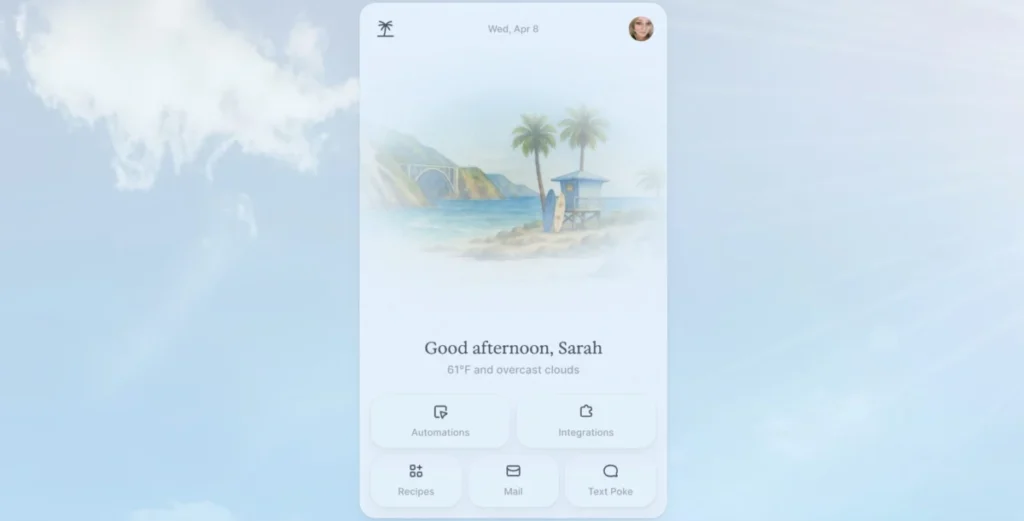
In a landscape where artificial intelligence is increasingly defined by raw computational power and benchmark performance, the industry’s focus is undergoing a subtle, yet profound, shift toward the user experience. This week, Cognition, the high-profile AI coding startup, announced the acquisition of The Interaction Company of California, the creators of Poke—an AI assistant renowned for its conversational fluidity and uncanny ability to mimic the personality of a human friend.
The deal, which industry insiders value in the "low nine figures," marks a pivotal moment in the race to build not just smarter AI, but more relatable digital companions. By absorbing Poke’s interaction layer, Cognition aims to inject a dose of personality, slang, and humor into its flagship coding agent, Devin, signaling that the future of enterprise software may rely as much on EQ (emotional intelligence) as it does on IQ.
The Genesis of the Deal: Merging Utility with Personality
The Interaction Company of California, co-founded by Marvin von Hagen, launched Poke in March 2026. From its inception, the platform stood out in a crowded market of AI tools by rejecting the clinical, prompt-response interface common in ChatGPT or Claude. Instead, Poke operated through the familiar medium of text messaging—integrated into platforms like iMessage, Telegram, and WhatsApp.
Users found that Poke did not merely execute commands; it engaged in back-and-forth dialogue, displaying a persona that felt proactive and aware of the user’s history. It handled everything from travel itineraries and financial planning to simple calendar scheduling.
For Cognition founders Scott Wu and Walden Yan, the acquisition is both a strategic expansion and a homecoming of sorts; both were early angel investors in The Interaction Company. Recognizing the limitations of current AI coding tools—which are often perceived as cold, "robot-like" entities—they saw an opportunity to transform Devin from a specialized software utility into a persistent, approachable colleague.
A Chronology of Integration: From Messaging App to Enterprise Agent
The timeline of Poke’s growth and subsequent acquisition highlights the rapid acceleration of the consumer-facing AI sector:
- March 2026: The Interaction Company launches Poke, introducing a text-based AI agent that emphasizes personality and conversational ease.
- Early 2026: Poke gains traction among hundreds of thousands of users, processing over 100 million messages in a three-month window.
- June 2026: In a significant industry milestone, Poke becomes the first AI agent officially approved for Apple’s "Messages for Business" platform, validating its utility as a bridge between consumers and corporate workflows.
- Q3 2026: Cognition, facing the challenge of scaling Devin’s adoption, formalizes its acquisition of The Interaction Company, aiming to leverage Poke’s interaction models.
- Late 2026 and Beyond: The companies commit to a period of stability, with Poke remaining on its existing platforms through the end of the year, followed by an experimental integration of Cognition’s SWE-1.7 software engineering model in 2027.
Supporting Data: The Cost of Charm
While Poke achieved remarkable engagement metrics—averaging over 33 million messages per month—the path to profitability proved steep. According to Marvin von Hagen, the very traits that made Poke popular were also the most expensive to maintain. The cost of running high-context, low-latency, and personality-driven AI agents at scale is significant.
For many startups in the generative AI space, the "compute-to-revenue" ratio remains a primary hurdle. Poke’s acquisition provides the necessary infrastructure and financial backing of a well-capitalized entity like Cognition, allowing the team to transition from a venture-backed growth model to a sustainable, enterprise-integrated future. The move underscores a growing industry realization: while user adoption is vital, the underlying architecture must be optimized to support the high costs of "human-like" persistence.
Official Perspectives: Building the "Persistent Co-worker"
The synergy between the two companies is best articulated by their leadership. Scott Wu, co-founder of Cognition, emphasized the emotional component of the acquisition in his recent blog post: "The Interaction team has built an agent that people love: it’s proactive, it knows you, and it’s fun to talk to. That’s exactly how working with Devin should feel, and now we get to build it together."

Marvin von Hagen echoed this sentiment, arguing that the future of the workplace is not just about the code an AI can write, but the rapport it builds with its human counterpart. "You probably prefer it if you have co-workers that have personality, rather than if you have co-workers that are just robots," von Hagen said in an interview. "When you have co-workers that are also software engineers, they can also make a joke. And you’ll find it funny and enjoyable."
By integrating Poke’s personality layer, Cognition isn’t just looking to improve Devin’s output—they are looking to improve the human experience of the software development lifecycle.
The Implications: A Shift Toward Relational AI
The acquisition of Poke by Cognition serves as a bellwether for the next phase of the AI gold rush. For the past two years, the industry has been obsessed with "reasoning" capabilities and coding accuracy. Now, the focus is shifting toward "agentic" behavior and persistence.
1. The Rise of the "Conversational Interface"
We are moving away from the "search bar" paradigm of AI. Future assistants will likely function more like Poke, living within the apps we use daily (messaging, email, Slack) rather than requiring users to open a dedicated portal. By embedding itself into existing communication flows, AI becomes a utility that is always "on" and "contextually aware."
2. The Necessity of Persistence
One of the primary criticisms of current AI coding assistants is their "amnesia." They often struggle to maintain context across long-term projects or multiple sessions. By bringing Poke’s architecture into Devin, Cognition is looking to solve the problem of task persistence. If an AI can "remember" a conversation from three weeks ago, or recall a joke shared during a late-night debugging session, it ceases to be a tool and starts to be a colleague.
3. Orchestration Over Execution
Von Hagen’s vision for the future involves Poke acting as an "orchestrator." Currently, a coding agent might handle one pull request at a time. The next generation of AI will likely involve a central "personality" layer—Poke—managing a fleet of specialized agents like Devin, coordinating their tasks, and communicating the results back to the user in a natural, coherent, and friendly manner.
Conclusion: The Future of the Software Engineer
The deal between Cognition and The Interaction Company is a clear signal that the "commoditization of intelligence" is well underway. When every AI can write code with roughly the same level of accuracy, the differentiator will be the experience of working with that AI.
As we look toward 2027 and the integration of the SWE-1.7 model with Poke’s interaction engine, the role of the software engineer is poised for a transformation. We are moving from a world where engineers interact with machines to a world where they collaborate with agents. If those agents can effectively mirror human personality, the friction between human intent and machine execution may finally begin to disappear.
For now, the team behind Poke remains focused on maintaining their existing user base, ensuring that their current service remains as responsive and reliable as ever. But for the broader tech ecosystem, the message is clear: the robots are coming to the office, and they’ve been instructed to be a lot more charming.