OpenAI Launches GPT-6.1 Terra: Faster, Cheaper “Computer Use” AI Promising a 50% Slash in Developer API Costs
SAN FRANCISCO — In a move designed to cement its dominance over enterprise workflows and developer ecosystems, OpenAI officially rolled out GPT-6.1 Terra on Monday. Touted as a major evolutionary leap over its predecessor, the new middle-tier model targets the daily grind of office work, promising enhanced "computer use" capabilities, significantly higher accuracy, and a steep 50% reduction in standard API pricing compared to the older GPT-5.6 Terra.
The release marks the latest salvo in the fiercely contested generative artificial intelligence market, arriving on the heels of aggressive autumn product rollouts and escalating competition with rivals like Anthropic. OpenAI says GPT-6.1 Terra is rolling out immediately to paid users across Plus, Pro, Enterprise, and Education tiers, where it powers features within ChatGPT Work and the coding platform Codex.
Main Facts: What is GPT-6.1 Terra?
GPT-6.1 Terra occupies the vital middle ground in OpenAI’s model hierarchy. While heavy-duty models like GPT-6 Astra and GPT-6.1 Sol are engineered for complex, multi-layered research and advanced programming, Terra is built for the everyday digital workspace.
Its defining capability is "computer use"—an AI archetype that transcends text generation by actively interacting with graphical user interfaces. Terra can read on-screen elements, navigate software menus, click through desktop and web applications, and draft complex replies just as a human worker would.
Key highlights of the GPT-6.1 Terra launch include:
- Aggressive Pricing: Standard API prices—the fees developers pay to integrate the intelligence directly into third-party software—have been slashed by 50% relative to the GPT-5.6 Terra model.
- Immediate Availability: The model is accessible now through ChatGPT Work (OpenAI’s agentic mode that executes tasks across multiple websites and applications autonomously) and Codex.
- Tiered Rollout: While Plus, Pro, Enterprise, and Edu users gain immediate access to Terra, free-tier users will continue to utilize the lower-tier GPT-5.6 Luna.
- Target Audience: Routine office administrators, developers automating workflows, and businesses seeking cost-effective agentic automation.
Chronology: The Path from Limited Preview to GPT-6.1
The journey to GPT-6.1 Terra reflects the blistering pace of AI development and the shifting geopolitical and regulatory landscape surrounding Silicon Valley.
Summer 2026: The Genesis of Terra
Terra first entered the public consciousness on June 26, when OpenAI introduced it as part of the GPT-5.6 family during a limited preview requested by the Donald Trump administration. The model was initially sequestered under strict testing conditions before receiving a wider public release on July 9. At that time, OpenAI marketed Terra as a model matching the performance benchmarks of GPT-5.5 while operating at roughly half the cost.

September 2026: The Autumn Rush and the Sol/Luna Debut
The AI race reached a fever pitch in September. In a dramatic display of competitive posturing, OpenAI launched GPT-6 Sol and Luna mere minutes after rival firm Anthropic debuted its Claude Opus 5.5 model. Noticeably absent from that September refresh was any update to the Terra lineage—leaving developers wondering when the mid-tier workhorse would receive the GPT-6 architectural treatment.
October 2026: The Arrival of GPT-6.1 Terra
Monday’s release of GPT-6.1 Terra answers those questions, bringing the mid-tier offering up to speed with OpenAI’s latest multimodal and agentic benchmarks. The company has clarified that for deep, exploratory research or highly complex systems engineering, users should still turn to GPT-6.1 Sol or GPT-6 Astra, leaving Terra to dominate the realm of administrative automation and rapid execution.
Supporting Data: Benchmarks and Reliability
OpenAI has backed the release of GPT-6.1 Terra with a suite of internal performance metrics and third-party benchmark evaluations. The data points toward significant reductions in hallucination rates and exponential leaps in terminal-based task execution.
Taming the Hallucination Rate
In internal stress tests designed deliberately to trick models into making factual errors, GPT-6.1 Terra demonstrated a massive reduction in mistakes.
- Low Reasoning Effort: When operating at a low reasoning effort setting (which dictates how long the model spends "thinking" before executing a response), the factual error rate plummeted from 53.6% in GPT-5.6 Terra down to 16.7% in GPT-6.1 Terra.
- Maximum Effort: When pushed to its maximum reasoning capacity, the error rate dropped an additional 18 percentage points, settling at an impressive 4.3%.
Terminal-Bench 4.0 Performance
When tested on Terminal-Bench 4.0—a rigorous benchmark that evaluates how effectively coding agents can complete multi-step tasks through a command-line terminal—Terra showed transformative gains:
- At maximum reasoning effort, GPT-6.1 Terra successfully completed 50.3% of the test tasks.
- In comparison, its predecessor, GPT-5.6 Terra, managed only 21.5% on the same benchmark.
Furthermore, OpenAI claims that Terra executes tasks more than three times faster on average than both GPT-6 Astra and GPT-6.1 Sol. While these figures stem entirely from OpenAI’s internal testing environments, they point to a distinct design philosophy: sacrificing hyper-specialized depth for speed, efficiency, and rock-bottom operational costs.
Official Responses and Industry Context
In its official community announcement, OpenAI emphasized the economic and practical balance struck by the new model.
"It’s a significant step up over GPT-5.6 Terra, with 50% lower standard API prices," OpenAI stated. "GPT-6.1 Terra is rolling out now and is available to all Plus, Pro, Enterprise, and Edu users in ChatGPT Work and Codex."
The emphasis on developer economics is no accident. As enterprise adoption matures, businesses are shifting their scrutiny away from raw benchmark scores and toward total cost of ownership (TCO). By cutting API costs in half while drastically improving "computer use" reliability, OpenAI is directly addressing enterprise demands for affordable automation tools that can operate legacy software without human intervention.
This strategy aligns with the evolution of ChatGPT Work, OpenAI’s flagship agentic environment. As covered previously in tech circles, ChatGPT Work functions autonomously, signing into accounts, navigating multi-step web forms, and handling enterprise data workflows behind the scenes. Terra serves as the computational engine driving these background agents, making affordability paramount for businesses scaling automated digital labor.
Implications: What GPT-6.1 Terra Means for the Future of Work
The launch of GPT-6.1 Terra carries profound implications for software developers, enterprise IT budgets, and the white-collar workforce.
1. The Democratization of AI Agents
By cutting standard API prices by 50%, OpenAI is lowering the barrier to entry for independent developers and startups aiming to build software wrappers and autonomous agents. Tasks that previously required expensive calls to high-end frontier models can now be routed through Terra at a fraction of the cost, making widespread consumer and enterprise agent deployment economically viable.
2. Redefining "Computer Use"
The transition from chat-based interfaces to action-oriented interfaces is accelerating. Because Terra can visually interpret screens, click buttons, and fill out forms, it blurs the line between traditional software automation (like robotic process automation, or RPA) and cognitive AI. Office workers may increasingly find themselves managing fleets of background AI agents rather than performing manual data entry.
3. Escalating Pressures on Competitors
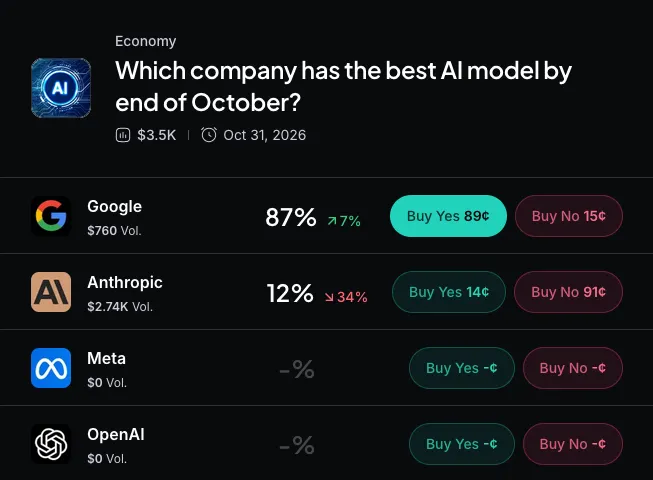
Anthropic, Google, and open-source communities now face a stiff challenge. By offering a model that balances speed, specialized computer-interaction skills, and heavily discounted API rates, OpenAI is forcing competitors to re-evaluate their own pricing models. As prediction markets and industry analysts debate which firm will hold the crown for the best AI model, OpenAI’s relentless iteration cycle ensures that cost-efficiency and practical utility remain front and center in the AI race.