The Art of Accountability: Brandon S. Copley and the Visual Legacy of Broken Treaties
The discovery of unmarked graves at the sites of former Indian Residential Schools across North America has served as a harrowing catalyst for a national reckoning. For many, these revelations are not merely historical footnotes but active, festering wounds. Among those channeling this collective trauma into a tangible, visual dialogue is Brandon S. Copley, a two-spirit assemblage artist whose work transforms the discarded remnants of history into profound indictments of colonial broken promises.
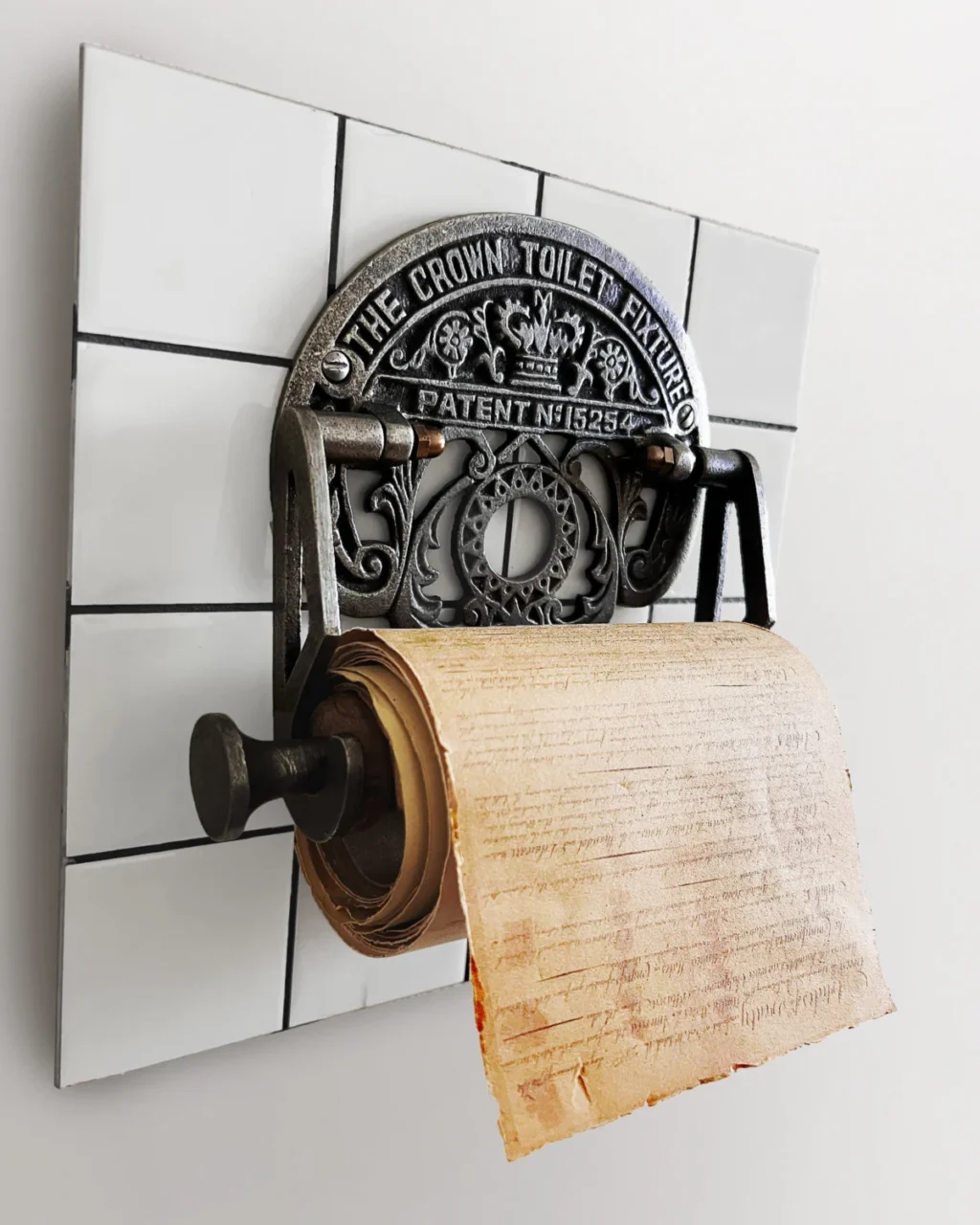
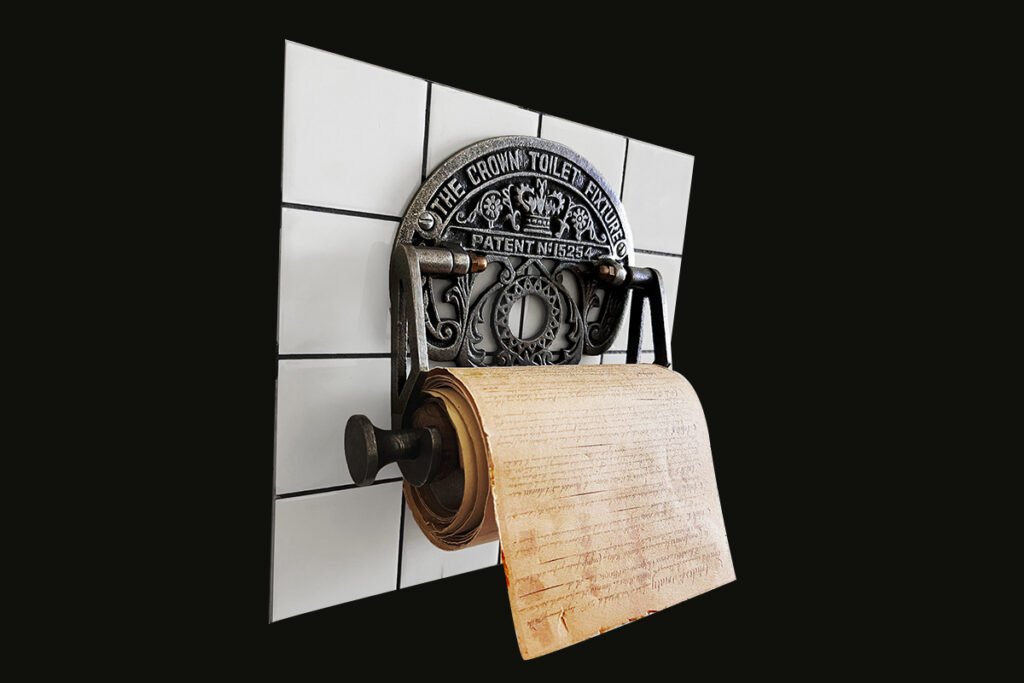
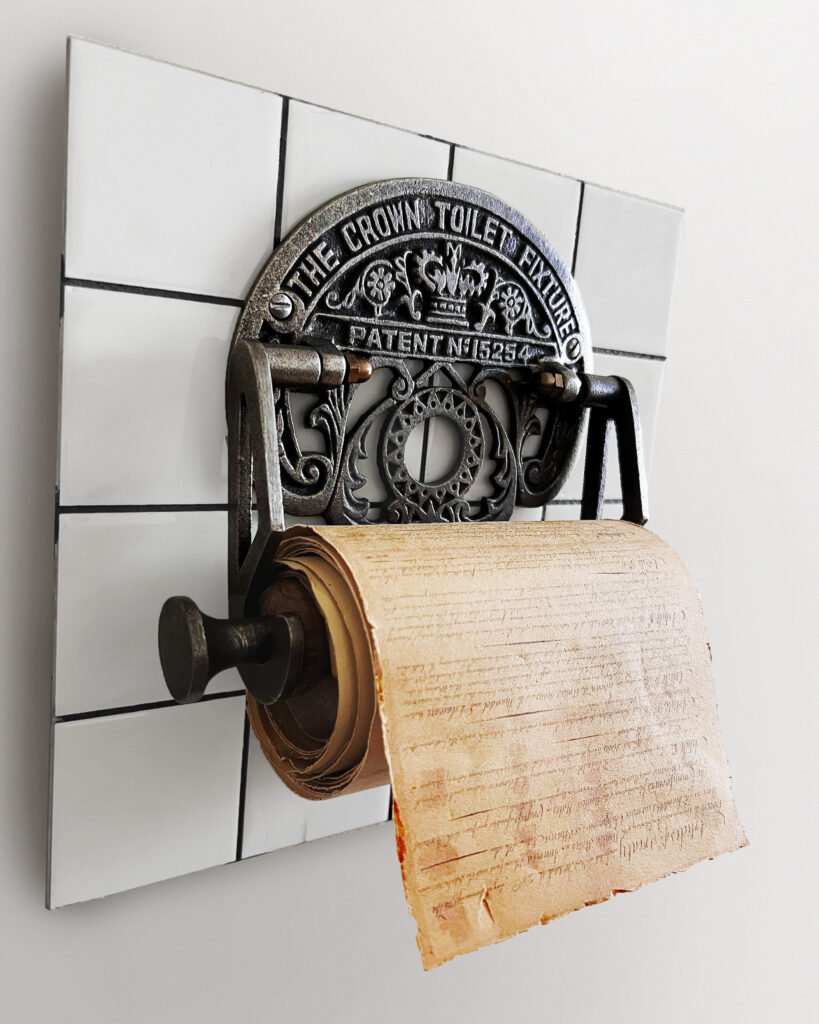
Copley’s latest body of work—which features striking installations such as parchment manuscripts wrapped around the barrels of antique, cast-iron toilet paper rolls—serves as a visceral metaphor for the treatment of Indigenous treaties: legal documents treated by the state as disposable waste.
The Catalyst: Confronting a History of Erasure
The impetus for Copley’s current creative trajectory was the devastating confirmation of child remains found on the grounds of Indian Residential Schools. For generations, Indigenous communities had spoken of these losses, but the physical evidence brought to light in recent years forced a broader, uncomfortable public acknowledgment of the school system’s catastrophic impact.
For Copley, an artist of Seneca and Maidu descent, the news triggered what he describes as a "creative grieving state." He began to view the history of Indigenous relations not as a linear narrative of progress, but as a series of deliberate erasures. "Telling the stories of those natives who were lost or forgotten," Copley notes, became his primary mission. He saw a direct correlation between the treatment of these children—discarded as if they were insignificant—and the treatment of the treaties that were meant to govern the relationship between Indigenous nations and the United States government.
Chronology of a Colonial Crisis
To understand the weight of Copley’s art, one must look at the historical timeline of the residential school system and the parallel erosion of legal sovereignty:
- 1819–1879: The Era of Forced Assimilation. The Civilization Fund Act of 1819 set the stage for the systematic removal of Indigenous children from their families. By 1879, the Carlisle Indian Industrial School opened, serving as the blueprint for hundreds of other institutions designed to "kill the Indian, save the man."
- The 19th-Century Treaty Era: During this time, hundreds of treaties were signed between the U.S. government and sovereign tribes. These were not gifts; they were complex, binding legal agreements involving land cessions and the guarantee of rights, healthcare, and education.
- 1920s–1970s: The Peak and Decline: The residential school system reached its height of activity, causing untold generational trauma. Simultaneously, the U.S. government pursued "Termination Policy" eras, which sought to unilaterally end the government-to-government relationship with tribes.
- 2021–Present: The Discovery and Reckoning. The identification of graves at the Kamloops Indian Residential School in British Columbia sparked a continental investigation, leading to similar discoveries across the United States. This period marks the current era of public accountability, where artists like Copley are now working to ensure these stories are not buried once more.
The Semiotics of Assemblage: Supporting the Narrative
Copley’s work falls into the tradition of assemblage—an art form that utilizes "found objects" to create a narrative. His choice of materials is intentional and symbolic. By wrapping replicas of historical treaties around the rusted, utilitarian hardware of Victorian-era plumbing, he forces the viewer to confront the discrepancy between the gravity of constitutional law and the casual negligence of the colonial state.
The Power of the "Discarded"
In the context of art history, this approach draws inspiration from masters like Betye Saar, who used found objects to critique systemic racism and gender stereotypes. Copley’s use of materials mirrors his thematic focus:
- Old Parchment: Represents the "shallow" but legally binding promises made by the state.
- Cast-Iron Hardware: Represents the heavy, unyielding, and often cold nature of the colonial bureaucracy.
- The Toilet Paper Roll: Acts as a biting commentary on how treaties were essentially treated as "scraps of paper in the wind"—meant for disposal, temporary, and ultimately disrespected.
Institutional and Official Responses
The discovery of the school graves has compelled federal entities to respond, though the efficacy of these responses remains a subject of intense debate among activists and tribal leaders.
In the United States, Secretary of the Interior Deb Haaland launched the Federal Indian Boarding School Initiative in 2021. The investigation sought to identify the locations of schools, the number of children who attended, and the number of students who died or were buried in unmarked sites. The subsequent reports have confirmed that hundreds of schools operated across the country and that thousands of children were subjected to physical, sexual, and emotional abuse, as well as forced labor.
However, many survivors and their descendants argue that reports and apologies are insufficient without structural policy changes. The "broken promise" theme central to Copley’s art reflects this skepticism; for many, the government is still failing to uphold the basic tenets of the treaties that remain the "supreme law of the land" under the U.S. Constitution.
Implications: A New Era of Indigenous Artivism
The work of artists like Copley represents a shift in the landscape of nonprofit and social justice advocacy. In a time when traditional journalism and institutional records are increasingly contested, art serves as an essential archive.
Redefining Public Memory
By translating historical grief into fine art, Copley is performing a necessary act of "cultural sponge" work—absorbing the trauma of the past and refracting it into something that forces a public response. His work asks the viewer: If the law is only as strong as the integrity of the state, what happens when that integrity is discarded?
The Role of Nonprofits and Advocacy
Organizations like the Nonprofit Quarterly (NPQ) have highlighted how critical it is to support voices that exist outside of traditional, state-sanctioned narratives. In an era where "multiracial democracy" is under strain, the work of Indigenous artists serves as a litmus test for the health of that democracy. When Indigenous history is silenced, the democracy itself becomes hollow.
Conclusion: The Persistence of the Promise
Brandon S. Copley’s journey from a Bay Area artist to a voice for historical accountability is a testament to the power of creative expression in the face of institutional erasure. His assemblage pieces do more than memorialize the dead; they challenge the living to acknowledge that treaties are not just historical documents—they are living obligations.
As the findings of the Federal Indian Boarding School Initiative continue to emerge, the art community will play a vital role in ensuring that these facts remain in the public consciousness. Copley’s work reminds us that while the parchment may be fragile and the institutions may be rusted, the truth contained within these stories is unbreakable. To move forward, society must stop treating the rights of Indigenous peoples as disposable and start honoring the treaties that were the bedrock of a promised, yet still unfulfilled, partnership.
In the words of the artist himself, the goal is to make the "useless" appear useful once more—to re-center the humanity that was so callously discarded, ensuring that the echoes of the past find a permanent place in the architecture of our future.