The End of an Era: Navigating the Landscape After Mint.com’s Closure
When Mint launched in 2007, it revolutionized the personal finance space. For the first time, average consumers had access to a free, intuitive dashboard that aggregated bank accounts, credit cards, and investments into a single, cohesive view. It democratized financial literacy, making the complex world of budgeting accessible to the masses. However, after being acquired by Intuit in 2009 and serving millions of users for over a decade, Mint.com officially shuttered its doors, leaving a massive void in the market.
For former users, the transition is more than just a software migration; it is a search for a new "financial command center." Whether you prioritize investment tracking, rigorous zero-based budgeting, or simple expense monitoring, the current landscape of fintech offers several robust alternatives. Having used these tools extensively over the years, I have curated a selection of the best replacements to help you regain control of your financial life.
The Rise and Fall: A Chronology of Mint
To understand the current market, one must look at the trajectory of the app that defined it.
- 2007: Mint.com launches, offering free, automated budget tracking. It gains rapid popularity for its ease of use.
- 2009: Intuit, the parent company of TurboTax and QuickBooks, acquires Mint for approximately $170 million.
- 2010–2020: Mint continues to grow, integrating credit score monitoring and investment tracking, cementing its status as the industry standard.
- 2023–2024: Intuit announces the sunsetting of Mint.com, directing users toward Credit Karma—a platform more focused on financial product recommendations than granular budgeting.
- The Aftermath: Millions of users are forced to migrate their historical data to new platforms, sparking a surge in demand for high-quality, subscription-based personal finance management (PFM) tools.
The Top Contenders: Evaluating Your Options
1. Monarch Money: The Gold Standard for Couples and Families
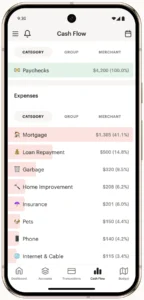
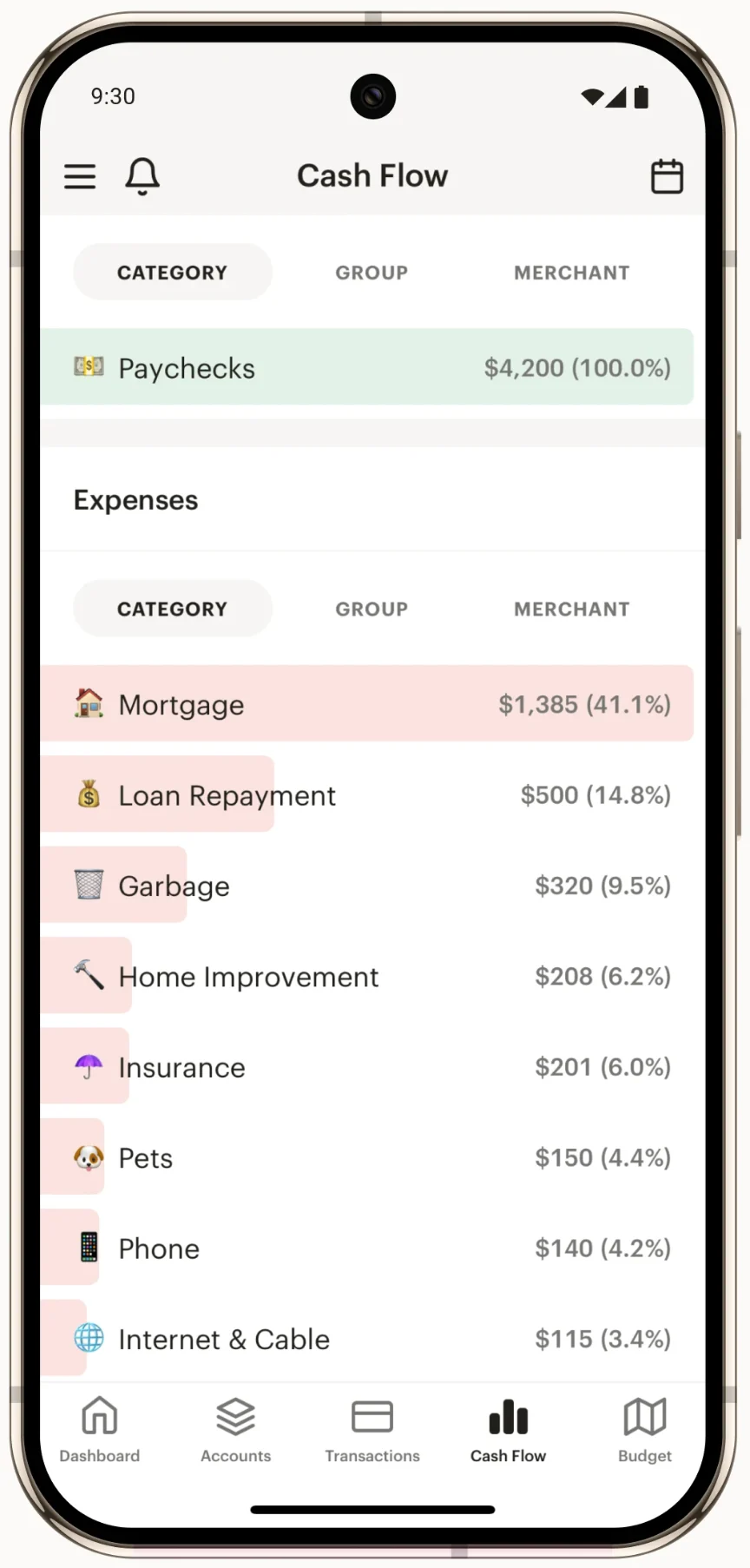
Having used Monarch Money for two years, I consider it the premier successor to Mint. Its interface is both aesthetically pleasing and deeply functional, offering a comprehensive view of your net worth, cash flow, and investment performance.
Why it stands out:
Monarch excels in collaborative finance. It allows multiple users to manage a single household budget, which is invaluable for couples. A standout feature is the "Flex Budgeting" system, which accounts for the natural volatility in monthly expenses—a common pain point in traditional, rigid budgeting apps. Furthermore, its co-founder, Val Agostino, was a key product manager at the original Mint, which explains the intuitive, user-centric design language.
- Best For: Couples and power users.
- Pricing: $8.33/month (billed annually). Tip: Use code ROB50 for 50% off the first year.
2. Quicken Simplifi: Built for the Mobile Generation
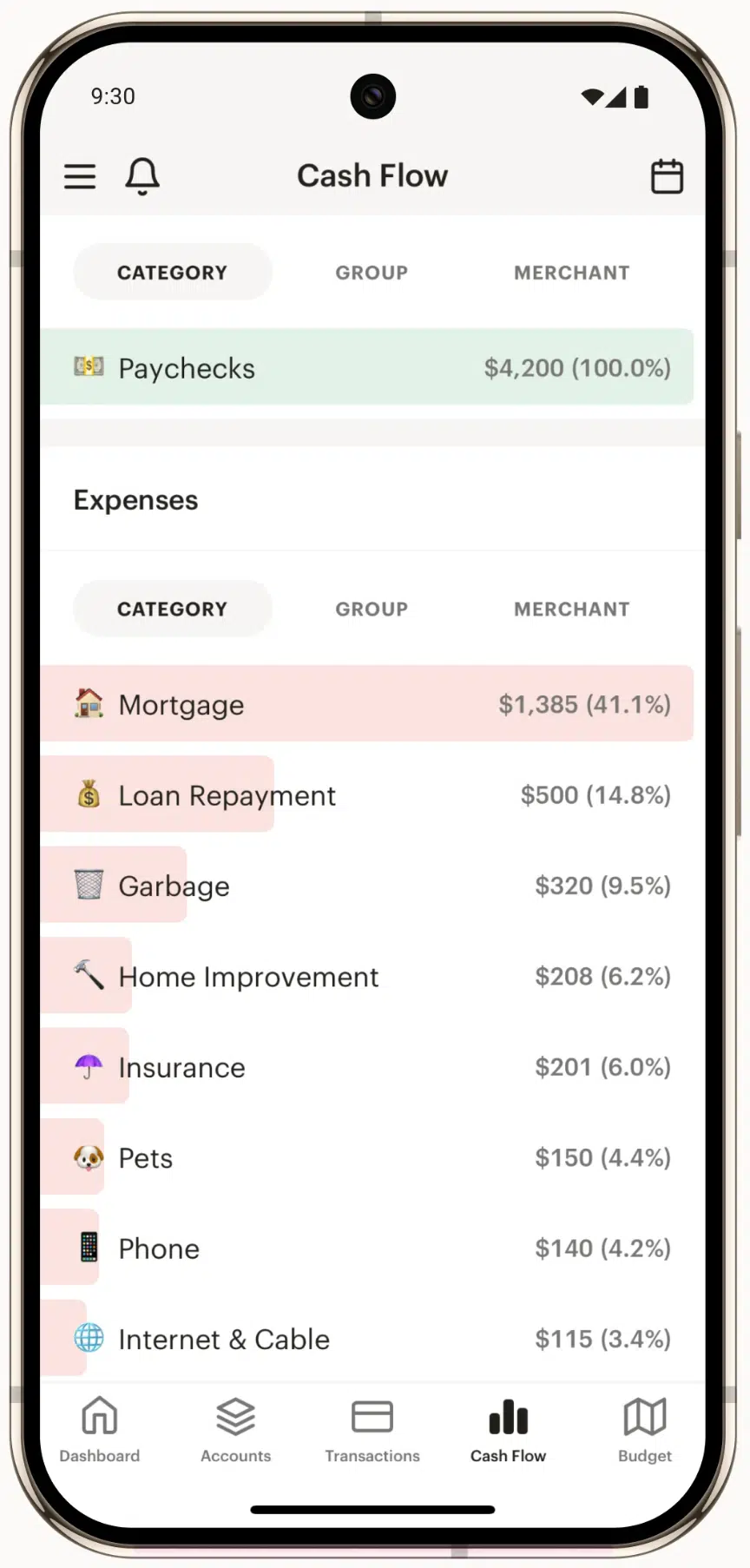
Unlike legacy desktop software, Quicken Simplifi was built from the ground up to be a mobile-first experience. It focuses on automation, using algorithms to analyze your historical income and spending to project a realistic "spending plan."
Key Features:
Simplifi shines in its calendar-based view of upcoming bills. If you live paycheck-to-paycheck or need to ensure your cash flow remains positive throughout the month, the calendar view is a lifesaver. It is lightweight, fast, and removes the clutter often found in more complex financial suites.
- Best For: Smartphone users and those who value simplicity.
- Pricing: $6.99/month (billed annually).
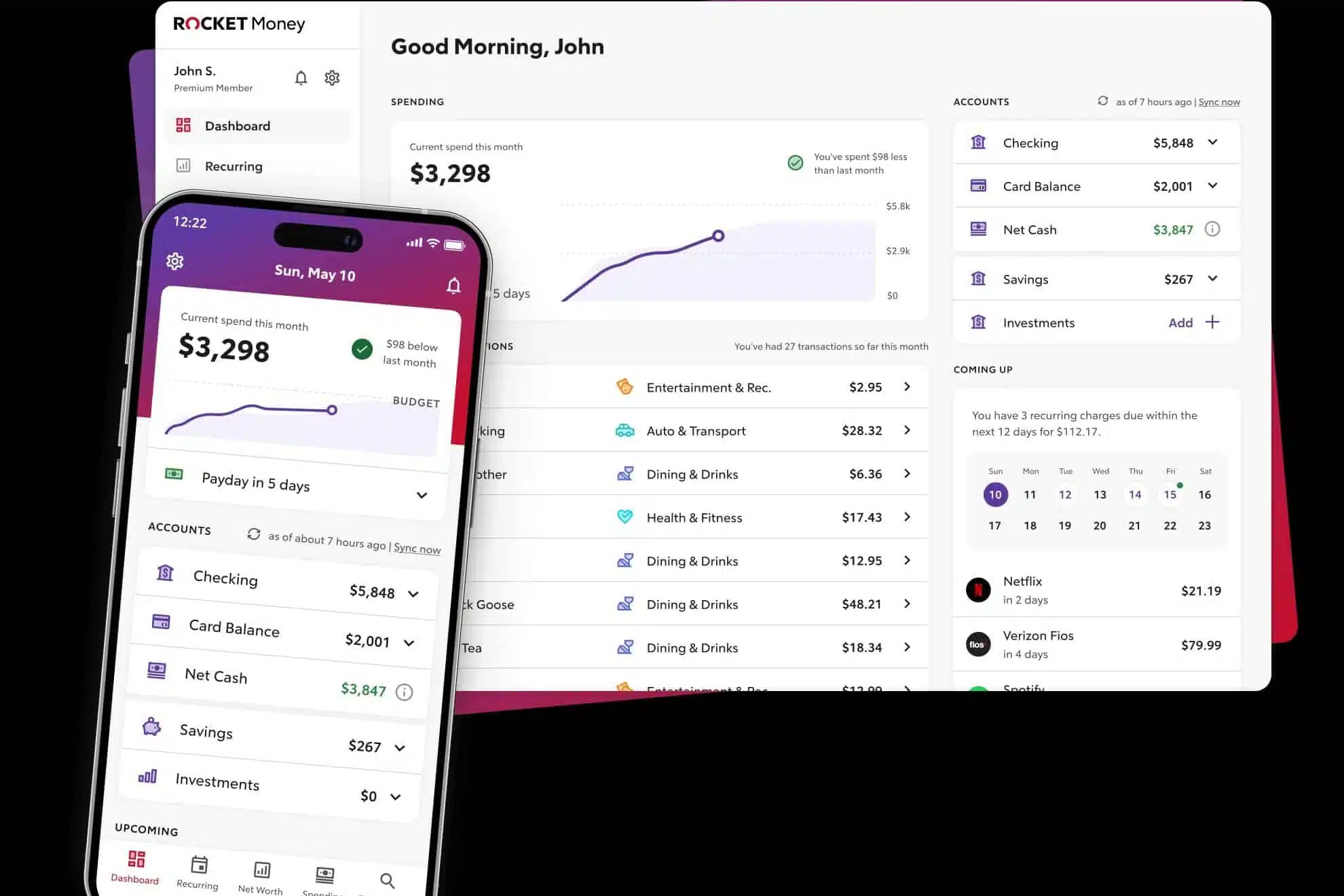
3. Rocket Money: Budgeting Made Effortless
For many, the most useful feature of Mint was its ability to categorize transactions and alert users to recurring subscriptions. Rocket Money excels here. It is arguably the most user-friendly interface on this list, making it an ideal "plug-and-play" replacement for those who don’t want to spend hours configuring rules.
The Value Proposition:
Rocket Money offers a "pay-what-you-want" model for its premium features. It handles the basics of budgeting exceptionally well and provides automated subscription cancellation services, which can pay for the app’s cost in a single month.

- Best For: Budgeting and subscription management.
- Pricing: Free basic version; $7–$14/month for premium.
4. Empower (formerly Personal Capital): The Investor’s Choice
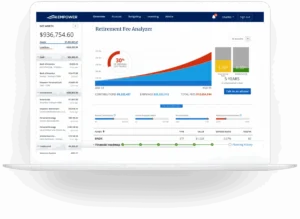
If your financial goal is primarily wealth management rather than daily expense tracking, Empower is the undisputed leader. I have used Empower for over a decade, and it remains the best tool for visualizing investment asset allocation and retirement readiness.
The Edge:
Empower goes beyond simple budgeting to offer "Financial Checkup" tools, retirement fee analyzers, and investment portfolio snapshots. It is a powerful, professional-grade tool that happens to be free for the core dashboard.
- Best For: Long-term wealth building and investment tracking.
- Pricing: Free.
5. Origin: The Comprehensive Financial Ecosystem
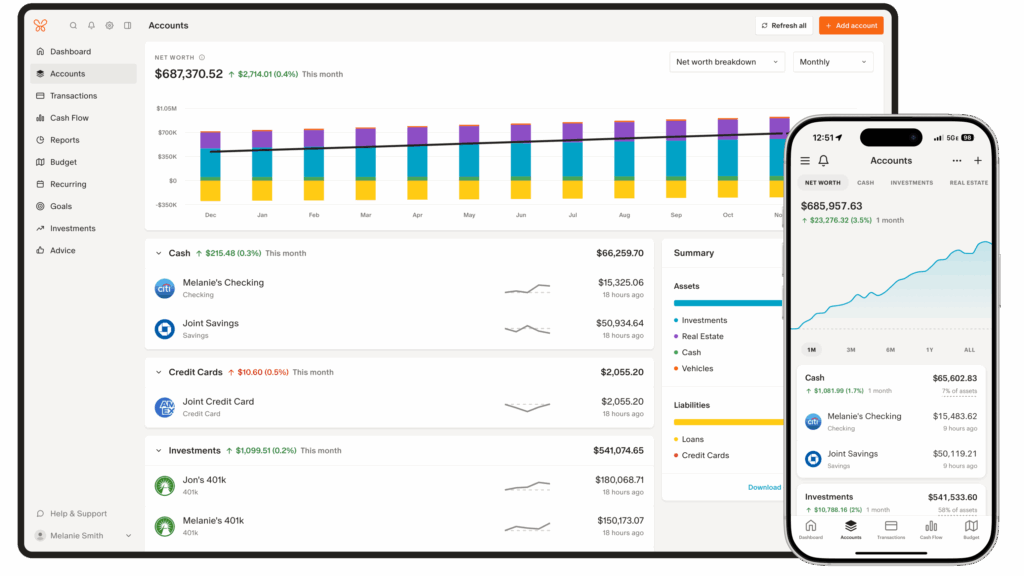
Origin is a sophisticated, AI-driven platform that bridges the gap between budgeting and financial planning. It isn’t just an app; it is a financial coach.
Advanced Capabilities:
Origin provides tax software integration, AI-driven financial insights, and even access to Certified Financial Planners (CFPs). It is the most feature-rich option on this list, designed for users who want a holistic, all-in-one financial dashboard.
- Best For: Users wanting an all-in-one financial planning solution.
- Pricing: $99/year.
6. Tiller Money: For the Spreadsheet Purists
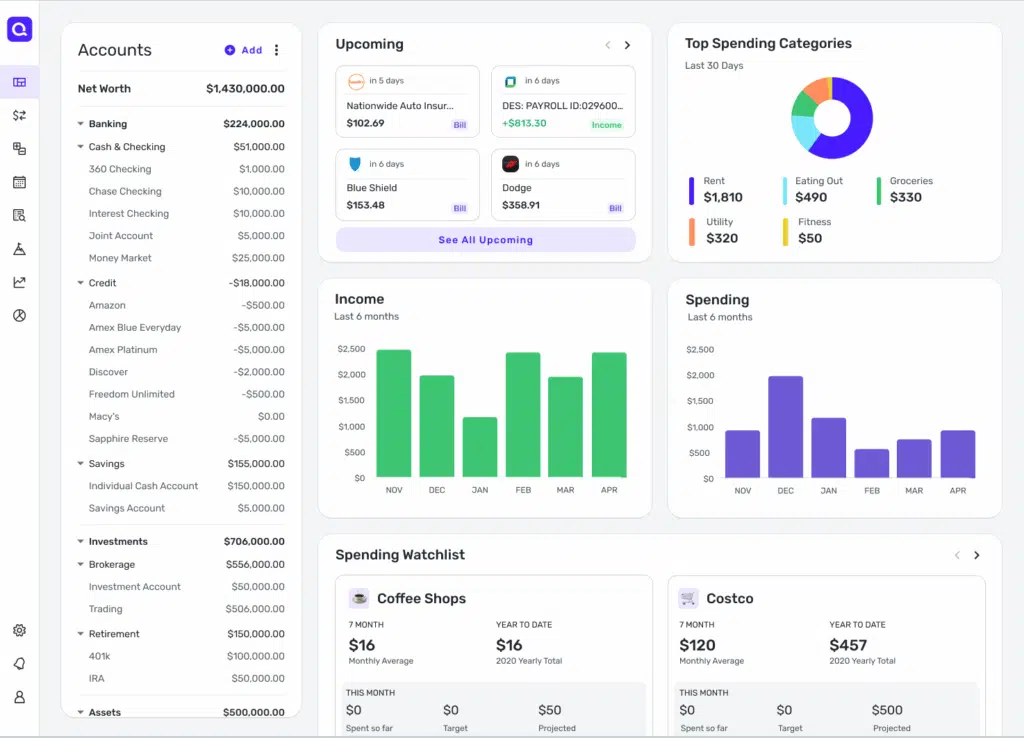
If you prefer complete control over your data, Tiller is the answer. Tiller automatically imports your financial transactions directly into Google Sheets or Microsoft Excel.
Why it works:
There is no "black box" algorithm here. You are the architect of your own reports. While it has a steeper learning curve than a standard app, the level of customization is unparalleled. Once you understand the template system, you can build dashboards that no retail app could ever replicate.
- Best For: Spreadsheet enthusiasts.
- Pricing: $99/year.
7. YNAB (You Need A Budget): The Zero-Based Budgeting Powerhouse
YNAB is legendary in the personal finance community for its "Give Every Dollar a Job" philosophy. It requires a mindset shift toward zero-based budgeting, where every dollar earned is allocated to a specific category before the month begins.
The Trade-off:
While powerful, YNAB is strictly a budgeting tool. It lacks the robust investment and net worth tracking features found in Monarch or Empower. It is also one of the more expensive options, making it a dedicated choice for those serious about changing their spending habits.
- Best For: Debt reduction and strict budget adherence.
- Pricing: $109/year.
Methodology and Considerations
My evaluation of these platforms is based on years of active usage, testing across multiple devices, and a comparative analysis of over 25 different financial tools. When choosing your next app, consider these three criteria:
- Data Security: Does the app use bank-level encryption (e.g., Plaid or MX)?
- Automation: How much manual work is required to categorize transactions?
- Cross-Platform Accessibility: Can you access your data on both desktop and mobile?
Final Implications: Which Path Should You Choose?
The closure of Mint marks a turning point in personal finance. We have moved away from the "free for everyone" era into a subscription-based model where companies compete based on user experience and specialized tools.
If you are struggling to decide, ask yourself what you miss most about Mint. If it was the investment tracking, go with Empower. If it was the collaborative budgeting, choose Monarch Money. If you want the absolute simplest path, try Rocket Money.
Regardless of the tool you choose, the most important factor is consistency. A financial tool is only as good as your commitment to using it. By selecting a platform that aligns with your specific financial goals, you can turn the end of Mint into the beginning of a more organized, prosperous financial future.