Beyond the Battlefield: Why Protecting Nature Remains an Economic Imperative Amid Global Conflict
Main Facts
As geopolitical tensions and devastating conflicts in Ukraine and the Middle East consume the attention and fiscal resources of governments worldwide, a dangerous narrative is taking hold: that the preservation of nature is a luxury we cannot currently afford. In times of war, inflation, and fiscal tightening, environmental conservation is frequently dismissed as a non-urgent goal to be revisited only when global stability returns.
According to leading environmental economists and international policy experts, embracing this view is a catastrophic mistake. Nature is not an isolated domain of conservationists and wildlife enthusiasts; it is the fundamental bedrock of the global economy. Over half of the world’s Gross Domestic Product (GDP)—amounting to trillions of dollars—is directly dependent on nature and the ecosystem services it provides.
With vital international biodiversity and climate change summits approaching, policymakers face a stark reality check. Far from competing with economic growth and national security, investing in ecological preservation is a prerequisite for both. According to recent macroeconomic projections, successfully meeting internationally agreed-upon biodiversity targets—specifically the global "30×30" initiative—could add up to $450 billion to annual global GDP by 2050 while generating millions of sustainable jobs.
Chronology of Crisis and Commitment
The Gathering Storm: A Timeline of Convergence
The intersection of geopolitical conflict and ecological vulnerability has created a compounding series of crises over recent years, underscoring the urgent need to decouple environmental inaction from political complacency.
- December 2022 (The Kunming-Montreal Framework): At the UN Biodiversity Conference (COP15), world leaders adopt the landmark Kunming-Montreal Global Biodiversity Framework. The centerpiece of this agreement is the "30×30" target: a global commitment to protect and conserve at least 30% of the world’s land and ocean by 2030.
- The 2024–2025 Fiscal Realignment: Spurred by protracted conflicts in Ukraine and the Middle East, major global powers pivot toward aggressive militarization, sharply increasing defense budgets and shifting political focus toward immediate security and short-term economic growth. Environmental financing stalls, lagging far behind the commitments made in Montreal.
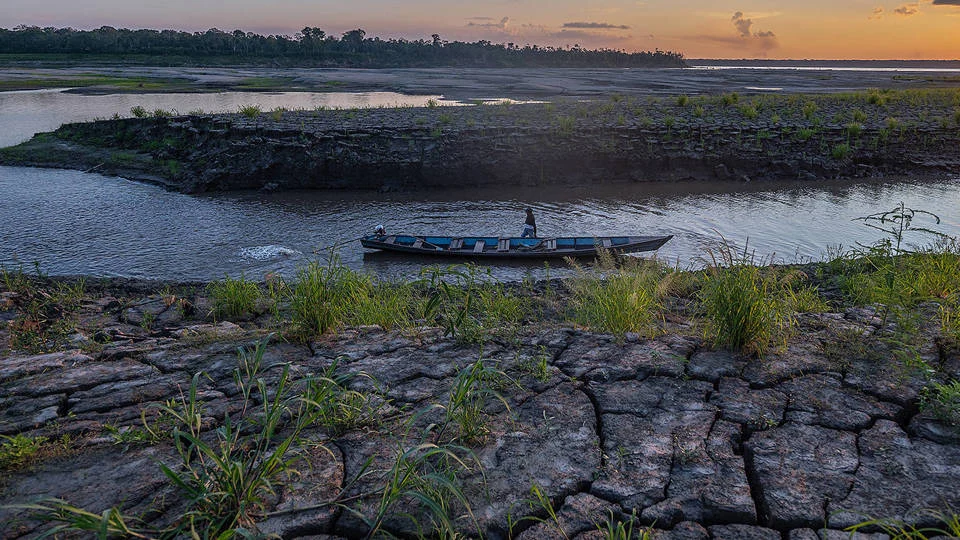
- Summer 2026 (The Double Blow): A sweltering and prolonged drought sweeps across Europe, inflicting between $2 billion and $3 billion in direct crop losses. This agricultural shock compounds an already volatile market: the war-induced disruption and closure of the Strait of Hormuz causes global fertilizer prices to surge by a staggering 71%.
- September 2026: Driven by the dual pressures of geopolitical supply chain shocks and extreme weather events linked to ecological degradation, global food prices climb to their highest levels since 2022, according to reports from the Food and Agriculture Organization (FAO).
- May 2026 – Present (The Implementation Gap): While 116 countries submit formal commitments to protect up to 27% of land and inland water areas, data reveals a glaring disparity between diplomatic promises and on-the-ground reality. As the world enters the final four-year stretch toward the 2030 deadline, maritime conservation lags dangerously behind terrestrial progress, prompting renewed calls for immediate funding and management reform.
Supporting Data and Economic Metrics
The argument for prioritizing nature conservation is anchored not merely in moral imperatives, but in hard, quantifiable economics. The financial toll of environmental collapse vastly outweighs the costs of preventative conservation.
- $9.5 Trillion: The size of the global food industry, which is entirely underpinned by healthy, nutrient-rich soils.
- 1.5 Billion: The number of people worldwide whose livelihoods depend directly on forests, which regulate rainfall, prevent erosion, and maintain local water cycles.
- $2.7 Trillion: The estimated annual cost to the global economy if critical ecosystems undergo a partial or total collapse, according to World Bank projections.
- $2–$3 Billion: The direct agricultural losses suffered in Europe alone during the severe summer droughts, illustrating how quickly climate shocks translate into macroeconomic damage.
- 71%: The surge in global fertilizer prices caused by the closure of the Strait of Hormuz amid Middle Eastern conflict, which severely damaged farming yields worldwide.
- 20% vs. 10%: Current progress toward the 30×30 target. While 20% of global land and inland waters are designated as protected or conserved, only 10% of the ocean is formally protected.
- 3.5%: The fraction of the global ocean that the Ocean Protection Gap Report assesses as effectively protected, revealing that harmful industrial activities continue unchecked in many supposedly restricted maritime zones.
- $100–$180 Billion: The estimated annual funding required to successfully deliver the 30×30 framework, a massive jump from current spending levels of roughly $24 billion per year.
- $450 Billion & 4–7 Million Jobs: The projected boost to annual global GDP by 2050 and the number of new jobs created if governments fully fund and implement the 30×30 targets.
Official Responses and Policy Perspectives
As global leaders prepare for upcoming UN biodiversity and climate forums, international organizations, scientific bodies, and policy analysts are sounding the alarm over government complacency.
Environmental scientists and economic analysts point out that nature-related crises operate on their own timeline, showing no regard for geopolitical distractions. When asked whether defense spending should supersede environmental investments, policy experts argue that this presents a false dichotomy. National security is inextricably linked to food and water security; a state facing systemic agricultural collapse and resource scarcity cannot maintain long-term stability, regardless of its military strength.
The Campaign for Nature and other leading conservation groups have released sobering assessments detailing the implementation gap. While diplomatic filings show that 116 nations have submitted plans to protect up to 27% of terrestrial areas by the 2030 deadline, analysts emphasize that pledges on paper are meaningless without execution. Many nations have failed to provide the necessary spatial mapping, cost analysis, and dedicated financing required to turn these areas into functioning, legally secure sanctuaries.
Furthermore, international maritime organizations note that progress in ocean conservation remains severely neglected. Unlike terrestrial conservation—which is inching closer to the 2030 trajectory through existing commitments—marine protection is severely underfunded and plagued by poor enforcement. Without robust, long-term funding arrangements that can survive shifting political landscapes and economic downturns, marine reserves will remain "paper parks"—protected in theory, but vulnerable to overfishing, industrial pollution, and ecological degradation in practice.
Implications for the Global Economy and Future Security
The convergence of war, fiscal tightening, and ecological breakdown presents a defining test for 21st-century governance. If governments continue to treat environmental protection as a discretionary budget item—something to be funded only when budgets are flush and the world is at peace—the consequences will be irreversible.
1. Food and Water Insecurity as a Catalyst for Conflict
Ecological degradation directly undermines food and water systems. When soils lose their integrity, rivers fail to regulate floodwaters, and forests can no longer stabilize local climates, agricultural yields plummet. When these environmental stressors intersect with geopolitical conflicts—such as trade disruptions in the Middle East or the devastation of grain exports in Ukraine—the result is runaway inflation, famine, and social unrest. Investing in nature is, therefore, a core component of conflict prevention and geopolitical resilience.
2. The Shift from Pledges to Implementation
The next four years will determine whether the 30×30 framework succeeds or becomes another missed global target. Moving forward, policymakers must transition from rhetoric to rigorous implementation. This requires scaling up annual biodiversity financing from its current baseline of $24 billion to the required $100–$180 billion threshold. Crucially, this capital must be viewed not as a government subsidy or charitable donation, but as a high-yield investment that secures trillions of dollars in economic value and millions of jobs.
3. Redefining Fiscal Priorities
In an era defined by overlapping crises, governments are understandably pressured to prioritize immediate threats like defense and short-term economic stabilization. However, financial prudence demands a long-term horizon. Failing to invest in natural infrastructure guarantees vastly higher emergency relief costs down the line, as societies are forced to cope with recurring climate disasters, collapsing fisheries, and agricultural failures.
Ultimately, nature cannot be placed on the back burner. The systems that clean our air, pollinate our crops, regulate our climate, and sustain our economies are the ultimate foundation of human survival. Protecting the natural world is not merely about saving bees, forests, and coral reefs—it is a fundamental investment in our own collective future.