The Battle for the Fed: Trump’s "Committee of Inquiry" and the Constitutional Crisis Over Central Bank Independence
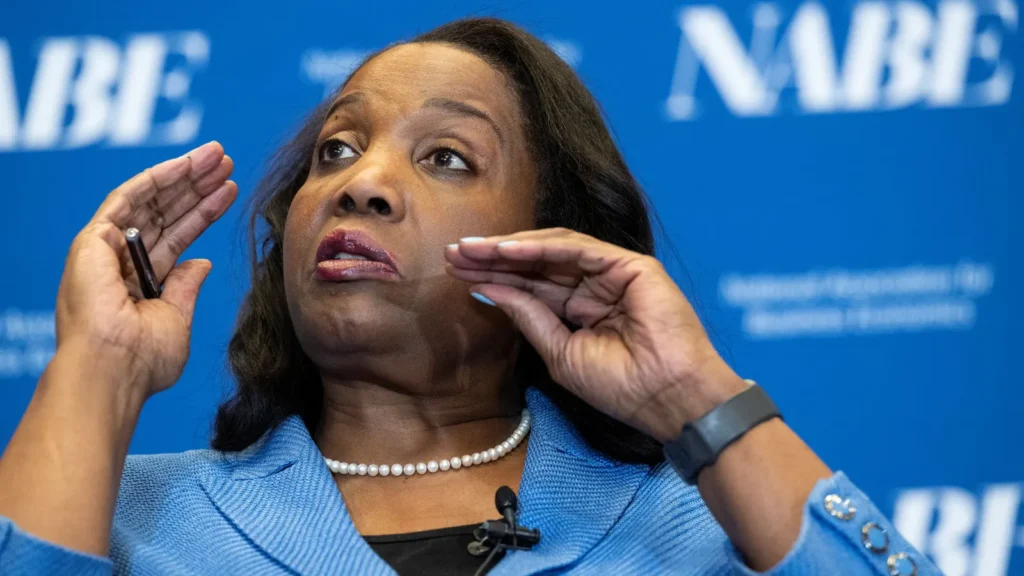
In a move that marks a definitive escalation in the ongoing friction between the White House and the Federal Reserve, President Donald Trump has officially established a three-person “committee of inquiry” to investigate allegations of mortgage fraud against Federal Reserve Governor Lisa Cook. The announcement, released this past Friday, represents a calculated attempt by the administration to circumvent previous judicial roadblocks and solidify executive authority over the nation’s monetary policy apparatus.
The development signals that the intense political climate of 2025 has carried over into 2026, with the White House continuing its aggressive push to reshape the composition of the Federal Reserve Board. By framing the inquiry as an administrative necessity to ensure the "faithful execution of the law," the President has signaled his intent to bypass the typical protections afforded to Fed governors, effectively challenging the long-standing norms of central bank independence.
A Chronology of Conflict: From Mortgage Allegations to the Supreme Court
The origins of this standoff trace back to August 2025, when the White House first signaled its intent to terminate Governor Cook’s tenure. The administration alleged that Cook had committed mortgage fraud, a claim that triggered a protracted legal battle. When the President initially moved to remove her, Cook filed suit, arguing that the attempt violated the legal protections and due process requirements inherent in her appointment.
The case ascended rapidly through the district and appellate levels, culminating in a pivotal Supreme Court ruling in June 2026. In a 5-4 decision, the Court sided with Governor Cook, ruling that the administration had failed to provide sufficient due process before attempting a termination. Chief Justice John Roberts, writing for the majority, emphasized that a government official in such a position is entitled to notice, an explanation of the evidence, and a meaningful opportunity to respond to the charges.
"At minimum, Cook was entitled to some explanation of the evidence at issue, some avenue for a response, and a deadline by which a response would be due," Roberts wrote. "Only after Cook has had the opportunity to respond to the charges made against her may a final decision be made."
Rather than backing down, the White House has interpreted the Court’s ruling as a procedural map rather than a stop sign. The current "committee of inquiry" is, in effect, the administration’s answer to the Chief Justice’s mandate. By establishing a formal, albeit internal, hearing process, the White House is attempting to satisfy the judicial requirements for "due process" while maintaining its singular objective: the removal of a political appointee it deems unfavorable.
The Committee and the Precedent of 1912
The committee structure appears to draw direct inspiration from a historical precedent cited in the Supreme Court’s June ruling. In 1912, President William Howard Taft convened a similar "committee of inquiry" to determine if he possessed the constitutional authority to fire members of the Board of United States General Appraisers.
The current Trump-appointed committee is comprised of three high-ranking administration loyalists: Kevin Hassett, Director of the National Economic Council; Keith Sonderling, Labor Secretary and acting head of the Office of Government Ethics; and Andrea Lucas, Chair of the Equal Employment Opportunity Commission.
The committee’s mandate is to review the evidence and allegations against Governor Cook during a closed-door hearing scheduled for November 5 at the White House. While Cook is permitted to bring legal counsel and submit a written statement, the process remains strictly under the administration’s control. The committee will produce a transcript, but the final determination of "cause" for removal will rest with the President.
Supporting Context: The Renovation Scandal and DOJ Skepticism
The push against Governor Cook is unfolding against a backdrop of broader administrative pressure on the Federal Reserve. Just one week prior to the announcement of the committee, the Fed’s Office of the Inspector General (OIG) concluded an investigation into a $2.5 billion renovation project at the central bank. While the report found significant evidence of mismanagement and bureaucratic inefficiency, it notably stopped short of alleging criminal activity.
Following this, Attorney General Todd Blanche announced that the Justice Department would not reopen a criminal probe into former Fed Chair Jerome Powell regarding the same renovation expenditures. These developments appear to have frustrated the White House, which had hoped that the renovation controversy would provide the legal leverage necessary to force a leadership change at the top of the Fed.
With the criminal route effectively closed, the administration has pivoted toward administrative and ethics-based inquiries, shifting its focus from the former Chair to the individual governors on the Board.
Official Responses: A Clash of Constitutional Interpretations
The response from Governor Cook’s legal team, led by high-profile attorneys Abbe Lowell and Norm Eisen, has been one of profound skepticism. In a formal statement, they expressed "grave doubts" regarding the legitimacy of the committee, labeling it a potential "box-checking exercise" rather than a genuine pursuit of justice.
"If the hearing is anything close to objective, the conclusion will be that Governor Cook did not commit mortgage fraud, leaving no cause to remove her," the attorneys stated. "Governor Cook welcomes the opportunity to present the facts so she can clear her name and demonstrate there is no legal basis to fire her."
On Capitol Hill, the reaction has been polarized along party lines. Senate Democrats have been vocal in their condemnation, characterizing the inquiry as an assault on institutional norms. Senator Elizabeth Warren (D-MA) described the committee as an "illegitimate show trial," arguing that the President’s focus on the Fed is a diversion from broader economic and geopolitical challenges. Senate Majority Leader Chuck Schumer echoed this sentiment on social media, asserting that the inquiry is a pretext for a power grab that could trigger "economic chaos for American families."
Conversely, supporters of the President argue that the executive branch has been too deferential to the "unaccountable" bureaucracy of the Federal Reserve. From this perspective, the President is merely fulfilling his duty to ensure that the individuals managing the nation’s currency are held to the same ethical standards as any other federal employee.
Implications: The 2026 Midterms and the Future of Monetary Policy
The timing of the hearing—two days after the 2026 midterm elections—is widely viewed as a signal of confidence from the White House. Conventional political wisdom suggests that a controversial maneuver like this might be delayed until after an election to avoid potential voter backlash. By scheduling it immediately following the vote, the administration suggests it expects to maintain its political momentum regardless of the congressional outcomes.
Furthermore, the committee’s recommendation to the President is slated for "as soon as practicable" after November 10. This timeline suggests that the administration intends to resolve the Cook matter quickly, potentially clearing the way for new appointments before the end of the year.
The potential replacements for Cook, or for other positions on the board, remain subjects of intense speculation. The inclusion of Kevin Hassett on the committee—a figure who was previously passed over for the Fed Chair position—raises questions about whether the committee is also serving as a vetting ground for future leadership roles. Additionally, the recent hiring of economist Judy Shelton by the Treasury Department further suggests that the administration is positioning "intellectually diverse" candidates who hold views on monetary policy more aligned with the President’s preferences.
Conclusion: A New Era of Executive Oversight
Whether or not the committee finds sufficient cause to remove Governor Cook, the mere existence of this inquiry has already altered the landscape of American central banking. The traditional wall between the White House and the Federal Reserve, designed to insulate monetary policy from the short-term pressures of electoral politics, is under unprecedented strain.
As the hearing date approaches, the eyes of the financial world will be fixed on the White House. The outcome of this inquiry will not only determine the future of Governor Cook’s career but will also serve as a landmark case in the ongoing struggle over the extent of executive power in the 21st century. If the administration succeeds in its mission to remove a governor through this committee process, it could establish a precedent that fundamentally reshapes the Federal Reserve, transforming it from an independent institution into one more directly accountable to the political dictates of the Oval Office.