The Architect of the Digital Age: Vint Cerf Departs Google as the Internet Enters the AI Era
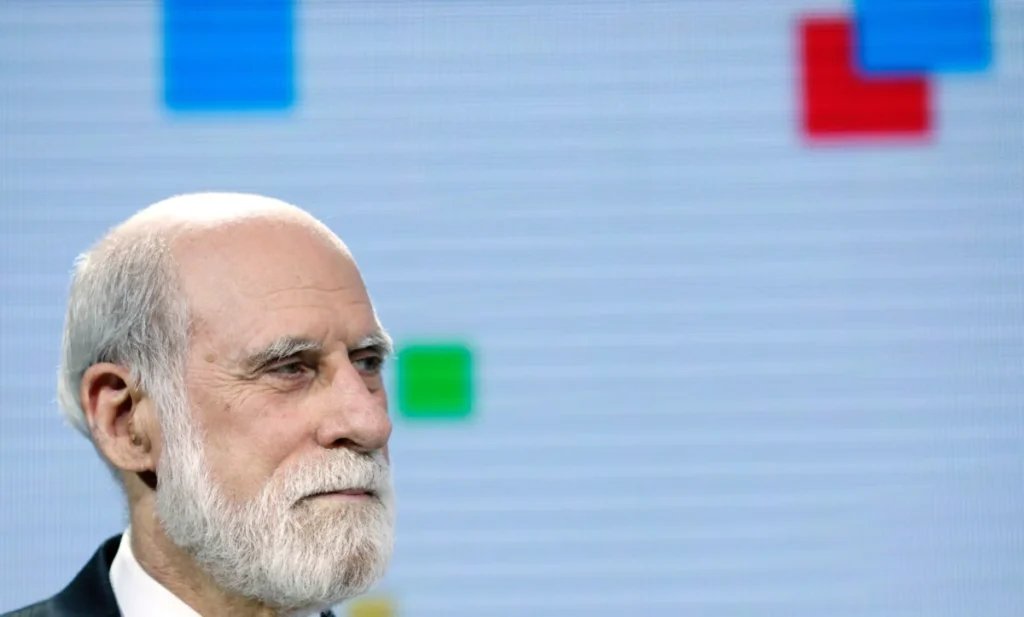
Next week, a chapter of technological history will quietly close. Vinton “Vint” Cerf, the man widely revered as one of the “fathers of the internet,” will step down from his long-standing role as Google’s chief internet evangelist. His departure marks the end of a two-decade tenure at the search giant, but more significantly, it punctuates a career that effectively built the foundation of modern human communication.
Cerf’s exit was announced during the recent Open Frontier conference, hosted by the Laude Institute. The news was shared by his longtime peer, UC Berkeley professor and RISC processor pioneer Dave Patterson, who took a moment to honor the 83-year-old luminary. "Vint has been at Google for more than 20 years, and he is retiring a week from today," Patterson told the assembly. "I think we ought to give him a round of applause for a relatively good career."
The room erupted in cheers, a testament to the profound respect Cerf commands within the computer science community. Google has yet to issue a formal statement regarding the transition, but the gravity of the moment was felt by all in attendance—a transition from the era of the foundational internet to an uncertain, AI-driven future.
The Architect of Global Connectivity: A Chronology
To understand the weight of Cerf’s departure, one must look back at the radical architecture he helped forge in the 1970s. Alongside his collaborator Robert Kahn, Cerf developed the Transmission Control Protocol and the Internet Protocol (TCP/IP).
These protocols acted as the universal language for computers. Before TCP/IP, networks were siloed, proprietary, and incapable of "talking" to one another. Cerf’s vision allowed for a decentralized, robust, and scalable network of networks. His contributions have been recognized with the industry’s highest honors, including the prestigious Turing Award—often called the Nobel Prize of computer science—and the Presidential Medal of Freedom.
Key Milestones in a Career of Firsts:
- The 1970s (The Foundation): While working at DARPA, Cerf and Kahn design the architecture that would become the backbone of the internet.
- The 1980s (The Expansion): Cerf works on the MCI Mail project, the first commercial email service connected to the internet, proving that the network could be more than just a government or academic tool.
- The 1990s (The Global Stage): Cerf serves as the founding president of the Internet Society (ISOC), steering the transition of the internet into the public and commercial spheres.
- 2005 (The Google Era): Cerf joins Google as Vice President and Chief Internet Evangelist, tasked with looking over the horizon for the next big shifts in global networking.
- 2025 (The Transition): After 20 years of evangelizing the open, connected world, Cerf steps back from his corporate duties.
Open Source and the Future of AI Infrastructure
Cerf’s final appearance at the Open Frontier conference was not merely a retrospective; it was a masterclass on the future of software. He appeared on a panel with other titans of the industry, including François Chollet (creator of Keras), John Ousterhout (creator of Tcl), and Matei Zaharia (co-founder of Databricks).
The discussion centered on the "durability" of open-source systems. As the tech industry pivots aggressively toward artificial intelligence, a central concern has emerged: the centralization of powerful, closed-source models. Unlike the decentralized internet that Cerf built, modern AI is often locked within the walls of a few massive, well-resourced labs.
Cerf, however, sees this as a temporary phase. He argues that the emergence of "agentic" AI—autonomous software capable of executing complex tasks and coordinating with other software—will inevitably force a shift back toward the open standards he championed decades ago.
"The agentic model of AI, with multiple agents from multiple sources interacting with each other, is going to force composability," Cerf noted. "It will create a requirement for interoperability and standardization."
The "Telephone Game" and the Need for Protocol
One of the most compelling insights Cerf offered at the conference was his critique of natural language as a primary interface for machine-to-machine communication. While many in the industry believe that Large Language Models (LLMs) will eventually communicate via human-like natural language, Cerf remains skeptical.
He invoked the "telephone game"—the classic children’s game where a whispered message becomes hopelessly distorted by the time it reaches the end of a line.
"Imagine a bunch of agents talking to each other in natural language," Cerf warned. "That’s kind of terrifying."
Cerf believes that for AI agents to be truly useful, they require the same rigorous, formal protocols that the internet relies on today. "I don’t think English is going to be the best choice. There’s a flexibility in it, but there’s ambiguity, and I think precision for inter-agent interaction is going to be very, very important. An agent really needs to be sure the other agent understands what it is that they just agreed to do together."
His warning serves as a roadmap for the next generation of engineers. If the companies currently building AI models prioritize proprietary "black box" systems over standardized, interoperable protocols, they may find themselves in an environment that is brittle and prone to failure.
A Legacy of Style and Substance
Beyond the technical, the conference offered a rare, humanizing glimpse into the man who defined the digital age. In a lighthearted exchange, Dave Patterson recalled meeting a young Vint Cerf in the 1970s.
"He’s always been the best-dressed computer scientist I’ve ever met," Patterson remarked. "My memory of Vint is that he came as a grad student with a shirt and tie in the 70s."
Cerf, known throughout his career for his penchant for three-piece suits, admitted that his style was a deliberate, albeit gentle, act of rebellion. "I even had a vest, and for some reason I always wanted to stick out," Cerf said. "Instead of having long hair and something in my nose, I thought just dressing differently was one way to do it."
That desire to "stick out"—to be the professional outlier in a field often characterized by casual defiance—has been a hallmark of his career. It reflected his broader philosophy: while the internet grew from a counter-cultural ethos, it required institutional rigor, diplomacy, and the steady hand of someone who understood how to navigate both the halls of government and the chaos of the startup world.
Implications: The End of an Era?
As Vint Cerf retires from Google, the industry faces a crossroads. The internet, which he spent the last two decades "evangelizing," has largely achieved its primary goal: universal connectivity. But that connectivity is now facing a new set of challenges, from the erosion of privacy to the massive concentration of power in AI labs.
If Cerf is correct, the "agentic economy" will be the next great battleground for standards. The companies that successfully define the protocols for how AI agents communicate will exert an influence on the digital economy that could rival the influence of the companies that built the early internet protocols.
For those in the tech sector, the lesson of the Open Frontier conference is clear: durability is not an accident. It is a product of open, standardized design. As Cerf steps into retirement, his legacy is not just a collection of protocols or a history of awards, but a challenge to the next generation of builders: to ensure that the next phase of the digital revolution is as open, interoperable, and robust as the one he helped create.
Vinton Cerf leaves Google not just as a pioneer who finished his work, but as a sage who has identified the next great obstacle to human progress. Whether the industry listens to his warnings about the "telephone game" of AI remains to be seen, but the history of the internet suggests that when Cerf speaks about the necessity of standards, it is usually wise to pay attention.