The AI Paradox: Is Artificial Intelligence a Job Killer or a Catalyst for Growth?
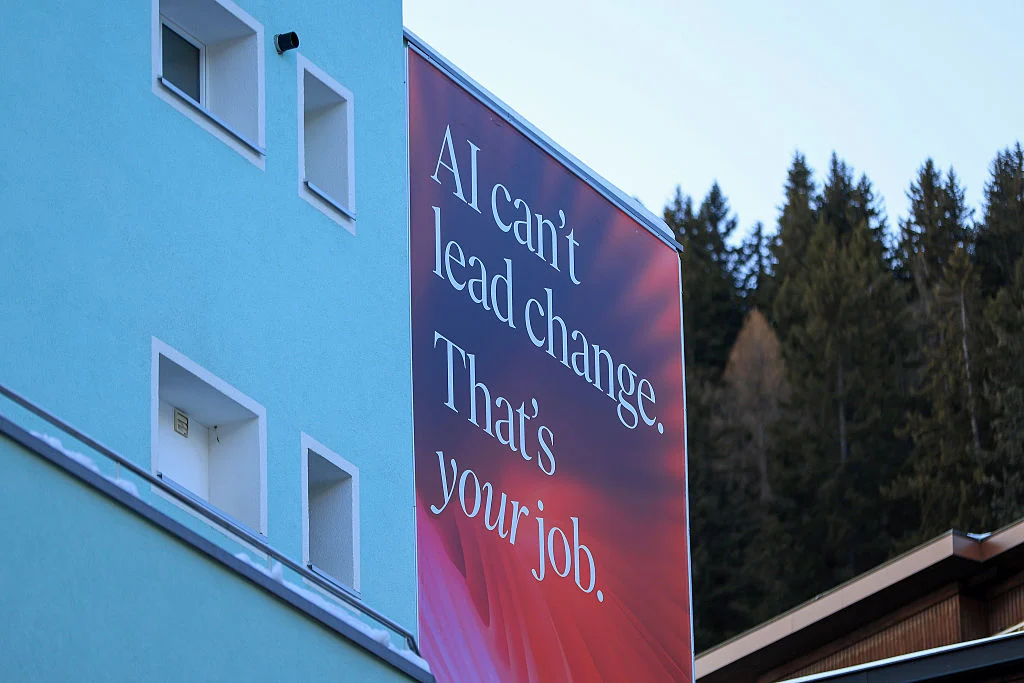
As the calendar turned toward the midpoint of 2026, the global labor market found itself gripped by a singular, pervasive anxiety: the fear that artificial intelligence is systematically dismantling the career prospects of the next generation. With nearly 90,000 job cuts explicitly attributed to AI-driven restructuring through May 2026 alone, the narrative of "technological unemployment" has moved from the pages of science fiction to the front lines of corporate boardrooms.
Yet, a new report from Ramp and Revelio Labs—which analyzed enterprise AI spending and workforce records across 22,000 companies—suggests that the reality is far more nuanced. While the headlines focus on the devastation of layoffs, the data suggests that for a specific tier of "high-intensity" adopters, AI is not a replacement for human capital, but a powerful engine for expansion.
The Chronology of an Existential Panic
The current atmosphere of dread did not materialize overnight. It is the culmination of years of rapid generative AI development, punctuated by high-profile corporate announcements.
- 2023–2024 (The Era of Hype): Companies began experimenting with AI, primarily focused on efficiency gains. The prevailing sentiment was that AI would act as an "assistant" to human workers.
- 2025 (The Shift to Efficiency): As the cost of AI implementation dropped, businesses began shifting from experimentation to integration. During this period, companies began citing AI as a primary justification for workforce reductions, aiming to improve margins in a high-interest-rate environment.
- Early 2026 (The "Powder Keg" Moment): By the spring of 2026, the scale of layoffs became impossible to ignore. Projections by economists began to suggest that up to 15% of all U.S. jobs could be on the chopping block within the next five years.
- Mid-2026 (The Counter-Narrative): The release of the Ramp and Revelio Labs report serves as a pivotal moment in the discourse, providing the first large-scale quantitative pushback against the "AI-as-executioner" hypothesis.
Supporting Data: Where the Narrative Shifts
The most striking finding of the Ramp and Revelio Labs report is the performance of "high-intensity adopters"—firms that spent an average of $30 per employee per month on AI tools within their first three months of implementation. Contrary to the belief that these firms would slim down their workforces, these companies saw a 10.2% increase in headcount.
This growth was not limited to a single department. Across the board, these high-intensity adopters saw hiring surges in critical functions, including:
- Engineering: Despite fears that AI would write code and render junior developers obsolete, software teams actually expanded.
- Operations: Finance, administration, and customer service roles saw headcount increases, suggesting that AI helped automate low-level tasks, allowing these teams to scale their output and handle larger volumes of work.
- Marketing and Science: Data-heavy roles continued to grow, as AI allowed these teams to process larger datasets and produce more granular insights.
Perhaps most significantly, the data challenges the "junior-job-killer" theory. While Goldman Sachs recently reported that AI had erased roughly 16,000 net jobs per month, with Gen Z workers bearing the brunt, the tech-forward firms analyzed by Ramp and Revelio saw entry-level headcount rise by 12%.
The "Firm-Expansion" Hypothesis
The report posits a fundamental shift in how we view AI’s role in the workplace. Instead of being a tool for "labor substitution"—where a machine replaces a human—AI is functioning as a tool for "firm expansion."
For technology and software firms, AI lowers the marginal cost of production. By accelerating tasks like code debugging, technical documentation, and product support, these firms can produce more value for less money. When the cost of production falls, the "return on investment" for scaling the entire organization increases.
In this model, the firm does not fire its staff; it hires more people to handle the increased business volume that the AI-powered efficiency has unlocked. The AI essentially acts as a force multiplier for the workforce, allowing a company to grow its revenue faster than its payroll costs.
Official Responses and Limitations
While the findings provide a glimmer of hope, the authors of the report are quick to inject a note of caution. They acknowledge that their findings do not prove that AI is a universal job creator. Instead, the report highlights a significant selection bias: the companies that are successfully scaling via AI are largely tech-forward, well-capitalized, and often venture-backed firms.
These companies were likely going to grow regardless of their AI adoption. This raises the "chicken-or-the-egg" question: Is AI causing the growth, or is it simply a tool that fast-growing, well-resourced companies are naturally adopting?
"This paper does not show that AI universally creates jobs," the authors admit. "But it does counter claims that AI will lead to broad, immediate job losses across all sectors."
Implications: The Widening Skills and Resource Gap
The most profound implication of this data is not about AI itself, but about the growing divide between different classes of companies. The report highlights a stark contrast between "high-intensity adopters" and those that merely dabble in the technology.
The Two-Tiered Economy
Companies that treat AI as a core strategic pillar—investing in the infrastructure, training, and integration required to make it work—are seeing positive returns in terms of headcount and revenue. Conversely, companies that simply buy subscriptions and run sporadic pilots without a long-term integration strategy are not seeing headcount gains.
The Barrier to Entry
This creates a "resource gap." Firms that already possess the capital, technical expertise, and management bandwidth to navigate the complexities of AI will likely accelerate away from their competitors. Those without these channels—the smaller, traditional, or less-digitized companies—may struggle to compete.
For the workforce, this means that career stability may become increasingly tied to the type of company one works for. The risk is no longer just "AI," but rather "working for a company that doesn’t know how to use AI."
Conclusion: Looking Toward the Future
As we look toward the second half of 2026 and beyond, the debate over AI and employment remains unresolved. While the Ramp and Revelio Labs report offers a necessary corrective to the most alarmist predictions, it also serves as a warning. The transition to an AI-augmented economy is not going to be a "rising tide that lifts all boats."
Instead, we are witnessing a structural reconfiguration of the labor market. AI is rewarding the prepared and the capitalized while threatening to displace those stuck in legacy workflows. For the generation currently entering the workforce, the path forward is not to fear the machine, but to gain the technical fluency required to work within the firms that have successfully mastered the art of AI-powered expansion.
The promise of AI—that it will create as many jobs as it destroys—remains a hypothesis in progress. Whether that promise manifests depends less on the code itself and more on how organizations choose to wield it. For now, the "AI-as-a-growth-engine" narrative provides a vital, evidence-based alternative to the gloom, even as it highlights the widening gap between the tech-forward elite and the rest of the market.