The AI Carbon Paradox: Big Tech’s Climate Goals Collide with Explosive Energy Demand
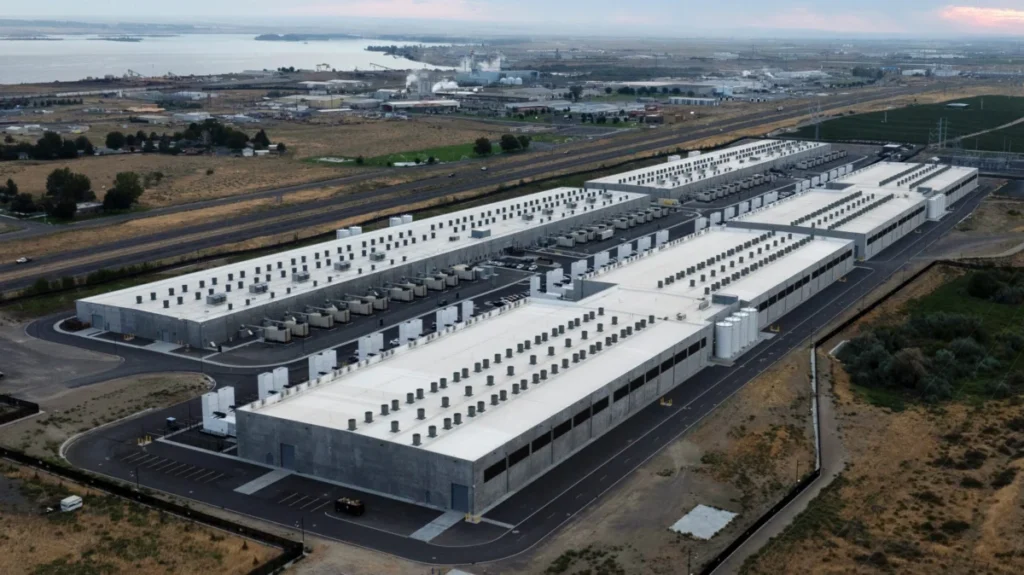
In the race to dominate the artificial intelligence landscape, the world’s largest technology companies are discovering a sobering reality: the infrastructure required to power the next generation of intelligence is fundamentally at odds with their ambitious environmental commitments. Newly released sustainability reports from 2025 reveal that Amazon.com Inc. and Alphabet Inc.’s Google have seen their greenhouse gas emissions spike, a trend that mirrors a broader, industry-wide struggle to reconcile the massive, non-negotiable energy requirements of generative AI with the urgent global necessity of decarbonization.
The 2025 Emissions Spike: A Sector-Wide Trend
The latest data paints a challenging picture for the hyperscalers. Amazon reported a 16% year-over-year increase in emissions, totaling approximately 81 million metric tons of carbon dioxide equivalent—a volume of greenhouse gases roughly equivalent to the annual output of 19 million gasoline-powered passenger vehicles. The company attributed this surge primarily to the massive scale of new data center construction and the heavy fuel consumption required to maintain its global logistics and delivery network.
Similarly, Google’s latest environmental report shows an 18% overall rise in its “ambition-based” emissions—a specific accounting metric that excludes certain parts of its complex supply chain. More concerningly, Google’s Scope 1 emissions, which cover direct emissions from its own operations (excluding purchased electricity), climbed 20% compared to 2024. The company explicitly linked this increase to the rapid expansion of its data center portfolio, necessitated by the insatiable demand for compute power to train and deploy large language models.
This is not an isolated phenomenon. Microsoft and Meta Platforms Inc., the other two pillars of the current AI boom, reported emissions increases of 23% and 64% respectively in their most recent filings. The data indicates that despite their public pledges toward net-zero, the tech sector is currently experiencing a period of intense carbon-intensive growth.
A Chronology of the Climate-AI Conflict
The current crisis is the culmination of several years of aggressive AI investment following the widespread public adoption of generative AI tools in late 2022.
- 2020–2022: The Efficiency Era: Tech giants focused on optimizing their existing infrastructure, often touting "carbon-neutral" status through the purchase of Renewable Energy Credits (RECs).
- 2023: The AI Pivot: The "Generative AI Gold Rush" began. Companies shifted capital expenditure away from general software toward massive data center build-outs equipped with power-hungry H100 and Blackwell-class GPUs.
- 2024: The First Signs of Strain: Sustainability reports began showing that the massive energy draw of training models was outpacing the speed of grid decarbonization.
- 2025: The Reality Check: As revealed in this week’s reporting, the industry’s growth has caused a measurable reversal in progress. Emissions metrics that had been trending downward or plateauing began to rise sharply, forcing a re-evaluation of net-zero timelines.
Supporting Data: The Anatomy of a Carbon Footprint
The struggle to manage emissions is divided into three distinct buckets, each presenting unique challenges for the industry.
The Electricity Conundrum (Scope 2)
Electricity consumption is the most visible hurdle. Google reported a staggering 37% increase in electricity use last year. While the company managed a slight reduction in its Scope 2 emissions—those associated with purchased electricity—through aggressive procurement of renewable energy, it is fighting a losing battle against the sheer volume of power needed. Amazon, meanwhile, saw its emissions from purchased electricity rise by 34%, highlighting the difficulty of finding enough "green" power to match the rapid, decentralized growth of its cloud operations.
The Embodied Carbon of Hardware (Scope 3)
The physical hardware powering AI—the chips, the servers, the concrete for cooling systems, and the steel for construction—represents a massive, often overlooked carbon liability. Google reported a 25% rise in Scope 3 (supply-chain) emissions, which it attributed directly to the carbon-intensive manufacturing processes required to build the modern AI factory. The "embodied carbon" of a data center is significant, and as companies rush to build more facilities, this baseline of emissions continues to climb.
Infrastructure Bottlenecks
The surge in demand is forcing tech companies to rely on whatever power is available on the local grid. In many regions, this means tapping into natural gas power plants. Industry observers point to companies like SpaceX, which has reportedly utilized gas turbines to run its AI data centers in Tennessee and Mississippi, as evidence that the "AI revolution" is incentivizing a reinvestment in fossil fuel infrastructure rather than a transition away from it.
Official Responses: "Stubborn on Vision, Flexible on Details"
The companies involved acknowledge the discrepancy between their targets and their current performance, though they frame it as a necessary growing pain of the AI transition.
"While the speed and scale of AI adoption is unique—and the change is happening faster and more broadly than anything else we’ve encountered in our lifetimes—the need to stay stubborn on our vision and flexible on the details is familiar territory," stated Kara Hurst, Amazon’s Chief Sustainability Officer.
Google’s report took a similarly pragmatic tone, noting that the path to net zero would not be a straight line. The company admitted that its current AI infrastructure build-out is “accelerating faster than the grid is decarbonizing,” suggesting that the responsibility for greening the grid lies as much with utility providers and government policy as it does with private enterprise.
Both companies remain officially committed to their long-term targets: Amazon is aiming for net zero by 2040, while Google maintains a more aggressive target of 2030.
Implications: The Industry at a Crossroads
The environmental impact of AI has become a central point of contention for investors and climate scientists alike.
The Activist Challenge
This spring, a wave of shareholder proposals targeted Amazon, Alphabet, and Meta, demanding transparency on how these firms plan to reconcile AI growth with climate goals. While none of the proposals garnered majority support, the effort signals a growing divide between corporate management and institutional investors who fear that climate-related risks could eventually hurt the companies’ long-term valuations.
The Scientific Perspective
Critics argue that the industry is failing a fundamental test of corporate responsibility. Sasha Luccioni, co-founder and chief scientific officer of the Sustainable AI Group, argues that the current trajectory is incompatible with the climate crisis. "We’re essentially in a climate crisis and we should not be having emissions growth at all, arguably, and yet the data centers are going in the opposite direction," Luccioni said.
The Grid of the Future
The long-term implication of this data is a potential shift in how Big Tech interacts with energy markets. To meet their goals, companies are moving beyond simple REC purchases and are now investing directly in nuclear power, battery storage, and advanced geothermal projects. However, these are multi-year, multi-billion-dollar endeavors.
For now, the "AI Paradox" remains: the technologies being pitched as tools to solve complex global problems—including climate modeling—are currently fueling a significant portion of the emissions that create those very problems. The industry stands at a crossroads where it must either fundamentally reinvent its energy sourcing or risk the reputation and regulatory consequences of failing its own environmental promises. As the hardware and construction cycle continues to accelerate through 2026, the world will be watching to see if the tech giants can turn the tide on these rising numbers.