250 Years of Gunfire: Reckoning with the American Mythos
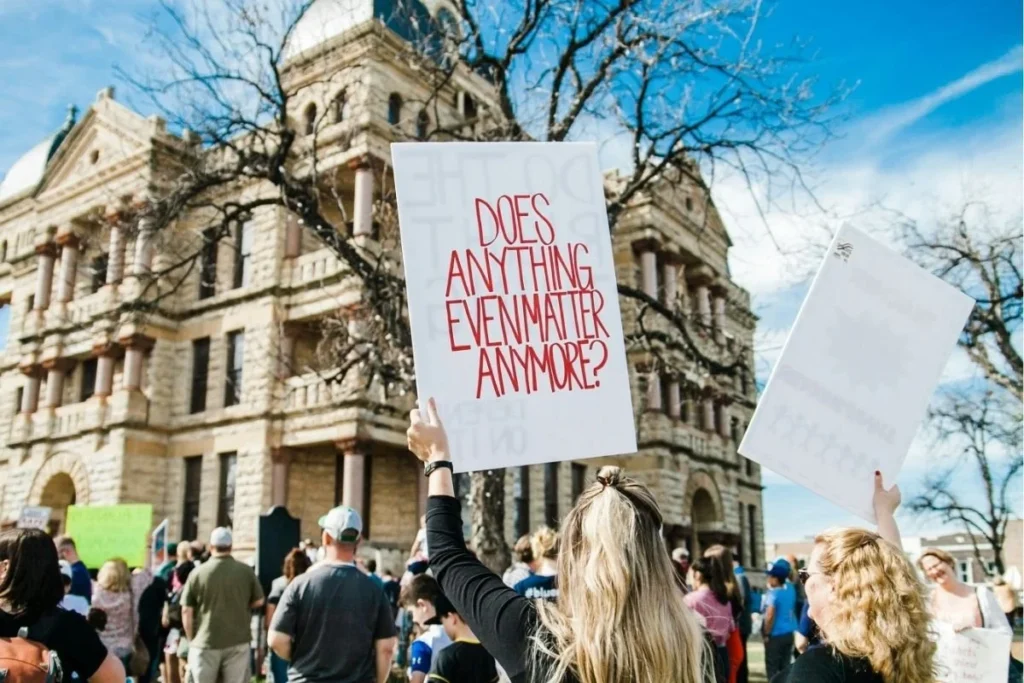
As the United States reaches its 250th anniversary this summer, the national atmosphere is one of deliberate spectacle. Across the country, preparations are underway for grand displays of patriotism: fireworks, parades, and commemorative rhetoric celebrating a "more perfect union." Yet, anniversaries are more than milestones for celebration; they are historical checkpoints. They invite a necessary, often painful audit of the national ledger—a tally of what has been built, the cost of that construction, and the identities of those who paid the steepest price.
A central component of this reckoning must be an unflinching look at the American relationship with firearms. Violence, specifically gun violence, has not been a mere peripheral byproduct of American life; it has been woven into the fabric of the nation’s history. For those committed to social progress, understanding this genealogy is not an academic exercise, but a prerequisite for survival.
The Foundation of Force: A Chronology of Control
To understand the current crisis, one must dismantle the sanitized mythology of the "minuteman." While the image of the colonial militia member standing against British tyranny is an enduring symbol of American self-determination, it represents only one facet of the founding era’s relationship with weaponry.
The Colonial and Antebellum Eras
From the outset, firearms were simultaneously instruments of liberty and mechanisms of subjugation. In the Southern colonies, armed slave patrols were the primary apparatus for enforcing human bondage, ensuring that the labor of enslaved people remained tethered to the profit of the state. Simultaneously, as the young republic sought to expand its territory, militias and settlers utilized the gun to systematically displace Indigenous nations. The displacement was not an accidental consequence of expansion; it was the mechanism of it.
The Frontier Myth and the Price of Expansion
As the United States pushed westward, the gun became the pen with which "Manifest Destiny" was written. The romanticized image of the rugged frontiersman masks a reality of state-sanctioned violence. The Trail of Tears and the massacre at Wounded Knee were not isolated excesses; they were the violent enforcement of federal policy. These events established a precedent: that the acquisition of land and wealth justified the destruction of human life. This ethos of violent acquisition was not left on the frontier; it was internalized as a core American value.
Reconstruction and the Re-assertion of Order
The aftermath of the Civil War provided a brief, flickering light of hope for formerly enslaved people. However, as Black Americans began to exercise their newfound citizenship, the gun was mobilized as a tool of domestic terror to dismantle those gains. The Colfax Massacre of 1873 and the Rosewood massacre in 1923 were not merely riots; they were systematic campaigns of ethnic cleansing carried out by armed mobs, often with the complicity or active participation of law enforcement. During this period, the Second Amendment did not protect the rights of all citizens; it functioned as a guarantor of White supremacy. This dynamic continued into the mid-20th century, as the assassinations of leaders like Medgar Evers and Martin Luther King Jr. demonstrated that the gun remained the primary weapon for maintaining the racial and political status quo.
Supporting Data: The Modern Gun Violence Epidemic
The lineage of violence described above is the direct ancestor of today’s American reality. The normalization of firearm use as a tool for "settling" disputes has manifested in a contemporary public health crisis of staggering proportions.
Current data from the Centers for Disease Control and Prevention (CDC) paints a grim picture:
- The Scale of Loss: More than 40,000 Americans are killed by firearms annually. This figure encompasses homicides, suicides, and accidental discharges.
- A Youth Crisis: For the first time in American history, firearm-related injuries have surpassed motor vehicle accidents to become the leading cause of death for children and adolescents in the United States.
- The Cycle of Grief: The cadence of mass shootings—in schools, places of worship, and grocery stores—has become a routine feature of American life. The cycle is almost ritualistic: the tragedy, the national outcry, the fleeting legislative attention, and the eventual return to silence.
This cycle mirrors the historical periods where violence against the vulnerable was justified through the rhetoric of necessity. Today, weapons designed for battlefield efficiency are ubiquitous in civilian spaces, contributing to a sense of pervasive insecurity that undermines the democratic process itself, as seen in the increasing trend of armed intimidation at polling stations and public protests.
Official Responses and the Legislative Gridlock
The response from the federal government to this systemic violence has been characterized by a profound disconnect between public sentiment and legislative action. While polls consistently show that a majority of Americans support universal background checks and stricter regulations on high-capacity weaponry, the legislative process remains largely paralyzed.
Opponents of stricter gun laws often cite the Second Amendment as an absolute barrier to reform. However, legal scholars increasingly argue that the "originalist" interpretation of the amendment fails to account for the reality that the founders lived in an era of single-shot muskets, not semi-automatic rifles capable of firing dozens of rounds in seconds.
The debate is further complicated by the powerful influence of the gun lobby, which frames any regulation as a precursor to total confiscation. This rhetorical strategy has proven highly effective at stalling legislation. Meanwhile, state-level responses have been bifurcated: while some states have enacted robust gun safety measures, others have moved to loosen restrictions, creating a patchwork of laws that complicates enforcement and allows firearms to move easily across state lines.
Implications: A Choice for the Next Century
The trajectory of the last 250 years does not have to be the trajectory of the next. History is not destiny; it is a record of choices made by those who came before us. We are not bound to continue this legacy of violence.
The Power of Youth Advocacy
The emergence of movements like March For Our Lives, born from the tragedy of the 2018 Parkland shooting, offers a blueprint for change. By refusing to accept the "thoughts and prayers" narrative, a new generation of civic leaders has demonstrated that the status quo is a policy choice, not a natural disaster. Since 2018, these movements have been instrumental in the passage of hundreds of local and state laws, proving that grassroots mobilization can overcome institutional inertia.
Redefining Rights and Responsibilities
To move forward, the nation must engage in a nuanced conversation about rights. Acknowledging that the right to bear arms is part of the constitutional tradition does not mean that this right is—or should be—absolute. Every democracy in the world balances individual liberties against the collective right to safety. The question is not whether Americans have rights, but how we define the boundaries of those rights when they collide with the fundamental right to live without the fear of being gunned down in a classroom or a community center.
Conclusion: Toward a New National Identity
As we reflect on 250 years of history, we must decide what we want the next 250 to look like. The anniversary serves as a mirror. If we look at the reflection and see only the violence of our past, we fail the future. If, however, we see the potential for a society that values human life above the instruments of death, we begin the work of transformation.
This work requires a commitment that extends beyond a single election cycle. It demands the removal of weapons of war from our streets, the implementation of universal background checks, and, perhaps most importantly, a cultural shift. We must decide, as a collective, that our national identity is not rooted in the barrel of a gun, but in the strength of our communities, the health of our children, and the integrity of our democratic institutions.
The next chapter of the American story will not be written by the ghosts of the past, but by the choices we make today in our legislatures, our courtrooms, and our living rooms. The 250th anniversary is not the end of the American experiment—it is an opportunity to finally begin the version of the country that has been promised, but never fully realized. The gunfire can stop, but only if we collectively decide that it must.