IRS Advances Stalled High-Income Nonfiler Cases Following Inspector General Audit and Watchdog Pressure
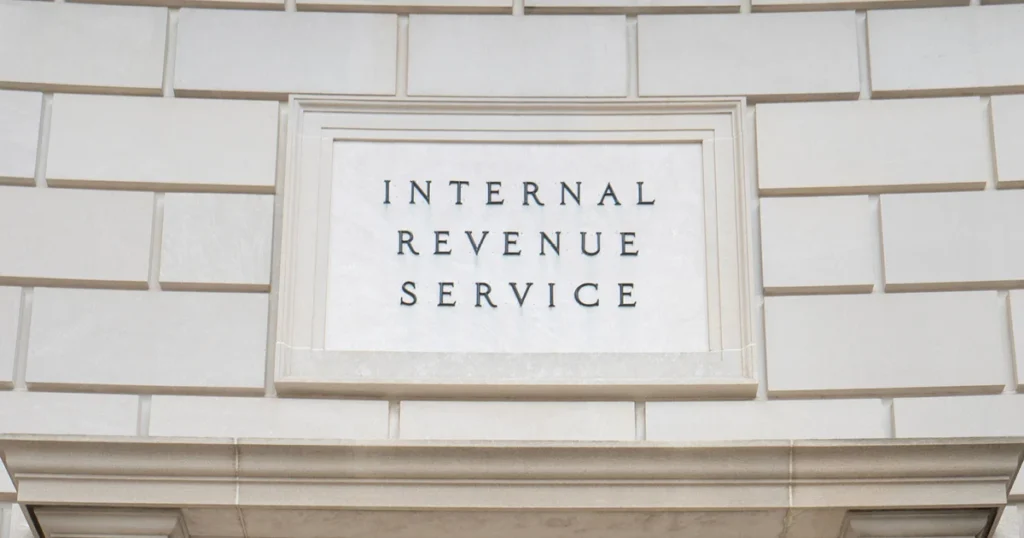
WASHINGTON — In the high-stakes world of federal tax enforcement, accountability is paramount. A newly released federal watchdog report reveals that nearly 39,000 high-priority tax enforcement cases—representing billions of dollars in potential revenue—stalled inside the Internal Revenue Service (IRS) system due to resource constraints and systemic processing errors. Prompted by an intensive audit by the Treasury Inspector General for Tax Administration (TIGTA), the IRS has taken corrective action, unfreezing tens of thousands of high-income nonfiler files that had languished in limbo for more than a year.
The oversight report sheds light on the inner workings of the IRS’s high-income nonfiler enforcement initiative, illuminating vulnerabilities in agency communication, technological tracking, and interdepartmental resource allocation. While the agency has successfully jumpstarted the delayed cases, the audit underscores structural deficiencies that continue to hinder broader tax administration efforts.
Main Facts: Stalled Cases, Billions in Revenue, and IRS Corrective Action
At the heart of the controversy is a high-profile initiative launched by the IRS in February 2024. Designed to crack down on wealthy individuals who failed to file tax returns, the program monitored over 135,000 cases involving taxpayers earning $400,000 or more annually, federal and IRS employees, and specific individuals flagged via congressional inquiries through the Senate Finance Committee.
However, an audit conducted by TIGTA—culminating in a report published in September—revealed that nearly 39,000 of these high-priority cases became bottlenecked at the initial notification stage. Specifically, as of June 30, 2025, exactly 38,824 high-priority cases involving 33,653 individual taxpayers remained frozen in "first-notice status." These files had failed to progress through the IRS’s standard enforcement pipelines, effectively granting delinquent taxpayers an unearned grace period.
The Financial Stakes
The paralyzed files represented approximately $15.7 billion in potential tax assessments. According to TIGTA’s estimations, had the IRS taken prompt action rather than permitting the cases to stall, the agency could have secured immediate returns or tax assessments in 10,482 of those instances, translating to roughly $321.3 million in additional tax revenue. Fortunately, watchdog representatives confirmed that this $321.3 million remains recoverable through resumed collection activities.
Immediate Remediation
Confronted with the audit findings, the IRS concurred with all six recommendations put forward by TIGTA. In March 2026, the agency successfully advanced the affected cases, moving the accounts forward so that the targeted taxpayers would finally receive mandatory final notices and face potential enforcement mechanisms, such as liens, levies, or criminal referrals.
Chronology of Events: From Initiative Launch to Audit and Resolution
Understanding how tens of thousands of high-priority enforcement cases slipped through the cracks requires examining a timeline marked by ambitious policy rollouts, internal resource panics, and rigorous external oversight.
February 2024: The Launch of the High-Income Nonfiler Initiative
In an effort to close the "tax gap" and ensure wealthy Americans pay their fair share, the IRS proudly rolled out a targeted high-income nonfiler initiative. The program pulled in 135,270 total cases, utilizing data analytics to spot high earners who skipped filing annual returns.
March 2024: The Internal Pullback
Just one month after the initiative’s grand debut, internal pressures began to fracture its execution. Collection function management within the IRS requested that final notices be systematically delayed. Officials cited severe concerns regarding available personnel resources—arguing that front-line workers lacked the bandwidth to manage the incoming workload. This decision halted the return-delinquency process, abruptly freezing additional collection notices and enforcement actions.
June 30, 2025: The Audit Snapshot Date
TIGTA established June 30, 2025, as the analytical cutoff date for its comprehensive review. By this date, out of 111,566 cases analyzed (after filtering out anomalies), a staggering 81,417 cases (or 73%) featured unfiled returns and zero tax assessments. Of those, the 38,824 high-priority files identified in the audit remained permanently parked in first-notice status.
September 4, 2025: Public Release of the TIGTA Report
TIGTA published its exhaustive audit findings, exposing the administrative logjam to the public, lawmakers, and tax professionals. The report detailed not only the stalled first-notice cases, but also a backlog of unassigned cases in the collection queue and a troubling pattern of issuing notices to individuals who had already filed their taxes.
March 2026: Case Unfreezing and Corrective Measures
Following direct alerts from TIGTA auditors—who diagnosed a mix of deliberate administrative delays and systemic software errors—the IRS collaborated with the watchdog to isolate the root causes. In March 2026, the IRS officially advanced the 39,000 stalled cases, reigniting enforcement proceedings.
Supporting Data: Queues, Processing Backlogs, and the Tax Gap
TIGTA’s audit report provides granular statistical evidence revealing systemic friction points across multiple layers of IRS compliance operations.
The Collection Queue Backlog
Beyond the cases stalled at the first-notice stage, thousands of other high-priority files were left waiting indefinitely in the IRS collection queue. As of June 30, 2025, exactly 10,969 high-priority cases involving 8,853 taxpayers sat unassigned, representing roughly $2.5 billion in potential tax liabilities.
TIGTA estimated that aggressively prioritizing these queued files could have yielded returns or assessments in 2,962 cases—impacting 2,399 taxpayers and unlocking approximately $90.8 million in immediate tax revenue. Although the IRS slowly chipped away at this specific backlog—reducing the unassigned queue to 9,463 cases by December 31, 2025—the persistent delay highlights chronic bandwidth issues within the agency’s workforce.
The "Already Filed" Fiasco
Perhaps one of the most troubling findings of the TIGTA audit involved administrative misfires that penalized compliant taxpayers. The report revealed that the IRS issued first notices in 4,918 cases involving 4,748 taxpayers who had already filed their tax returns.
How did this happen? Many of these individuals were swept into the nonfiler initiative simply because their paper or electronic returns had not yet been processed and posted to their accounts by the IRS. TIGTA discovered that 1,433 of those returns took over a year to post.
Consequently, compliant taxpayers were subjected to stressful, unwarranted compliance notices while fulfilling their legal duties, purely due to internal processing lags.
The Macro Context: The Tax Gap
To contextualize these figures, the report pointed to the broader macro-economic problem facing the federal government. The IRS estimates that the gross tax gap—the monetary chasm between total taxes legally owed and what is paid voluntarily and on time—reached a staggering $696 billion for tax year 2022.
Of that massive total, nonfilers accounted for $63 billion, or approximately 9% of the entire gross tax gap. The inability of the IRS to efficiently process high-income nonfilers directly impairs federal efforts to close this multi-billion-dollar deficit.
Official Responses: Internal Acknowledgment and External Critique
The release of the TIGTA report prompted strong reactions from both the federal watchdog and the nation’s tax collection agency, laying bare the tensions between regulatory ambition and operational reality.
TIGTA’s Critique of Agencywide Oversight
In its assessment, TIGTA did not solely blame resource shortages or computer glitches; it leveled institutional criticisms at top-tier IRS leadership. The watchdog concluded that the IRS lacks coordinated, agencywide oversight for its nonfiler programs.
Most damningly, the report revealed that the Nonfiler Executive Steering Committee—the central governing body meant to direct these initiatives—has not met since September 2020.
Furthermore, TIGTA found that the IRS fails to separately track financial and human resources dedicated exclusively to nonfiler programs, leaving management without performance metrics to evaluate the true efficacy of individual enforcement strategies. TIGTA asserted that the agency routinely prioritizes easier balance-due collection accounts over complex nonfiler investigations.
The IRS Defense and Strategic Pivot
In its formal response to the audit, the IRS accepted all six recommendations while highlighting its recent modernization efforts. The agency emphasized that it has aggressively expanded nonfiler enforcement operations in recent years, heavily aided by funding from the Inflation Reduction Act.
The IRS noted that it is actively deploying advanced data analytics, automation, and artificial intelligence (AI) to identify potential noncompliance earlier in the tax cycle, thereby improving case selection precision. Agency officials maintained that they are deliberately concentrating enforcement resources on high-risk taxpayers who pose the greatest threat to tax system integrity, while continuously striving to balance nonfiler enforcement with competing statutory priorities.
Implications: What This Means for Taxpayers, Practitioners, and the IRS
The unfolding fallout from the TIGTA audit carries profound implications for tax administration, tax practitioners, and high-income earners across the United States.
1. Increased Scrutiny for High-Income Earners
The unfreezing of nearly 39,000 cases signals that the IRS is clearing its internal roadblocks and refocusing on affluent nonfilers. High-income earners who have neglected to file past returns can expect swift enforcement activity, including the arrival of final notices and subsequent collection actions. The era of administrative pauses driven by resource anxiety appears to be drawing to a close for this demographic.
2. Urgent Need for IRS Technological Modernization
The fact that compliant taxpayers received threatening notices simply because the IRS took over a year to process their filed returns underscores the urgent necessity of IT modernization. If the agency hopes to utilize AI and automation effectively, its foundational data-processing infrastructure must be capable of logging returns in real time to prevent friendly-fire incidents that erode public trust.
3. Pressure on Agency Leadership to Institutionalize Oversight
TIGTA’s revelation that the Nonfiler Executive Steering Committee has been dormant for over half a decade places intense pressure on IRS leadership to revive institutional governance. Without cross-departmental coordination, specialized initiatives risk collapsing under the weight of regional resource hoarding and shifting administrative priorities.
4. Opportunities for Tax Professionals
For certified public accountants (CPAs) and tax attorneys, this audit serves as a critical warning. Practitioners representing high-income clients with historical filing discrepancies must act proactively. With the IRS actively clearing its backlogs and deploying sophisticated analytics, voluntary disclosure before receiving final notices remains the safest strategy to mitigate penalties, avoid aggressive liens, and protect clients from protracted administrative friction.
As the IRS works through its remaining compliance queues and implements TIGTA’s remaining recommendations, the success of its enforcement regime will ultimately be measured not by the number of cases launched, but by its ability to execute timely, accurate, and fair tax administration for all Americans.