The Global South’s Race for Transition Minerals: From Extraction to Accountability
By Global Resource & Policy Desk
Published: Special Report
Main Facts
As the international community accelerates its transition toward green energy, a high-stakes global scramble for critical minerals—such as nickel, lithium, cobalt, and copper—has intensified. This modern gold rush intersects with a growing consensus that the extraction of these materials must adhere to strict sustainable and responsible practices. However, translating high-level global frameworks into concrete, on-the-ground action remains a formidable challenge.
According to experts and policymakers, bridging the gap between lofty declarations and operational reality requires the deliberate consolidation of Global South policy and advocacy networks. While global gatherings—such as the Intergovernmental Forum on Mining, Minerals, Metals, and Sustainable Development (IGF) annual meeting—frequently champion themes like "interdependence," the underlying reality is one of fierce, unyielding competition.
For mineral-producing nations, this competitive pressure carries severe risks. If market acceleration undermines sustainability standards, it threatens to prevent equitable cost- and benefit-sharing both within and between developing nations.
To combat the historical legacy of the "resource curse," several mineral-rich countries have sought to retain greater control over their reserves. Prominent among these strategies are export bans on critical raw materials, designed to stimulate domestic value addition and support national economic development objectives.
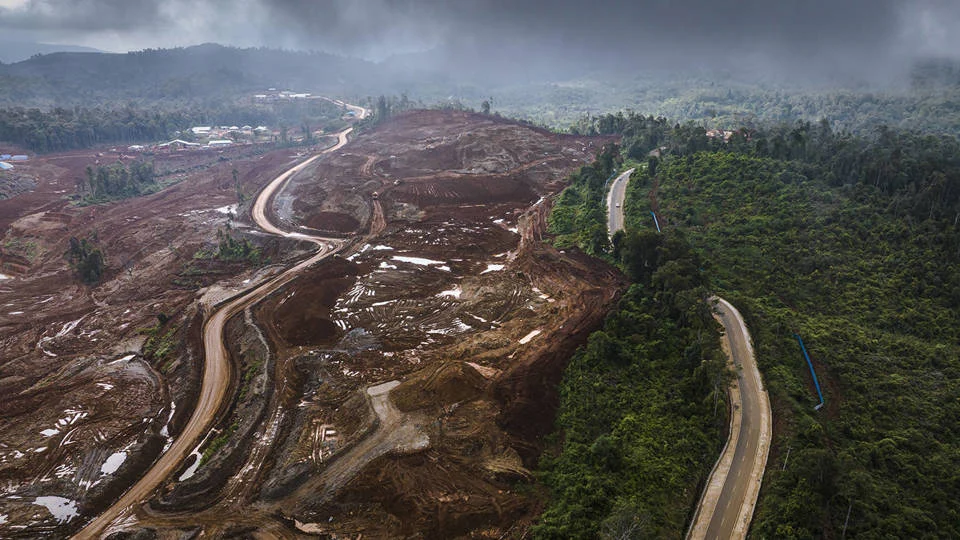
Yet, as Indonesia’s pioneering experience demonstrates, downstream industrialization is far from a silver bullet. While extraction, smelting, and processing have spurred localized economic growth in resource-rich provinces, they have frequently brought severe environmental degradation, social friction, and a failure to distribute wealth equitably to local populations.
Addressing these systemic challenges requires moving past fragmented bilateral trade deals that prioritize market access over human rights and environmental safeguards. Instead, the future of sustainable mineral governance hinges on strengthening South-South policy learning platforms and transnational civil-society advocacy networks capable of holding multinational corporations and governments accountable.
Chronology of the Critical Minerals Scramble
The modern geopolitical and economic landscape of transition minerals has evolved rapidly over the past several years, marked by key policy shifts, international declarations, and escalating civil-society interventions:
- 2020–2022 (The Rise of Export Bans): Following years of raw material exportation, countries like Indonesia aggressively implement export bans on unprocessed ores (such as nickel) to force foreign investors to build domestic smelting and processing facilities, sparking global supply-chain realignments.
- September 2024 (Global Guidance): The United Nations Secretary-General’s Panel on Critical Energy Transition Minerals releases a sweeping set of guiding principles, demanding a new paradigm rooted in justice, equity, and direct benefits for host countries and local communities.
- Late 2024 (Cross-Border Activism): Grassroots pressure escalates internationally. Indonesian NGOs, joined by Japanese and European civil-society groups, target multinational shareholders over alleged human-rights abuses linked to major operations like the Sorowako nickel project.
- 2025 (Institutional Pushback): Organizations such as Publish What You Pay Indonesia leverage international platforms—including the OECD Forum on Responsible Mineral Supply Chains in Paris—to formally challenge weak national nickel governance and demand tighter regulatory compliance.
- April 2026 (Investor Mobilization): International campaigners from organizations like Mighty Earth, Climate Rights International, and Global Witness successfully pressure electric-vehicle manufacturers and institutional investors to adopt stricter due-diligence obligations regarding deforestation and human rights in nickel supply chains.
- October 12–14, 2026 (The IGF Annual Meeting): Convening in Geneva under the overarching theme of "Interdependence," the Intergovernmental Forum on Mining, Minerals, Metals, and Sustainable Development tackles the persistent paradox of green-energy cooperation versus cutthroat resource competition.
Supporting Data and Economic Realities
The sheer scale of the green-energy transition guarantees unprecedented demand for transition minerals over the coming decades, creating both historic economic opportunities and acute structural risks for developing economies.
Exponential Demand Projections
- The International Energy Agency (IEA) projects that to achieve global net-zero emissions targets, overall demand for critical minerals will triple by 2030 and quadruple by 2040.
- Specific components vital to electric vehicle (EV) batteries and renewable energy storage—such as nickel, lithium, and cobalt—face the steepest demand curves in industrial history.
The Indonesian Paradox: Growth vs. National Benefit
Indonesia’s trajectory as a global nickel powerhouse illustrates the complex mechanics of the resource sector:
- Regional vs. National Impact: While extraction, smelting, and processing have significantly boosted economic indicators in Indonesia’s three primary nickel-rich provinces, studies by economic research institutions indicate that these industrial expansions have not contributed proportionally to the broader national economy.
- Sacrifice Zones: The process of "frontier-making"—transforming marginal, biodiverse, or indigenous lands into heavy industrial resource-extraction centers—frequently generates new "sacrifice zones." Without robust democratic oversight, local communities bear the heaviest environmental and social burdens while capturing minimal long-term financial rewards.
Regulatory Discrepancies in Trade
Bilateral trade agreements often exacerbate these disparities. For example, the proposed EU–Indonesia Comprehensive Economic Partnership Agreement exhibits stark regulatory imbalances. The European Union maintains rigorous, legally binding sustainability standards for imported palm oil, yet historically applies far weaker environmental and social conditionality to industrial nickel imports—despite both sectors driving substantial environmental degradation and social disruption.
Official Responses and Institutional Frameworks
Governments, multilateral bodies, and regional organizations are increasingly forced to address the governance vacuum surrounding critical minerals, though approaches vary widely between resource-dependent nations and industrialized consumers.
Multilateral and Regional Declarations
- United Nations: The UN Secretary-General’s Panel on Critical Energy Transition Minerals has established foundational principles emphasizing that the energy transition must not replicate the exploitative extraction models of the past. It calls for value addition to remain within host nations and insists on free, prior, and informed consent (FPIC) from local populations.
- African Union: Long before the current EV boom, the AU pioneered structural resource governance through the Africa Mining Vision (AMV), backed by subsequent continental frameworks designed to ensure that Africa’s mineral wealth drives structural socioeconomic transformation rather than outward capital flight.
- ASEAN: The adoption of the ASEAN Principles for Sustainable Minerals Development (APSMD) represents a regional acknowledgment that Southeast Asian nations must harmonize environmental safeguards to prevent a "race to the bottom" among member states competing for foreign direct investment.
Shifting National Stances: The Indonesian Case Study
Faced with mounting international scrutiny and domestic civil-society pressure—including critiques aired at forums like the 2025 OECD Responsible Mineral Supply Chains event—the Indonesian government has initiated significant regulatory introspection.
Working alongside national research bodies and policy groups, the Coordinating Ministry for Economic Affairs and the National Economic Council have assessed the critical gaps between domestic regulatory frameworks and recognized international ESG benchmarks. As a direct result, the government has begun developing comprehensive Environmental, Social, and Governance (ESG) guidelines to help domestic firms align local operations with rigorous global supply-chain requirements.
Implications for the Future
The path forward for critical mineral governance depends heavily on breaking down geopolitical silos and empowering collaborative networks across the Global South.
The Power of South-South Learning
Platforms such as the Natural Resource Governance Institute’s South–South Transition Minerals Learning Platform have demonstrated the immense value of peer-to-peer knowledge exchange. By connecting government officials and policymakers from diverse jurisdictions—including Indonesia, Chile, Zambia, and the Democratic Republic of the Congo—these initiatives prevent a naive, "one-size-fits-all" approach to resource management. Policymakers can analyze why certain downstream industrialization strategies succeed in one regulatory and political economy while failing in another.
Transnational Advocacy and Shareholder Pressure
When national governments or corporate actors fail to protect local communities, transnational civil-society networks provide a vital corrective mechanism.
- The Vale Indonesia Precedent: When local grievances arose regarding the Sorowako nickel project, Indonesian NGO WALHI teamed up with Friends of Europe and Friends of the Earth Japan. By mobilizing over one hundred international organizations, they pressured major corporate shareholders—including Vale, Sumitomo Metal Mining, and Mitsui & Co.—into addressing human-rights abuses when domestic regulatory channels stalled.
- Corporate Accountability: Similar campaigns led by environmental watchdogs such as Mighty Earth, Climate Rights International, and Global Witness have effectively influenced downstream corporate buyers. Major automakers and EV battery manufacturers are increasingly imposing strict contractual due-diligence requirements on suppliers, pushing industrial operators like Weda Bay Nickel to pursue formal certifications, such as those offered by the Initiative for Responsible Mining Assurance (IRMA).
Conclusion
The fundamental challenge of the green transition is not merely technical or financial; it is fundamentally political and ethical. Achieving sustainable, inclusive mineral supply chains requires more than aspirational declarations at high-level summits in Geneva or New York. It requires consolidating the collective policy wisdom and advocacy strength of the Global South. By linking South-South governmental cooperation with fierce transnational civil-society accountability, producing nations can ensure that the minerals powering a sustainable future do not come at the cost of human dignity and ecological survival.