Houston Businessman Pleads Guilty in Targeted Arson Plot Against Popular Bar 5015
Main Facts: A Calculated Act of Retribution
A high-stakes business dispute in Houston took a volatile and criminal turn, leading to a significant federal prosecution. Acting U.S. Attorney John G.E. Marck announced this week that 42-year-old Lyndell Leroy Price has officially pleaded guilty to conspiring to commit arson against Bar 5015, a commercial establishment located on Almeda Road.
The case, which has drawn considerable attention from local law enforcement and federal agencies alike, centers on a calculated scheme of destruction fueled by professional jealousy and failed negotiations. Price, a prominent figure in the Houston business scene, admitted to orchestrating a plan to burn down the establishment owned by his former business partner.
According to federal court filings, the arson was not a random act of vandalism but a targeted strike. The motive was rooted in a series of rejected business propositions. Price had allegedly sought to expand his portfolio by buying into Bar 5015, a request that was promptly denied by the owner. Furthermore, Price attempted to coerce his former partner into selling his stake in the Turkey Leg Hut—a well-known Houston establishment co-owned by the pair—a request that was also rebuffed.
Faced with these rejections, Price opted to bypass civil negotiation, instead opting for a path of destruction that would ultimately land him, and two accomplices, in federal custody.
Chronology of the Crime: From Planning to Ignition
The Prelude to Violence
The tensions between Price and his former associate had been simmering for some time. Investigators believe that in the days leading up to June 12, 2020, Price moved from verbal threats and business pressure to active criminal planning. He recruited two younger associates, 27-year-old Armani Williams and 27-year-old Miziah Shepherd, to execute the firebombing.
The Night of the Incident
On the early morning hours of June 12, the conspirators initiated their plan. Surveillance and investigative reports detail a cold, methodical preparation phase. The trio purchased gasoline and plastic fuel containers from local retailers before positioning themselves near the Almeda Road property.
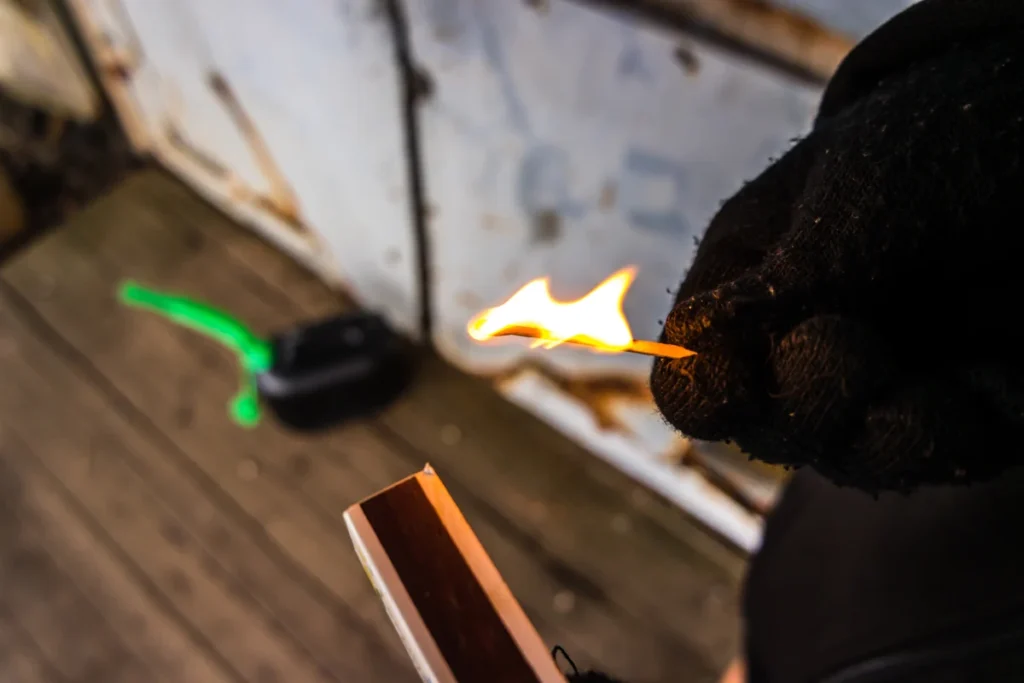
Donning face coverings to evade identification, Williams and Shepherd approached Bar 5015 under the cover of darkness. Carrying the gasoline-filled containers, they moved to the entrance of the bar. In a brazen act of destruction, they poured the accelerant across the venue’s entrance ramp and outdoor deck, effectively turning the structural entrance into a fuse. After igniting the gasoline, the conspirators fled the scene, leaving the building to be consumed by the flames.
The Aftermath
The fire caused significant structural damage to Bar 5015, but the threat extended well beyond the walls of the business. The intensity of the blaze endangered nearby residential homes, adjacent commercial properties, and vital local infrastructure, including the electrical grid.
Following the successful ignition, the conspirators maintained a level of chilling professional detachment. Evidence presented in court revealed that a member of the conspiracy contacted Price shortly after the fire to confirm that the "mission was complete." Following this confirmation, the hired accomplices received payment for their roles in the arson.
Supporting Data and Legal Proceedings
The Federal Response
The investigation into the arson was a collaborative effort involving a coalition of law enforcement agencies. The FBI’s Houston field office, the Bureau of Alcohol, Tobacco, Firearms and Explosives (ATF), and the Houston Fire Department’s Arson Bureau served as the primary leads. They were bolstered by the Houston Police Department, the Texas Department of Public Safety, and the Harris County Constable’s Office (Precinct 4).
Assistant U.S. Attorneys Sebastian A. Edwards and Keri Fuller have been tasked with the prosecution of the case, presenting a mountain of evidence—including digital communications, financial records, and surveillance footage—that left the defendants with little room to maneuver.
Sentencing and Penalties
The defendants’ guilty pleas bring a measure of closure to the legal process. U.S. District Judge Lake has officially accepted the plea agreements for Price, Williams, and Shepherd. The sentencing hearing is scheduled for September 25.
The stakes for Price are immense. Under federal sentencing guidelines, he faces a maximum penalty of 20 years in federal prison and a potential fine of up to $250,000. While his accomplices, Williams and Shepherd, have also pleaded guilty to the same charges, their specific sentencing outcomes will depend on their levels of cooperation and their respective criminal histories. All three men remain in custody, where they will stay until their final sentencing hearings in late September.
Official Responses and Public Impact
The U.S. Attorney’s Office
The U.S. Attorney’s Office has framed this case as a stark warning against the use of violence to resolve business disputes. By pursuing this as a federal arson case, prosecutors are signaling that the destruction of property—especially when it threatens human life and critical infrastructure—will be met with the full weight of federal law.
"The resolution of this case underscores our commitment to holding those who resort to violence accountable," a spokesperson for the U.S. Attorney’s Office stated. "Arson is a inherently dangerous crime that puts first responders and the public at risk. When business disputes escalate to this level, the consequences are severe and life-altering."
The Impact on the Community
The fire at Bar 5015 sent shockwaves through the local business community. For residents living near Almeda Road, the incident was a frightening reminder of how quickly a private dispute can manifest as a public safety hazard. The risk posed to the electrical grid and nearby homes could have resulted in a tragedy far greater than the property loss experienced by the bar owner.
Industry analysts have noted that this case highlights the "dark side" of the high-profile Houston nightlife and hospitality industry, where the lines between professional competition and personal vendettas can sometimes blur.
Implications: The High Cost of Retaliation
Deterrence and the Rule of Law
The prosecution of Lyndell Leroy Price serves as a powerful case study in the limitations of "extra-judicial" retribution. In many industries, disagreements between partners or stakeholders are common, but the move from arbitration or civil litigation to arson is a threshold that carries irrevocable consequences.
By treating the case with federal severity, the judicial system is sending a message: that the federal government considers the weaponization of fire against a commercial enterprise to be a severe assault on the safety of the community. The fact that the perpetrators believed they could facilitate such a crime and maintain a veil of secrecy only to be dismantled by a multi-agency investigation demonstrates the effectiveness of modern forensic and digital surveillance.
Future Business Relations
The fallout from this case will likely influence how partnerships in Houston’s hospitality sector are managed in the future. Business owners are now being reminded of the importance of robust partnership agreements, transparent dispute resolution processes, and the necessity of vetting potential partners thoroughly.
Furthermore, the case has highlighted the vulnerability of commercial properties to acts of arson. Following the fire, discussions have increased among local business owners regarding enhanced security measures, fire suppression system audits, and the importance of documenting threats.
Conclusion
As the September 25 sentencing date approaches, the legal saga of the Bar 5015 arson nears its end. However, the impact of the crime—on the victims, the local community, and the defendants themselves—will resonate for years to come. The case stands as a grim reminder that in the eyes of the law, the line between a frustrated businessman and a federal felon is a single, destructive decision.
As the Houston legal community watches the sentencing, the primary takeaway remains clear: justice is a slow, methodical process, but one that ultimately accounts for even the most hidden acts of malice. Price, once a player in the thriving Houston food and drink scene, now faces a future defined by the bars of a prison cell, a consequence of choosing fire over law.