Beyond Classification: The "Clarity Act" and the New Era of Digital Asset Regulation
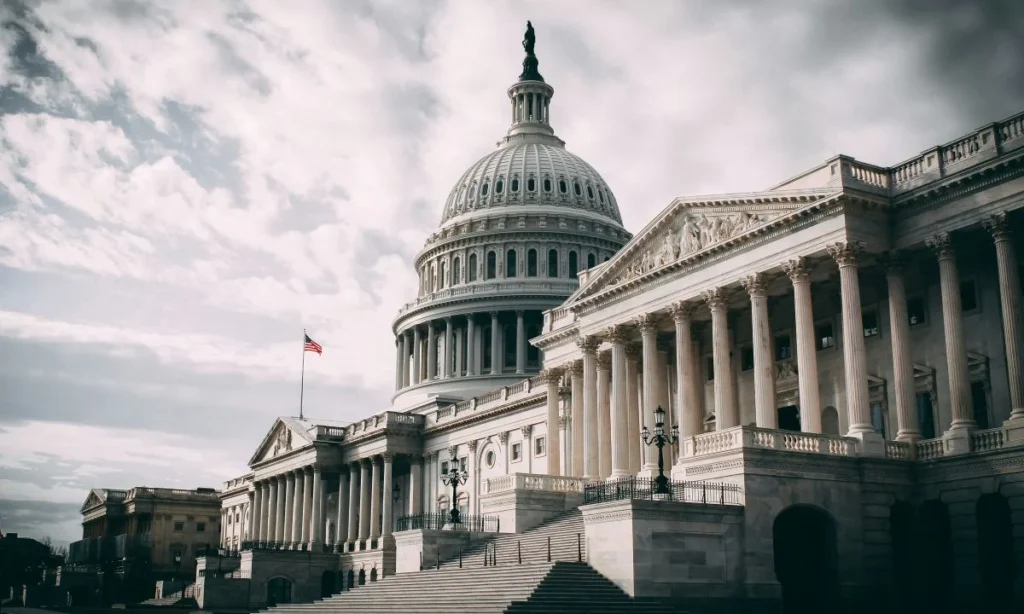
For nearly a decade, the cryptocurrency industry in the United States has operated under a cloud of regulatory ambiguity, frequently characterized by "regulation by enforcement." Stakeholders across the digital asset ecosystem have lobbied tirelessly for a legislative framework that would provide long-term certainty, defining the boundaries between securities, commodities, and everything in between.
As of September 15, that long-sought goal is reaching a historic inflection point. The "Clarity Act," a landmark legislative package, is set for a pivotal Senate vote. However, what began as a narrow proposal to delineate the jurisdictional boundaries between the Securities and Exchange Commission (SEC) and the Commodity Futures Trading Commission (CFTC) has evolved into something far more expansive. The bill has morphed into a comprehensive attempt to reconcile the collision between decentralized technology and the foundational structures of the traditional American financial system.
The Evolution of the Clarity Act: A Chronology of Scope
The journey of the Clarity Act reflects the rapid maturation of the crypto industry. In its initial drafts, the bill was primarily technical, focusing on the "Howey Test" and the functional classification of digital tokens. The goal was simple: provide developers and issuers with a roadmap to compliance that didn’t involve litigation.
However, as the legislation underwent successive rewrites, the scope widened significantly. By the summer of 2026, the bill had expanded to address systemic financial risks, ethical standards for public officials, and the integration of blockchain-based products into traditional banking and gaming sectors.
- Phase I (The Foundation): Initial focus on SEC/CFTC jurisdictional clarity and token classification.
- Phase II (The Expansion): Incorporating provisions for stablecoin regulation and systemic risk management.
- Phase III (The Ethics Overhaul): Integration of strict financial disclosure and divestment rules for elected officials, largely in response to the involvement of high-profile political figures in private crypto ventures.
- Phase IV (The Final Markup): Final negotiations focusing on Tribal sovereignty, prediction markets, and the preservation of state gaming laws.
The New Frontier: Why "Classification" No Longer Suffices
The industry’s early years were defined by the question, "What is this asset?" Today, the debate has shifted to, "What does this asset do to the financial system?" As digital assets become embedded in corporate treasury, payment rails, and settlement layers, regulators are moving away from labeling and toward monitoring economic flows.
The Stablecoin-Banking Nexus
One of the most consequential aspects of the current Clarity Act is its treatment of stablecoins. Lawmakers have moved beyond viewing stablecoins merely as "crypto assets," instead assessing them as potential substitutes for bank deposits.
The bill introduces a "circuit breaker" mechanism. If stablecoins begin to trigger widespread deposit flight from community banks—a scenario that could destabilize local lending environments—federal regulators, led by the Treasury Secretary, are granted authority to intervene. This effectively subjects stablecoin issuers to a form of quasi-banking supervision, acknowledging that when a digital asset performs the function of a deposit, it must be regulated with the same systemic caution as a commercial bank.
Ethics as Market Structure
A major turning point in the legislative process came with the inclusion of rigorous ethics standards. In an era where political figures are increasingly involved in digital asset ventures, the potential for conflicts of interest has become a central legislative concern.
Senator Cynthia Lummis (R-Wyo.), chair of the Senate Banking Digital Assets Subcommittee, has touted the current bill as a bipartisan victory, noting that it incorporates over 120 demands from Democratic colleagues. The inclusion of provisions championed by Senators Thom Tillis (R-S.C.) and Ruben Gallego (D-Ariz.) requires senior officials to place digital assets into qualified blind trusts or divest from holdings that could be influenced by their policy decisions. This is an unprecedented move to ensure that as Washington builds the rules for the future of finance, those writing the rules are not playing the game themselves.
Supporting Data and Industry Intelligence
According to the PYMNTS Intelligence and Citi report, Chain Reaction: Regulatory Clarity as the Catalyst for Blockchain Adoption, the next phase of the blockchain revolution will be defined entirely by the quality of the regulatory guardrails. The report underscores that safe, scalable adoption is no longer a technological hurdle, but a legal one.
Data points from the report suggest:
- Institutional Integration: Over 65% of large-cap corporate treasuries are exploring blockchain-based settlement, provided a clear regulatory framework is established.
- Market Stability: The introduction of "circuit breaker" provisions for stablecoins is viewed by industry analysts as a necessary compromise to secure traditional banking support for on-chain finance.
- Political Exposure: Public sentiment, as tracked by recent polling, suggests that while crypto support was once a niche interest, it has become a litmus test for fiscal policy, with voters increasingly focused on how digital asset legislation affects the broader economy.
Official Responses and Stakeholder Concerns
The path to Tuesday’s vote has not been without friction. The Indian Gaming Association (IGA) has been a vocal critic of the bill’s current iteration. Chairman David Z. Bean has urged senators to vote against the legislation unless specific protections are added for Tribal economies and existing gambling laws.
The conflict stems from the rise of "prediction markets"—platforms where users bet on real-world outcomes using blockchain-based tokens. Because these markets operate globally and instantaneously, they often collide with state and Tribal gaming statutes. The Clarity Act seeks to clarify that blockchain developers are not exempt from derivatives law, yet for Tribal leaders, the language remains dangerously vague.
"The Clarity Act," argues the IGA, "fails to adequately insulate Tribal sovereignty from the decentralized nature of these new financial instruments."
Conversely, proponents of the bill argue that the legislation is the most comprehensive effort to date to provide "rules of the road." Senator Lummis emphasized the intensity of the negotiations in her Monday statement: "After a year of intense daily bipartisan negotiations, this bill is ready. It balances the need for innovation with the absolute necessity of protecting the integrity of the American financial system."
Implications for the Future of Finance
As the Senate prepares for the vote, the broader implications are becoming clear. The "Clarity Act" is not just a crypto bill; it is an experiment in legislative agility.
1. The End of Siloed Regulation
The legislation marks the beginning of the end for siloed regulatory approaches. As financial products become programmable, the same instrument may function as a commodity, a security, a deposit, and a gambling derivative simultaneously. The Clarity Act represents the first attempt to create a "multi-layered" regulatory architecture that can handle these overlapping functions.
2. The SEC’s Pivot
The SEC, once the primary enforcement arm against the crypto industry, is increasingly pivoting toward a role as an "on-chain architect." The bill clarifies that while the SEC retains oversight of securities, its role in the future will involve building the infrastructure for a regulated, transparent, and compliant digital securities market.
3. The "Collision" Era
The most profound takeaway from the current legislative cycle is that "clarity" is not a destination, but a process. By attempting to solve the problem of classification, Congress has inadvertently uncovered a host of new gray areas regarding consumer protection, monetary policy, and federal-state jurisdiction.
Conclusion
The vote on September 15 will serve as a bellwether for the future of digital finance in the United States. Whether the Clarity Act passes or requires further refinement, one thing is certain: the era of crypto as a "Wild West" is drawing to a close.
The industry is now being folded into the traditional American financial framework. This transition will be fraught with challenges—from the protection of Tribal gaming interests to the delicate management of stablecoin liquidity. However, as the legislative process continues, it is evident that the goal has shifted from merely classifying digital assets to ensuring that when they collide with the existing financial system, they do so in a way that is safe, scalable, and—above all—accountable to the public interest.
For market participants, the message is clear: the age of ambiguity is ending, replaced by an era of complex, integrated, and high-stakes regulation. The next generation of financial innovation will be built not just on code, but on the firm foundation of legislative consensus.