Walmart+ Escalates Fuel Savings Strategy: A Strategic Response to Economic Headwinds
By PYMNTS
September 14, 2026
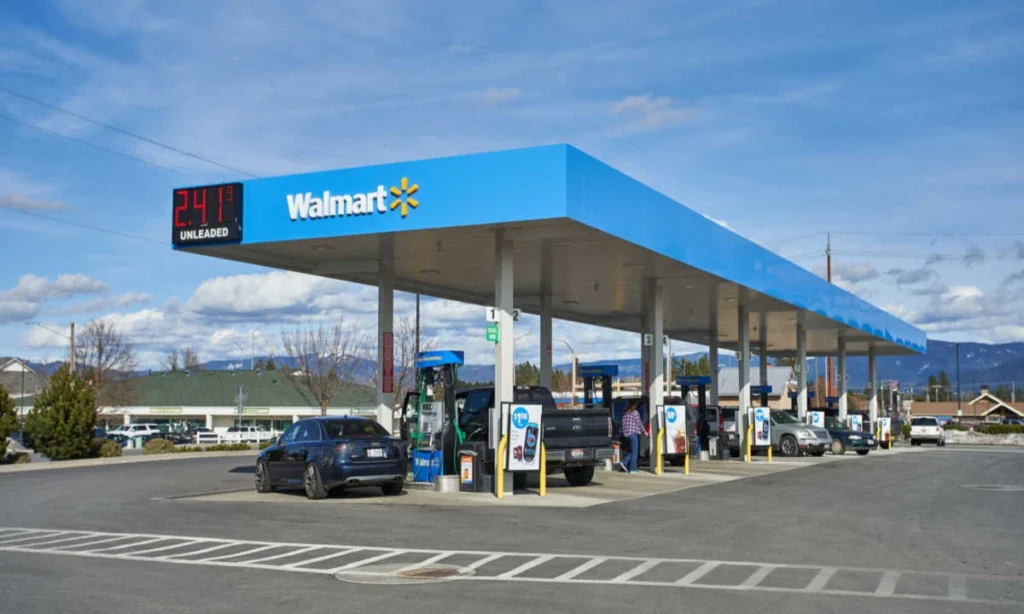
In an aggressive maneuver to reinforce the value proposition of its membership ecosystem, retail giant Walmart announced on Monday, Sept. 14, a significant expansion of the Walmart+ Gas Savings program. By partnering with Citgo, the retailer has added over 4,000 fueling stations to its existing network, bringing the total footprint to more than 17,000 participating locations nationwide. This expansion arrives at a critical juncture for American consumers, who are grappling with persistent inflationary pressures and a volatile energy market that continues to erode household discretionary income.
The Strategic Expansion: Bolstering the Membership Ecosystem
The addition of Citgo represents a substantial 30% increase in the network size of the Walmart+ fuel discount program. Previously, members enjoyed preferential pricing at Walmart-branded locations, Murphy USA, Exxon, and Mobil stations, as well as at Sam’s Club pumps. By integrating Citgo—a brand with a robust presence in many suburban and regional markets—Walmart is effectively increasing the utility of its subscription service, ensuring that the "10 cents per gallon" discount is accessible to a wider demographic of drivers.
For Walmart, the objective is clear: customer retention through tangible, recurring value. In an era where consumers are increasingly selective about which subscription services they maintain, Walmart+ is positioning itself not as a luxury, but as an essential budgetary tool.
Chronology of the Fuel Crisis: A Contextual Analysis
To understand the weight of this announcement, one must examine the trajectory of fuel costs over the past two years. The volatility of the gasoline market has transformed from a periodic economic annoyance into a primary driver of behavioral change for the American workforce.
- Early 2024: Household fuel expenditures began to stabilize at a high baseline, with average annual spending exceeding $2,600 per household.
- Summer 2026: Following a period of relative calm, the Consumer Price Index (CPI) report released last week confirmed a sharp 3.9% uptick in gasoline costs between July and August.
- September 2026: As of Monday, the national average for a gallon of gas climbed to $4.31—an alarming $1.14 increase compared to the same period in 2025.
- The Weekly Surge: The market has shown extreme sensitivity, with prices rising 13 cents in just the last seven days, further destabilizing the financial planning of low-to-middle-income families.
The "Labor Economy" in Jeopardy: Data-Driven Implications
The decision to expand fuel savings is not merely a retail tactic; it is a defensive play against the systemic erosion of the labor market. Recent collaborative research conducted by PYMNTS Intelligence and WorkWhile reveals that high fuel costs have become a "gatekeeper" for employment.
When commuting costs exceed a certain threshold relative to hourly wages, the economic incentive to work evaporates. The data paints a stark picture of how transportation costs are reshaping the workforce:
- Shift Refusals: Approximately 15% of workers in the "Labor Economy" have explicitly turned down job shifts because the cost of the commute outweighed the net pay of the shift.
- Reduced Availability: Another 16% of the workforce has opted to work fewer days per week to minimize fuel consumption, creating labor shortages in service and logistics sectors.
- The Aggregate Impact: A staggering 64% of workers in this segment have fundamentally altered their work habits—either by changing employers, reducing hours, or altering their method of travel—to cope with rising energy prices.
The societal implications are equally concerning. The report highlighted that 17% of surveyed workers missed at least one shift or workday due to transportation-related issues. For 9% of these individuals, this led to formal disciplinary action or the risk of termination, while 7% suffered the total loss of employment due to the compounding effect of these logistical hurdles.
Official Responses and Corporate Philosophy
Deepak Maini, senior vice president and general manager of Walmart+, emphasized that the program’s expansion is rooted in a fundamental understanding of the current household budget.
"A membership has to earn its place in a household budget," Maini stated in the official announcement. "That’s why we’re focused on delivering real value members can use again and again. Expanding our Gas Savings benefit by adding Citgo stations gives members even more places to save, with convenient locations that fit into their rhythm of daily life."
This philosophy underscores a shift in how major retailers view their subscription programs. Rather than focusing on exclusive content or expedited shipping alone, Walmart is doubling down on the "utility-first" model. By framing the $100+ annual gas savings as a direct offset to the cost of the Walmart+ membership fee, the company is attempting to make the subscription effectively "self-funding" for the average consumer.
Implications for the Retail and Energy Sectors
The integration of Citgo into the Walmart ecosystem carries several long-term implications for the broader market:
1. Competitive Pressure on Retailers
Retailers without robust fuel-saving partnerships may find themselves at a disadvantage. As fuel prices remain elevated, consumers are increasingly likely to consolidate their shopping and refueling behaviors. If a consumer can save $100 a year simply by choosing a specific fueling station that happens to be part of their retailer’s network, the "stickiness" of that retail ecosystem increases significantly.
2. The Shift in Consumer Loyalty
Brand loyalty is currently being redefined by utility. Consumers are moving away from traditional brand affinity toward "pragmatic loyalty," where they choose to shop at stores that offer tangible, high-frequency savings. Walmart’s expansion of the 17,000-station network creates a high barrier to entry for smaller competitors who cannot leverage similar economies of scale in the fuel sector.
3. Economic Stability and Employment
The expansion of such programs may provide a minor, albeit necessary, cushion for the gig economy and hourly workforce. By reducing the "tax" on commuting, programs like Walmart+ help stabilize the labor supply for essential businesses. If a worker can save enough on gas to make a shift profitable, the retailer—and the broader economy—benefits from increased participation.
Looking Ahead: The Future of the "Subscription Lifestyle"
As the cost of living continues to fluctuate, the battle for the American wallet will be fought on the front lines of daily expenses. Walmart’s strategic alignment with Citgo is likely just one step in a broader trend of integrating essential services into retail memberships.
While the 10-cent discount may seem incremental in the context of a $4.31 gallon of gas, the cumulative effect of these savings—when paired with grocery rewards, free shipping, and other member perks—is clearly designed to create a "walled garden" that shields the consumer from some of the harshest impacts of current economic conditions.
For the American consumer, the immediate future remains uncertain. However, the move by Walmart highlights a crucial reality: in a high-inflation environment, companies that successfully lower the friction of daily life—specifically regarding transportation and fuel—will capture the most significant share of the modern household budget.
As the program rolls out across the newly added 4,000 Citgo locations, industry analysts will be watching closely to see if other major retailers attempt to replicate this model, potentially leading to a new era of "fuel-backed" retail memberships. For now, Walmart has set a high bar, signaling that for the remainder of 2026, the key to winning customer loyalty is not just lower prices on shelves, but lower costs on the road.