The AI-Driven E-Commerce Revolution: How to Build a Marketing Empire from Your Laptop
The landscape of digital commerce has undergone a seismic shift. In 2025, TikTok Shop—the social media giant’s integrated e-commerce marketplace—processed a staggering $64.3 billion in gross merchandise value (GMV), nearly doubling its performance from the previous year. Within this total, the United States market alone contributed $15.1 billion. This meteoric rise was not driven by traditional high-budget advertising campaigns or expensive production studios, but by the democratization of content creation.
The primary engine of this growth? Short, punchy, face-to-camera videos where creators hold a product and articulate its value proposition. Once a barrier-to-entry for those without a phone, decent lighting, and a production team, this marketing model has been completely overhauled by artificial intelligence. Today, building a digital storefront and a corresponding marketing machine requires nothing more than a product photo and a suite of accessible AI tools.
The Chronology of an AI-Powered Marketing Workflow
Creating a professional-grade advertisement in the modern era follows a streamlined, five-step process that requires zero technical background. This workflow represents the new baseline for independent creators and small-to-medium businesses.
Step 1: Curating the Source Material
Success in the AI-commerce space begins with product selection. Whether you are passionate about a specific niche or are leveraging affiliate data to identify high-converting trends, the initial step is obtaining a high-quality, clean product image.
The image must be cropped to focus exclusively on the product, devoid of background clutter, models, or watermarks. This "clean" source acts as the truth-anchor for subsequent AI processing. The higher the fidelity of the input, the more authentic the output.
Step 2: Digital Synthesis and Virtual Modeling
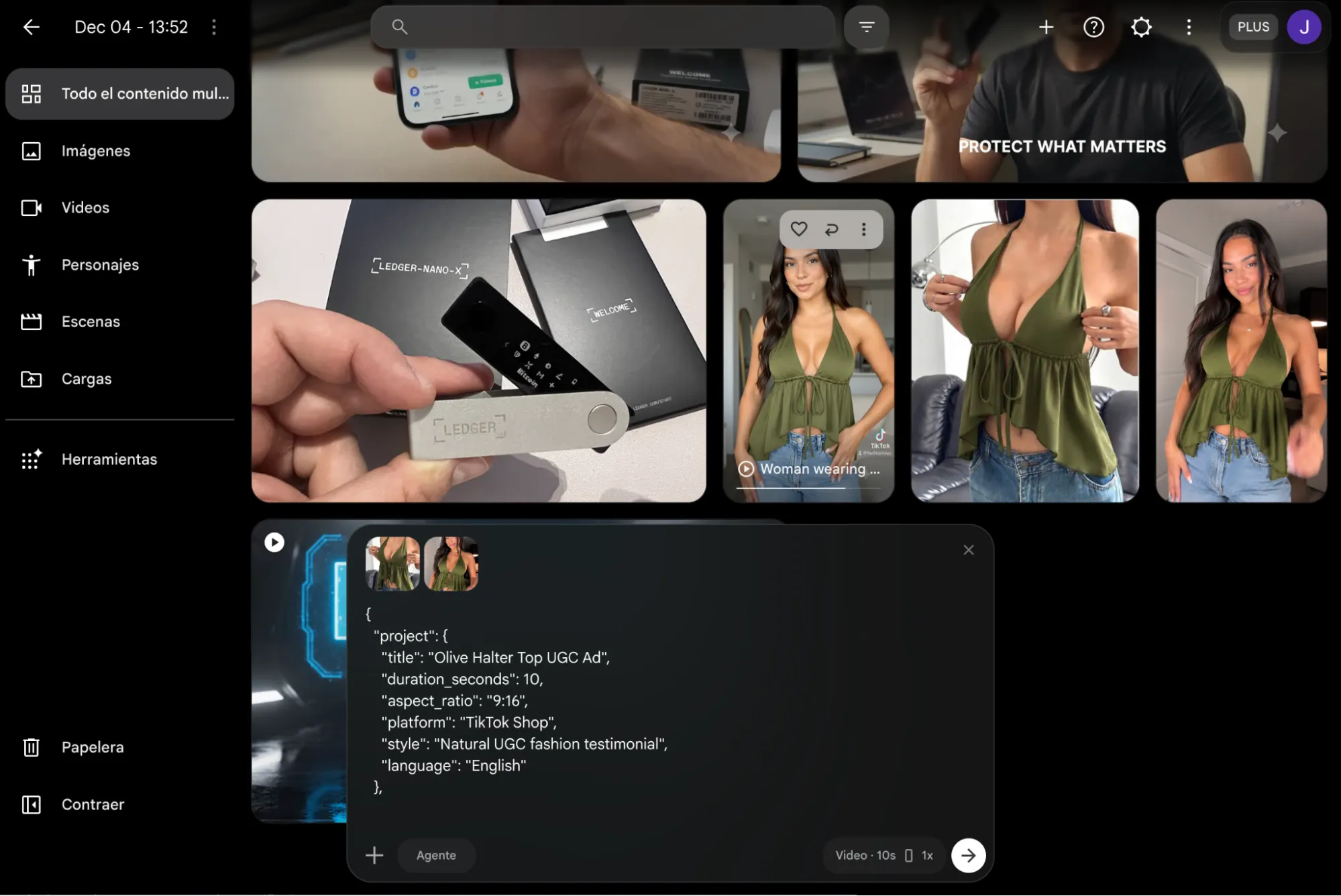
For apparel and accessories, human presence is essential for conversion. Using tools like OpenAI’s GPT Image 2—which currently leads the market in photorealism and product fidelity—marketers can place their product into a custom, AI-generated scene.
By crafting precise prompts, creators can specify demographic details, environmental settings, and lighting conditions to match their target audience. For instance, a prompt might dictate: "Generate a vertical 9:16 photo of a woman in her late 20s wearing this exact garment in a bright apartment. Preserve every characteristic: shape, proportions, color, fabric texture, and fit." This eliminates the need for professional photographers, casting calls, or physical studio rentals.
Step 3: Architecting the Script via JSON
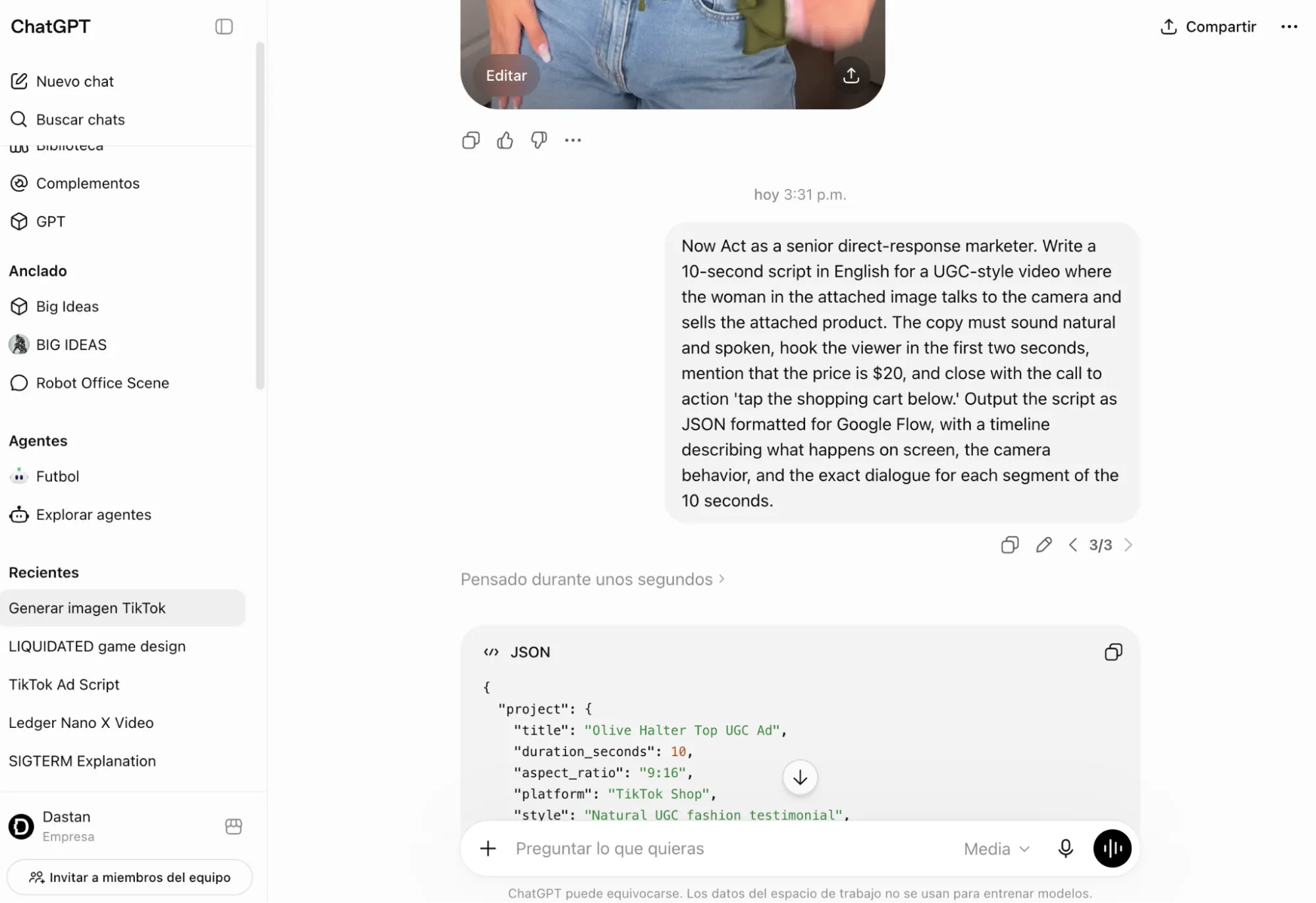
Rather than writing ad copy manually, creators now use AI to perform the "marketing thinking." By prompting an LLM (Large Language Model) to act as a senior direct-response marketer, users can generate 10-second scripts structured in JSON format.

Why JSON? Modern video-generation models, such as those powering Google’s ecosystem, interpret structured timelines—including camera behavior, dialogue, and specific visual beats—with significantly higher accuracy than loose paragraphs. This allows for precise control over the "hook," the value proposition, and the call to action (CTA), such as "tap the shopping cart below" for TikTok or "link in bio" for Instagram.
Step 4: The Generation of Motion
Once the visual and script components are ready, the final video is synthesized using platforms like Google’s Gemini Omni. This model is particularly powerful because it generates clips of up to 10 seconds with native audio, meaning the AI-generated model speaks the dialogue in sync with the visual cues.
While advanced users might lean toward professional API-based tools, the barrier to entry remains remarkably low. Google, for instance, has integrated these capabilities into YouTube Shorts and the YouTube Create app, providing a pathway for creators to generate content at minimal cost.
Step 5: Post-Production and Polishing
The final step involves refining the raw AI output using editors like CapCut. Here, creators trim anomalies—such as repetitive gestures or stuttered phrasing—and add professional-grade, word-by-word captions. While the AI does the heavy lifting, the human element in post-production ensures that the video meets the pacing requirements of high-engagement platforms.

Supporting Data and The "Free" Advantage
The economics of this transition are compelling. While subscription tiers for professional AI suites exist—ranging from $7.99 to $19.99 per month for advanced credit allotments—the existence of "backdoor" access via platform-native apps makes the cost of entry nearly zero.
However, this accessibility comes with regulatory constraints. Google, for example, embeds an invisible "SynthID" watermark into its AI-generated media. While this doesn’t impact the viewer’s experience, it is detectable by platforms. Furthermore, the volatility of AI creativity means that "one-shot" successes are rare; creators must be prepared to generate multiple variations of a single ad to achieve the desired output, making the speed of iteration the new competitive advantage.
Official Disclosure Requirements
As the volume of AI-generated promotional content swells, both social media platforms and regulatory bodies have tightened their disclosure policies. Transparency is no longer optional; it is a platform requirement.
- TikTok: The company mandates that realistic AI-generated images, audio, or video be clearly labeled. Advertisers must toggle the "This ad contains AI-generated content" disclaimer in the TikTok Ads Manager. Failure to disclose commercial relationships in sponsored content can result in account penalties or the removal of videos.
- YouTube: The platform requires creators to check "Yes" in the "AI use" section when uploading content that is realistically altered or generated. Furthermore, any paid promotion must be explicitly disclosed via the platform’s built-in disclosure tools.
- X (formerly Twitter): While X’s policies are more focused on the prohibition of synthetic media that causes "widespread confusion" or "threatens public safety," their advertising standards demand that all ads be honest and consistent with the advertised product.
These policies serve as a guardrail against deceptive marketing, ensuring that while the tools of production have changed, the fundamental requirement for honesty in advertising remains intact.
Implications: The Reality Check
Despite the ease with which one can now generate marketing materials, the barrier to actual sales remains high. A sobering statistic from Camille Moore, president of the marketing agency Third Eye Insights, highlights the disconnect between content production and business viability: of the 803,500 TikTok Shop stores operating in the U.S. in 2025, more than half recorded zero sales.
The implication is clear: The tools are nearly free, but the competition is not.
The ability to create high-quality, AI-generated video is no longer a differentiator—it is now a commodity. The true challenge for the next generation of e-commerce entrepreneurs lies not in the creation of the advertisement, but in the curation of the product, the understanding of the target audience, and the ability to cut through the noise of an oversaturated digital marketplace.
As we move toward 2026 and beyond, the most successful creators will be those who look beyond the "basic pipeline." Advanced techniques—such as maintaining consistent brand voices via platforms like ElevenLabs, implementing motion control, and utilizing node-based workflows like ComfyUI—will define the upper echelon of creators.
For the average user, the current workflow provides a vital, low-risk laboratory to test whether a product has market fit before investing significant capital. The democratized marketing empire is here, but like every gold rush before it, the tools are only as valuable as the strategy behind them.