Threads of Resistance: How the Freedom Quilting Bee Redefined Democracy in the Black Belt
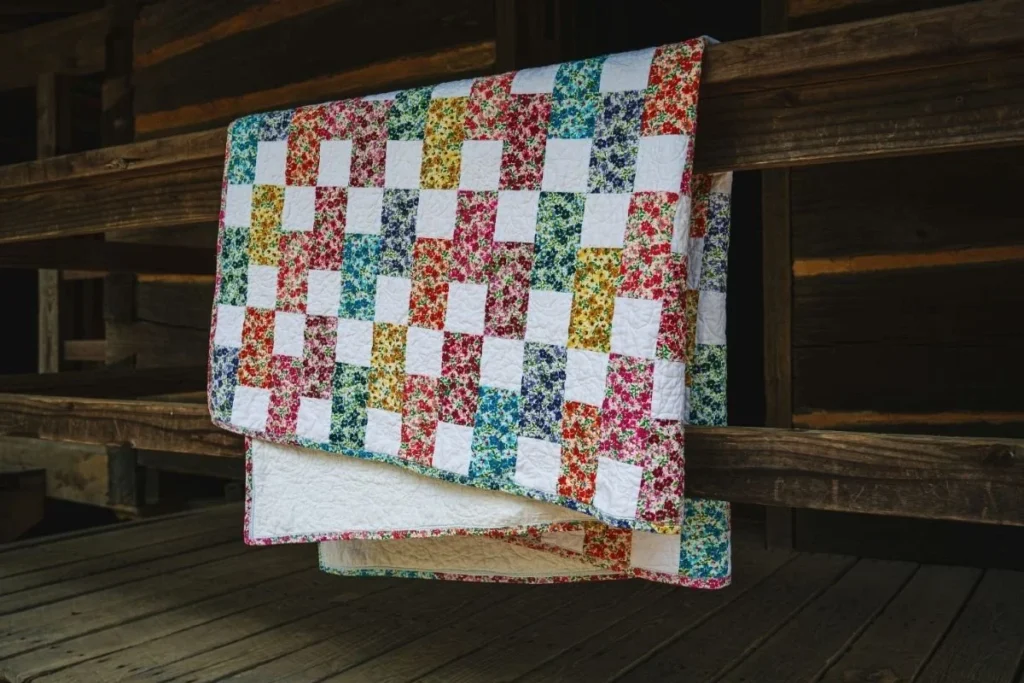
In the heart of Alabama’s Black Belt, where the Alabama River curves around the remote community of Gee’s Bend, the landscape has long been defined by both profound tragedy and extraordinary resilience. For over two centuries, the residents of this isolated peninsula—descendants of enslaved people—navigated a world designed to exclude them from the American promise. Yet, in 1966, an unlikely revolution began not with ballots or protests, but with needles, thread, and vibrant, geometric fabric. The Freedom Quilting Bee (FQB) emerged as a beacon of economic independence and civic participation, proving that democracy is often built most durably at the kitchen table.
The Foundations of the Freedom Quilting Bee: Main Facts
The Freedom Quilting Bee was more than a craft collective; it was a pioneering nonprofit cooperative that transformed the lives of 60 Black women in rural Wilcox County. Founded at a time when Black Americans were systematically disenfranchised, the Bee provided a rare mechanism for financial self-determination.
Under the leadership of visionary artists Estelle Witherspoon, Aolar Carson Mosely, and community ally Father Francis X. Walter, the cooperative bridged the gap between a geographically isolated community and national economic networks. By professionalizing the traditional craft of quilting—a skill honed through generations of necessity—the women of Gee’s Bend created a thriving business entity. They secured major contracts with retail giants like Sears, Roebuck & Co. and gained the attention of the cultural elite, effectively creating a model for cooperative business that served as a blueprint for grassroots economic empowerment.
A Chronological History: From Plantation to Cooperative
To understand the significance of the Freedom Quilting Bee, one must look at the historical trajectory of Gee’s Bend, a place whose very name carries the weight of its origin.
The Legacy of Enslavement (1816–1865)
The land was named for Joseph Gee, a North Carolina planter who established a plantation in 1816. The brutal reality of the era saw 17 enslaved people forced to labor on the 6,000-acre tract. By 1845, the property, along with the people enslaved upon it, passed to Mark H. Pettway. Historical records preserved by Souls Grown Deep detail a harrowing forced migration in 1846, during which Pettway compelled 100 enslaved people to walk the entire distance from North Carolina to Alabama. This history of displacement and forced labor formed the bedrock of the community’s shared memory.
The Sharecropping Trap (1865–1960s)
Post-Emancipation life offered little relief. The sharecropping system kept families in a cycle of debt and perpetual poverty, exacerbated by volatile harvests and systemic exploitation. The Great Depression further deepened the economic isolation of the region, rendering the community largely invisible to the outside world.
The Spark of 1966
The turning point arrived in 1966 when Father Francis X. Walter, an Episcopal priest, became lost in the rural backcountry. Stumbling upon the community, he was struck by the sight of brilliant, complex quilts hanging on clotheslines. Recognizing both the immense artistry and the desperate economic need, he envisioned a coalition that could leverage this talent to fund civil rights activities.
On March 2, 1966, the FQB was born in the home of Estelle Witherspoon. By April 2, it was legally incorporated as a nonprofit cooperative. The momentum was swift; two high-profile auctions in New York City saw nearly every quilt sold, signaling that the outside world was finally ready to recognize the brilliance of the Black Belt’s artisans.
Supporting Data: Economic Impact and Collective Labor
The efficacy of the Freedom Quilting Bee as a business entity is reflected in its scale of operations and the direct impact on household incomes. At its peak, the cooperative functioned as a sophisticated manufacturing hub.
- Production Capacity: The Bee produced approximately 30,000 shams every six months. These small, decorative pillows became a staple of the cooperative’s output, allowing them to scale production for national retail partners.
- Income Growth: Participation in the Bee was transformative. Records indicate that for many families in the Black Belt, the cooperative’s wages increased total household income by as much as 25 percent.
- Business Literacy: Beyond immediate earnings, the cooperative provided a training ground for Black women to learn financial management, contract negotiation, and organizational governance.
- Corporate Reach: The FQB secured design contracts with high-profile entities, including the Chairman of the Columbia Broadcasting Company, effectively breaking the barriers that had previously kept rural Black artisans out of the national marketplace.
Official Voices and Reflections
The impact of the Freedom Quilting Bee was not merely statistical; it was deeply personal. The women who led the Bee saw their work as a form of liberation.
Lucy Mingo, a lifelong piecer and quilter, reflected on the lack of opportunity that defined her youth: “There are so many ladies here in Boykin who really didn’t have the opportunity and didn’t have the skills to go out and get a job. But once they got to the quilting bee, that was something for them. I just didn’t only want it for myself. I wanted it for whoever would get able to get them a job there.”
Nettie Pettway Young, a former board member whose death in 2012 effectively signaled the end of the cooperative’s formal operations, emphasized the psychological shift the Bee facilitated. “The Bee was the first business Black people in Wilcox owned,” she noted. “It was the first time I knew I was special, the first job I had—excusing cotton picking.”
Curators and historians have also framed the Bee within the broader context of American civil rights. Curator Lauren Applebaum noted in an interview with Smithsonian Magazine, “Quilts have always engaged the pressing social and political issues of their time. They have been deployed throughout history by marginalized people to confront instances of violence, oppression, and exclusion.”
Implications: Quilting as Civic Infrastructure
The story of the Freedom Quilting Bee forces a re-examination of what we define as "democratic participation." In the mid-20th century, the formal political system in Alabama was intentionally constructed to prevent Black citizens from exercising their rights. In the absence of a responsive government, the people of Gee’s Bend constructed their own infrastructure.
A Model of Mutual Support
The FQB serves as a masterclass in community-led problem-solving. By pooling their labor, the women created a buffer against the whims of an exploitative economy. This was not just a business; it was a democratic institution where decision-making was shared, and collective responsibility was the guiding principle.
Democracy Beyond the Ballot Box
As the United States reflects on its history, the Freedom Quilting Bee stands as a poignant reminder that democracy is not solely the province of the state. It is sustained by the institutions that citizens build for themselves. The Bee demonstrates that when communities are denied traditional avenues of power, they build their own, using the tools—and the threads—they have at their disposal.
Even though the formal cooperative disbanded in 2012, its legacy persists. It remains a testament to the fact that economic self-sufficiency is a critical pillar of civil rights. The quilts of Gee’s Bend, once symbols of survival, are now recognized as national treasures, but their most important function remains the history they represent: a time when ordinary women, through the sheer force of their collective will, wove themselves into the fabric of American democracy.