India’s Digital Siege: How the Telegram Block Sparked a Massive Surge in VPN Usage and Platform Migration
In a move that has sent shockwaves through India’s digital landscape, the government recently imposed a week-long nationwide restriction on the popular messaging application Telegram. The measure, enacted as a preemptive strike against organized exam-related fraud, has inadvertently triggered a mass migration of users toward digital circumvention tools and alternative communication platforms. As millions of Indians suddenly found themselves cut off from one of the country’s most popular messaging services, the incident served as a potent case study on the resilience of internet users in the face of state-mandated digital barriers.
The restriction was centered on the upcoming re-test for the National Eligibility cum Entrance Test (NEET-UG)—the country’s largest and most high-stakes undergraduate entrance examination. Faced with persistent reports of fraudsters using encrypted channels to circulate fake exam papers and coordinate scams, the government moved to pull the plug on the platform. The resulting fallout provides a rare glimpse into the mechanics of internet censorship, the limitations of digital blocking, and the immediate, reflexive response of a tech-savvy population.
The Chronology of a Digital Blackout
The sequence of events began on June 16, when the Indian government signaled its intent to temporarily restrict access to Telegram. The goal was simple: to secure the integrity of the NEET-UG examination by severing a key communication node used by bad actors.
- June 16 (The Announcement): The government announces a week-long restriction on Telegram. Almost immediately, traffic patterns across the nation begin to shift.
- June 17 (The Surge): App intelligence firms begin reporting record-breaking download spikes for VPN services and alternative messaging apps as users attempt to bypass the block.
- June 18-19 (The Legal Battle): Telegram files an urgent challenge in the Delhi High Court, arguing that a blanket ban is a "disproportionate" response that harms over 150 million legitimate users.
- June 20 (The Court’s Decision): The Delhi High Court hears arguments from both the government and the platform.
- June 21 (The Ruling): The court upholds the government’s decision, citing the emergency nature of the situation and the necessity of preventing widespread exam fraud.
Supporting Data: A Nation in Digital Flight
The impact of the ban was immediate and quantifiable. According to data provided by app intelligence firm Appfigures, the day the restriction was announced marked the largest single-day surge in VPN downloads in India since the start of 2025.
The VPN Explosion
The numbers were staggering. Downloads of major VPN applications jumped by 49%—from a steady daily average of 139,000 to over 208,000 in just 24 hours. The surge was not limited to a few niche services; industry giants saw massive gains:
- Proton VPN: Recorded a 113% increase on Apple’s App Store and a 64% increase on Google Play.
- Turbo VPN: Saw an 85% spike on iOS and a 35% rise on Android.
- NordVPN & ExpressVPN: Also benefited, with respective increases of 41% and 31% on their primary platforms.
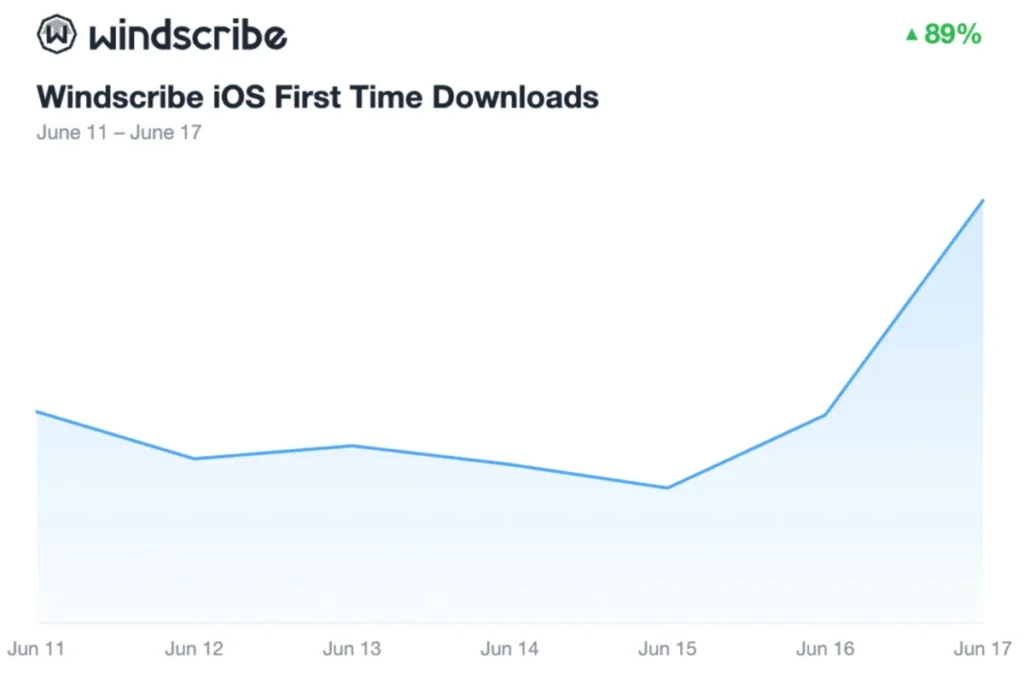
Windscribe, a Canadian provider, reported that its signups from India soared to 100% above its usual baseline. "The spike in India follows the same general trend we see in areas that ban specific apps, introduce age bans, or otherwise restrict internet access," noted Rebecca Rosenberg, growth operations manager at Windscribe.

The Flight to Alternatives
While many sought to bypass the ban, others looked for permanent alternatives. Signal, the privacy-focused messaging app, saw its downloads surge by 72% on the App Store and a massive 322% on Google Play. Viber also saw a 216% increase. Perhaps most notable was the growth of iMe, a third-party client for Telegram, which saw its daily Google Play downloads skyrocket from roughly 800 to over 50,000 in a single day.
The "Ghost" Activity
Paradoxically, the restriction did not lead to a total cessation of Telegram usage. Sensor Tower reported that Telegram’s daily active users actually rose by 17% on the day the measure was announced. Furthermore, Cloudflare Radar reported a sharp, sustained spike in DNS requests for Telegram domains. This suggests that while the government successfully blocked direct access, the "demand" for the service manifested as a persistent, automated, and human-driven attempt to bypass the wall, turning the blockage into a catalyst for heightened engagement.
Official Responses: Proportionality vs. Prevention
The legal and political debate surrounding the ban highlights a fundamental tension between national security and digital freedom.
Telegram’s Stance
Telegram’s legal team argued that the government’s approach was a "sledgehammer to crack a nut." They maintained that the platform had been actively cooperating with authorities by removing specific channels identified as conduits for fraud. Their argument rested on the principle of proportionality: by punishing 150 million users for the crimes of a few, the government was infringing on the rights of the general public.
The Government’s Position
Representing the state, Solicitor General Tushar Mehta defended the measure as a "temporary, event-linked" necessity. The government’s argument was that the sheer scale of the NEET-UG examination, which dictates the future of hundreds of thousands of students, justified an extraordinary response. The government emphasized that the move had a "logical nexus" to the objective—ensuring that no fraudulent papers could be leaked or circulated during the critical window leading up to the test.
The Judiciary’s Verdict
In its ruling on Friday, the Delhi High Court sided with the government. The court concluded that, given the "emergency nature" of the situation and the systemic risk posed by the potential for mass exam fraud, the authorities had followed the necessary legal procedures. The court effectively validated the state’s power to enforce digital curfews during times of national crisis.

Implications: The New Normal of Digital Governance
The events in India are not an isolated phenomenon; they represent a growing trend in global digital governance. Governments worldwide are increasingly comfortable using "internet-off" or "app-off" switches as a first-response tool for social or criminal challenges.
The Normalization of Circumvention
The most significant implication of this incident is the normalization of VPN usage among the general population. When millions of users are forced to install and configure circumvention tools, it creates a permanent shift in digital literacy. Once a user has a VPN on their phone, they are less likely to remove it, effectively creating a population that is better equipped to bypass future government restrictions.
The "Streisand Effect"
The spike in Telegram’s daily active users and the surge in DNS requests suggest that the block may have inadvertently increased the platform’s profile. By focusing so heavily on the app, the government signaled that Telegram is a powerful tool—perhaps more powerful than users previously realized.
Future Policy Challenges
The incident also raises difficult questions for the future of tech policy. If a platform is blocked for a week, and then restored, what is the long-term impact on its business model and the trust of its users? For India, a country with a massive, rapidly growing digital economy, the ability to balance the need for public order with the necessity of an open, accessible internet will remain a defining challenge.
As the dust settles, the week-long restriction on Telegram will likely be studied by policy experts, tech companies, and civil liberty advocates alike. It serves as a reminder that in the digital age, a government can control the infrastructure, but it cannot easily control the intent of the millions of people navigating that infrastructure to reach the content they desire. The "digital siege" may have been successful in its immediate goal of preventing exam fraud, but it has undeniably altered the digital landscape of the country in ways that will be felt for years to come.