The Trillion-Dollar Manufacturing Juggernaut: How China’s Trade Surplus Reshapes Global Economics and Employment
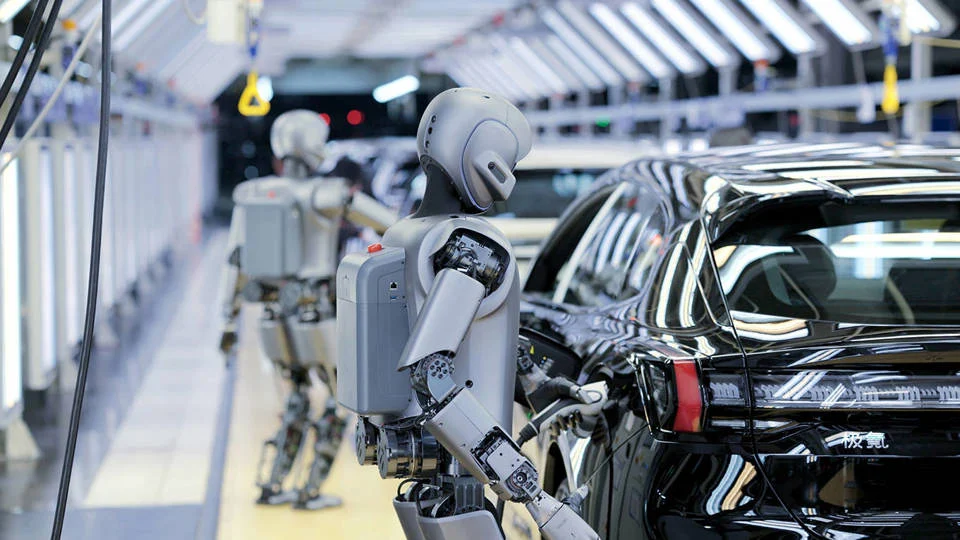
LONDON — In the shifting landscape of twenty-first-century macroeconomics, few forces are as disruptive, persistent, or transformative as the manufacturing might of the People’s Republic of China. With its annual trade surplus now surging past the monumental threshold of $1 trillion, Beijing’s industrial engine is not merely rewriting bilateral trade balances; it is fundamentally altering the laws of global supply, relative pricing, and long-term employment prospects across both the developed and developing worlds.
While policymakers in Washington, Brussels, and other Western capitals grapple with immediate defensive measures—ranging from sweeping tariffs to targeted industrial subsidies—a deeper, more structural reality is frequently obscured by short-term political rhetoric. According to prominent economic thinkers, chief among them former UK Financial Services Authority Chairman Adair Turner, the unstoppable manufacturing prowess of China means that long-held assumptions about industrialization as a universal ladder for economic development must be permanently discarded.
1. Main Facts: The Anatomy of China’s Surplus and Industrial Dominance
To comprehend the scale of the contemporary economic challenge, one must first confront the raw numbers. China’s annual trade surplus has broken historical records, comfortably sitting above $1 trillion. This staggering liquidity accumulation is not an accidental byproduct of post-pandemic recovery; it is the culmination of decades of strategic industrial policy, massive capital investments in automated and high-capacity manufacturing, and a domestic consumption model that has failed to keep pace with soaring national productive capacity.
Key Pillars of the Surplus:
- Unrivaled Scale and Efficiency: Chinese manufacturing benefits from deeply integrated supply chains, world-class infrastructure, and rigorous cost optimization that western competitors struggle to replicate.
- Domestic Overcapacity: Weak domestic consumer demand, exacerbated by structural issues in the Chinese property market, forces industrial enterprises to export excess output to foreign markets at highly competitive, often deflationary, prices.
- Technological Upgrading: Moving far beyond low-cost textiles and plastic toys, China now dominates high-value sectors, including electric vehicles (EVs), renewable energy infrastructure (solar panels and wind turbines), advanced electronics, and industrial robotics.
This vast output creates severe macroeconomic frictions. When a nation produces vastly more than it consumes and sells the remainder to the rest of the world, it exports deflation, suppresses foreign manufacturing margins, and compels importing nations to rethink their economic security.
2. Chronology: From WTO Accession to the Trillion-Dollar Era
The trajectory of China’s rise as the world’s workshop did not happen overnight. It is the result of a meticulously documented historical timeline spanning more than three decades.
Phase I: The Integration Era (1990s–2001)
- 1990s: China establishes itself as an attractive destination for foreign direct investment (FDI), leveraging cheap labor, special economic zones (SEZs), and a welcoming regulatory framework to draw multinational manufacturing operations away from North America, Europe, and Japan.
- December 2001: China officially joins the World Trade Organization (WTO). This milestone serves as the catalyst for the "China Shock," deeply integrating the nation into global trade networks and sparking an unprecedented wave of export-led growth.
Phase II: The Infrastructure and Heavy Industry Expansion (2002–2015)
- Mid-2000s: China’s trade surplus expands rapidly, driven by steel, heavy machinery, and consumer goods.
- 2008–2009 Global Financial Crisis: In response to western demand shocks, Beijing launches a massive domestic stimulus package centered on infrastructure and construction. This cements its dominance in heavy industries like steel and cement, generating structural overcapacities that eventually look outward for absorption.
Phase III: The High-Tech Pivot and Surplus Explosion (2016–Present)
- 2015: Beijing unveils "Made in China 2025," a state-led industrial policy aimed at achieving self-sufficiency and global dominance in high-tech sectors such as aerospace, advanced information technology, robotics, and green energy.
- 2020–2022: Despite global supply chain disruptions during the COVID-19 pandemic, Chinese factories prove remarkably resilient, capturing even greater market shares while western economies grapple with inflation.
- 2023–2026: China’s annual trade surplus shatters historical ceilings, surpassing $1 trillion. Western nations respond with aggressive trade defenses, including U.S. tariffs and European Union anti-subsidy investigations into Chinese electric vehicles.
3. Supporting Data: The Global Employment Delusion
A critical dimension of the debate surrounding China’s manufacturing dominance is its direct impact on global labor markets. For generations, conventional economic development theory prescribed a linear path out of poverty: nations transition from subsistence agriculture to labor-intensive manufacturing, and subsequently to high-value services. This was the playbook successfully utilized by the East Asian "Tigers" (South Korea, Taiwan, Singapore, Hong Kong) in the late twentieth century.
However, data from contemporary global labor trends suggests this traditional path is narrowing—if not closing entirely.
The Developed Economy Reality
In advanced economies, manufacturing employment has been in a secular decline for decades. Automation, artificial intelligence, and advanced robotics mean that modern factories require significantly fewer human workers to generate record-high output. As Adair Turner notes, “In developed economies, manufacturing employment will decline, regardless of industrial strategies pursued.” Western politicians who promise a wholesale return of millions of factory jobs via protectionist tariffs are selling a statistical impossibility.
The Developing World Dilemma
The more profound crisis lies in the Global South. Nations like India and various sub-Saharan African countries are experiencing massive expansions in their working-age populations. Traditionally, economists assumed these demographic bulges would find gainful employment in labor-intensive factories, mirroring China’s early developmental phase.
The data, however, tells a sobering story. China’s absolute dominance in manufacturing cost, quality, and supply chain network effects means that any expectation that developing nations can capture more than a trivial fraction of global manufacturing jobs is, fundamentally, a delusion.
- India: Despite ambitious "Make in India" initiatives, manufacturing’s share of India’s GDP has hovered stubbornly around 15–17%, failing to absorb the millions of young workers entering the labor market annually.
- Sub-Saharan Africa: Rapid demographic growth is outpacing industrial job creation. Without the capacity to compete with automated, highly efficient Chinese manufacturing ecosystems, African nations risk premature deindustrialization—becoming consumers of cheap foreign goods before building robust domestic industrial bases.
4. Official Responses: Protectionism, Subsidies, and Geopolitical Friction
Faced with the relentless tide of Chinese exports and the political fallout of stagnant domestic industrial employment, governments around the world are scrambling to formulate policy responses. These strategies represent a profound departure from the free-market orthodoxy that dominated global trade governance for the past forty years.
The United States: Tariffs and Decoupling
Washington has adopted an increasingly aggressive posture toward Chinese trade surpluses. Following the Section 301 tariffs initiated during the Trump administration, the Biden administration maintained and expanded these barriers, levying steep tariffs on Chinese electric vehicles (hiking them to 100%), semiconductors, solar cells, and critical minerals. Concurrently, legislation such as the CHIPS and Science Act and the Inflation Reduction Act (IRA) inject hundreds of billions of dollars into domestic semiconductor and green technology manufacturing to secure supply chain resilience.
The European Union: De-risking and Anti-Subsidy Probes
Brussels walks a delicate diplomatic tightrope, framing its policy not as "decoupling" but as "de-risking." Nevertheless, the European Commission has launched aggressive trade investigations, most notably into state-subsidized Chinese electric vehicles, leading to the imposition of countervailing duties. European policymakers are increasingly alarmed that unabsorbed Chinese industrial capacity will flood European markets, bankrupting local automotive and clean-tech champions.
Beijing’s Counter-Narrative
Predictably, Beijing rejects accusations of unfair trade practices or weaponized overcapacity. Chinese officials argue that their manufacturing success is the legitimate reward of decades of relentless innovation, high savings rates, robust education investment, and unmatched supply chain efficiency. Furthermore, Chinese leadership contends that its exports of affordable green technologies—solar panels, wind turbines, and EVs—are an indispensable global public good, vital for helping the world achieve net-zero carbon emissions.
5. Implications: Navigating a Post-Industrial Global Economy
The structural realities illuminated by China’s $1 trillion trade surplus force a radical reimagining of global economic governance, national development strategies, and the future of work.
1. The Death of the Export-Led Industrialization Model for the Global South
If traditional manufacturing can no longer serve as the primary elevator out of poverty for nations like India, Nigeria, or Indonesia, developing economies must look toward alternative growth vectors. This may involve leveraging digital service exports, developing localized agriculture value chains, and capitalizing on the global energy transition through the sustainable extraction and local processing of critical minerals.
2. The Rise of Neo-Mercantilism and Industrial Policy
Free trade is giving way to managed trade. Governments across the globe are accepting that national security, technological sovereignty, and social stability are too important to be left entirely to market forces. Subsidies, domestic content requirements, and strategic trade barriers are cementing their status as permanent fixtures of modern economic policy. The risk, however, is a fragmented global economy characterized by retaliatory trade wars, inefficiencies, and lower aggregate global growth.
3. Redefining Prosperity in Advanced Economies
For advanced economies, the challenge is not saving manufacturing jobs—which will continue to shrink as a share of total employment due to productivity gains—but rather managing the transition to high-value services, advanced research and development, and knowledge-based economies. Social safety nets, continuous worker retraining programs, and regional economic revitalization policies will be essential to prevent deep socio-political polarization among populations left behind by industrial shifts.
Conclusion
China’s $1 trillion trade surplus is much more than a bookkeeping anomaly or a temporary trade dispute; it is a structural watershed. As Adair Turner and other leading economists emphasize, denying the permanent realities of modern manufacturing efficiency—whether through political fantasy or unworkable protectionist nostalgia—will only delay necessary structural adjustments. The future belongs not to those who attempt to turn back the clock on global industrial trends, but to those nations, developed and developing alike, that successfully adapt to a world where technological prowess and productivity redefine the boundaries of national wealth.