The Silicon Central Bank: How Nvidia is Rewiring the Global AI Capital Stack
In the high-stakes arena of artificial intelligence, the line between technology supplier and venture financier has not just blurred—it has effectively vanished. Five years ago, Nvidia, the titan of the graphics processing unit (GPU) market, was a traditional corporate participant in the venture ecosystem, occasionally dipping its toes into the market with a single nine-figure investment round. Today, it stands as the most prolific investor in the AI space, fundamentally altering the anatomy of how technology companies are built, financed, and sustained.
Through the first eight months of 2026, Nvidia has participated in at least 53 venture funding rounds of $100 million or more. This staggering volume of activity places the semiconductor giant ahead of the most storied names in venture capital. For comparison, during the same period, Andreessen Horowitz participated in 44 such rounds, Sequoia Capital in 42, and Lightspeed Venture Partners in 38. While these figures track the number of rounds joined rather than the specific dollar amounts contributed, the strategic implications are profound. Nvidia has evolved from a chip manufacturer into the "central bank" of the AI revolution.
A Chronology of Financial Evolution
To understand how Nvidia arrived at this position, one must look at the trajectory of the AI boom itself.
- 2021–2022 (The Hardware-First Era): Nvidia’s dominance was built on a straightforward premise: the world needed GPUs. Cloud providers and developers were desperate for compute power, and Nvidia held the keys to the kingdom. Investment was largely confined to R&D and traditional M&A.
- 2023–2024 (The Infrastructure Pivot): As training models grew exponentially, the cost of entry skyrocketed. Nvidia began to realize that if its customers—AI startups—couldn’t afford the massive capital expenditure required to buy its chips, the market would stall. The company began strategic investments to ensure its ecosystem of buyers remained solvent and active.
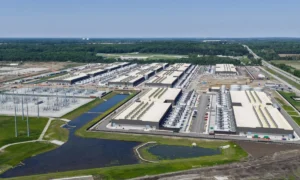
- 2025–2026 (The Financial Architect Era): The current phase represents a total shift. Nvidia is no longer just selling a product; it is structuring the financial ecosystem that allows its products to be consumed. By partnering with global financial powerhouses like BlackRock, Apollo, Blackstone, and Brookfield, Nvidia is mobilizing upwards of $500 billion to build the physical data centers that house its technology.
Supporting Data: The Scale of the Portfolio
The sheer scale of Nvidia’s financial reach is documented in its 2027 fiscal filings. As of July 26, 2026, the company’s equity investments were valued at approximately $99 billion, a meteoric rise from the roughly $7 billion reported just one year prior.
Beyond this equity stake, the company has pledged an additional $25 billion in investment commitments. This portfolio is not a passive collection of stocks; it is a strategic map of the AI landscape. It spans public market incumbents, early-stage AI developers, and, most importantly, the infrastructure providers who turn electricity and silicon into usable compute.
The collaboration with institutional giants—BlackRock, KKR, Goldman Sachs, and others—signifies that Nvidia is moving beyond the venture model into the realm of "infrastructure finance." By mobilizing third-party capital, Nvidia is creating a bridge between the high-risk world of software development and the low-risk, long-term horizon of utility-scale energy and real estate projects.
The Collapse of the AI Capital Stack
Traditionally, the capital stack was a segmented, orderly affair. Venture capital firms provided equity for growth; infrastructure funds financed long-lived physical assets; banks and private credit firms looked for predictable cash flows; and strategic corporate investors took minority positions for synergy.
In the AI era, these walls have collapsed inward. A modern AI company is a financial hybrid. It raises venture capital to develop its proprietary models, borrows against its GPU inventory, signs multi-year compute contracts, leases physical space in a data center financed by private equity, and receives direct investment from the very company that supplies its hardware.
This "circular" dependency places Nvidia at the center of a gravity well. When a startup chooses an AI provider, it is no longer just selecting a processor. It is choosing an ecosystem—one that includes networking, software, cloud capacity, developer support, and, crucially, a direct financial tether to the hardware supplier.
Implications for CFOs and Market Participants
For Chief Financial Officers and technology buyers, this new reality forces a shift in perspective. The question is no longer just "how much money is being spent?" but rather "how economically independent is that spending?"
According to PYMNTS Intelligence research from September 2025, nearly 7% of enterprise CFOs in the U.S. had already deployed agentic AI in live finance workflows, with another 5% in the pilot stage. As these agents take on more decision-making power, they are increasingly interacting with the financial infrastructure that Nvidia helps define.
The Risk of Economic Circularity
The danger, as seen in previous infrastructure booms—most notably the fiber-optic buildout of the late 1990s—is the risk of overcapacity. When the entity supplying the equipment also provides the financing to buy that equipment, the market may lose its traditional "price discovery" mechanism. If the primary driver of growth is subsidized capital rather than organic end-user demand, the risk of a bubble increases.
History teaches us that the economic importance of an underlying technology and the returns earned by those who finance its initial buildout are often distinct variables. Fiber optics became the backbone of the modern economy, yet many of the firms that initially financed the network suffered catastrophic losses when demand failed to keep pace with the massive, debt-fueled supply.
The Shift in Venture Strategy
For venture capital firms, the rules of the game have fundamentally changed. In previous cycles, success was defined by identifying the most innovative company. Today, success is increasingly defined by the ability to secure the "scarce inputs" of the AI age: GPUs, power, data center floor space, and affordable financing.
Nvidia’s involvement in 53 major funding rounds in eight months demonstrates that the company is no longer waiting for the market to bring demand to them; they are actively shaping the financial conditions required for that demand to exist. This creates a powerful feedback loop: Nvidia’s capital allows startups to build, those startups use Nvidia’s chips to scale, and the success of those startups justifies further investment in Nvidia’s ecosystem.
Conclusion: A New Economic Model
Nvidia’s transformation from a semiconductor manufacturer into a central financial pillar of the AI industry is one of the most significant corporate developments of the decade. By effectively becoming the "central bank" of AI, the company has secured a level of influence that extends far beyond its hardware.
However, this consolidation of power brings with it significant questions regarding market health and long-term sustainability. As the AI market transitions from the early, experimental phase into a more capital-intensive, industrial-scale phase, the industry will have to grapple with the realities of its own capital structure. Whether this financial engineering will lead to a more robust, efficient infrastructure or a fragile, circular market remains to be seen. What is certain is that the next chapter of the AI boom will be written as much in spreadsheets and debt covenants as it will be in lines of code or transistor counts.