The Architecture of Provocation: Reflecting on a Quarter-Century of Post-9/11 Strategy
By Timothy Snyder
September 10, 2026
Main Facts
Twenty-five years after the catastrophic events of September 11, 2001, the fundamental mechanics of modern terrorism remain widely misunderstood by the public and critically mishandled by state actors. As observers and historians look back on a quarter-century defined by the "Global War on Terror," the central thesis put forward by geopolitical analysts is stark: the primary objective of terrorism is never merely to inflict immediate suffering or loss of life, but rather to provoke a targeted nation into enacting self-destructive policies.
In the wake of the 2001 attacks, the United States fell squarely into this strategic trap. By reacting with overreach, prolonged foreign military engagements, the erosion of domestic civil liberties, and sweeping geopolitical destabilization, Washington ultimately inflicted deeper wounds upon its own democratic institutions, economic stability, and global moral authority than the initial terrorist strike ever could.
Writing from Kharkiv, historian Timothy Snyder reflects on how imperial and totalitarian secret services—from the historical Russian Empire to the Soviet apparatus—perfected the dark art of provocation. This technique relies on engineering a crisis so profound that the adversary reacts out of emotional trauma and fear, believing they are acting in self-defense, while actually executing the precise playbook laid out by their enemies.
Chronology: A Quarter-Century of Escalation and Overreach
To understand how the United States and the broader international community arrived at the current geopolitical landscape, it is essential to trace the trajectory of the post-9/11 era through key historical milestones:
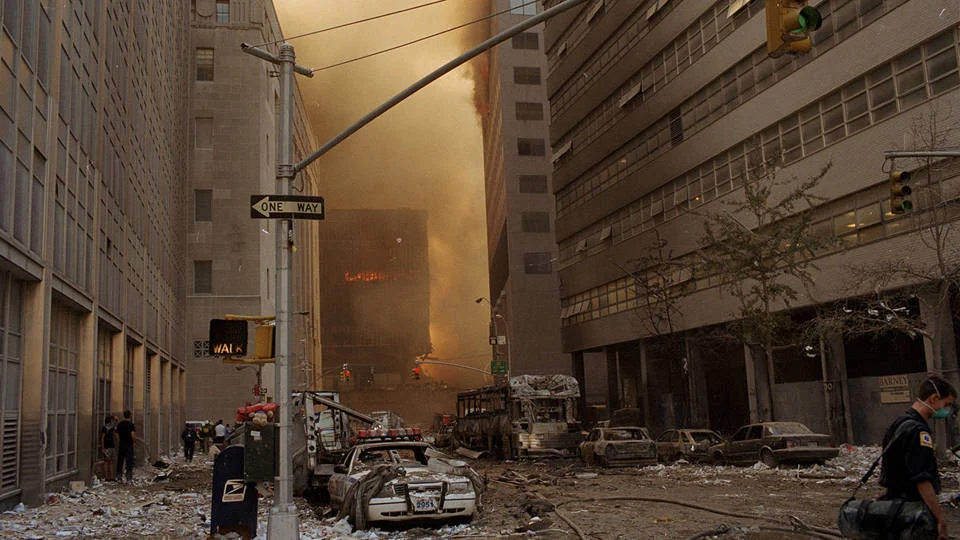
- September 11, 2001: Al-Qaeda coordinates four commercial airplane hijackings, targeting the World Trade Center in New York City and the Pentagon in Arlington, Virginia. Nearly 3,000 lives are lost, instantly transforming the American psychological and political landscape.
- September 18, 2001: The U.S. Congress passes the Authorization for Use of Military Force (AUMF), granting the executive branch sweeping, loosely defined powers to wage war against those responsible for the 9/11 attacks and any "associated forces."
- October 7, 2001: Operation Enduring Freedom begins with the U.S. invasion of Afghanistan, marking the official opening salvo of the Global War on Terror.
- October 26, 2001: President George W. Bush signs the USA PATRIOT Act into law, significantly expanding domestic surveillance capabilities and altering the balance between national security and privacy.
- March 20, 2003: Backed by deeply flawed intelligence regarding weapons of mass destruction, a U.S.-led coalition invades Iraq, toppling Saddam Hussein and triggering a multi-year sectarian civil war.
- 2004–2006: Revelations of detainee abuse at Abu Ghraib prison and the operation of offshore black sites, such as Guantanamo Bay, severely damage America’s moral standing as a champion of human rights and international law.
- May 2, 2011: Osama bin Laden is killed by U.S. Navy SEALs in Abbottabad, Pakistan. While celebrated as a major victory, the death fails to bring structural closure to the sprawling web of foreign interventions.
- 2011–2014: The chaotic aftermath of the Iraq War and broader regional destabilization create a power vacuum that gives rise to ISIS (Islamic State), demonstrating how attempts to eradicate extremism through force often mutate and worsen the threat.
- August 2021: The U.S. military completes its chaotic withdrawal from Afghanistan, ending America’s longest war with the return of the Taliban to power, prompting intense domestic debates over the utility of two decades of bloodshed.
- September 2026: Marking the 25th anniversary of 9/11, scholars, policymakers, and citizens evaluate the long-term strategic deficit accumulated through decades of reactive policymaking, polarization, and democratic erosion.
Supporting Data and Metrics
The true cost of the post-9/11 era is vast, multi-dimensional, and quantifiable through various economic, human, and institutional metrics compiled over the last twenty-five years:
- Financial Expenditures: According to studies from institutions like Brown University’s Costs of War project, the U.S. government has spent upwards of $8 trillion on post-9/11 wars, counterterrorism operations, homeland security, and interest payments on war debt.
- Human Toll: Direct and indirect casualties resulting from post-9/11 military operations in Afghanistan, Iraq, Pakistan, Syria, and Yemen are estimated to exceed 900,000 human lives, the vast majority of whom were civilians. Millions more have been displaced internally and internationally as refugees.
- Democratic Health and Polarization: Domestic policy shifts following 2001 normalized pervasive state surveillance and executive overreach. Analysts note a direct line from the emergency powers claimed in the early 2000s to the heightened political polarization and erosion of trust in democratic institutions witnessed in the 2020s.
- Global Power Shifts: By bogging down its military and diplomatic resources in protracted Middle Eastern quagmires, the U.S. inadvertently provided strategic breathing room for rising authoritarian powers—such as Russia and China—to expand their regional influence and challenge the international rules-based order.
Official Responses and Strategic Assessments
Over the past quarter-century, official reactions from Washington and international bodies have evolved significantly, transitioning from uncritical bipartisan unity to deep retrospective critique.
In the immediate aftermath of the attacks, the political consensus in Washington was absolute. Executive branch officials framed the conflict not merely as a law enforcement issue, but as an existential civilizational war. Agencies like the Department of Homeland Security were rapidly established, and intelligence apparatuses were granted unprecedented authority under the banner of preventing a "second wave" of attacks.
However, subsequent government commissions and independent oversight bodies have offered sharply critical assessments of these early choices. By treating terrorism primarily through a military lens rather than a transnational criminal and intelligence framework, successive administrations fell into the trap of endless entanglement.
In recent years, military strategists and national security experts have increasingly adopted the language of "great power competition," openly acknowledging that decades of counterinsurgency focus diverted crucial attention, capital, and strategic focus away from addressing major peer competitors and systemic transnational challenges like climate change, economic inequality, and cyber warfare.
Implications: Learning from the Trap of Provocation
As the world reflects on twenty-five years of the post-9/11 era, the implications for future statecraft are profound. The central lesson drawn from the history of provocation is that a nation’s greatest vulnerability does not lie in the destructive capacity of its enemies, but in its own emotional and political susceptibility to overreaction.
When a democracy allows fear to dictate its strategy, it risks dismantling the very values—rule of law, open society, institutional checks and balances, and respect for human rights—that make it worth defending. The architects of terror succeed not when they destroy concrete and steel, but when they successfully manipulate a free society into sacrificing its moral compass, draining its treasury, and exhausting its social fabric in pursuit of an unattainable, absolute security.
Moving forward, statesmen and security analysts must recognize that true resilience requires restraint rather than retaliation, and proportion rather than panic. Only by breaking the cycle of provocation can democratic nations avoid repeating the painful and self-inflicted lessons of the past quarter-century.