The Silent Crisis Beneath Our Feet: Why Europe Must Treat Its Dying Soil as a Strategic Asset
GENEVA/PARIS — When the European Union sits down to draft its industrial strategies and determine which economic assets are truly vital to its survival, policymakers almost exclusively fixate on things that can be manufactured in a factory. They obsess over semiconductors, high-capacity batteries, rare earth elements, and green hydrogen—sectors where foreign rivals already dominate or threaten to monopolize production.
Yet, Brussels almost entirely overlooks an asset that cannot be replicated, manufactured, or substituted anywhere else on Earth: Europe’s soil.
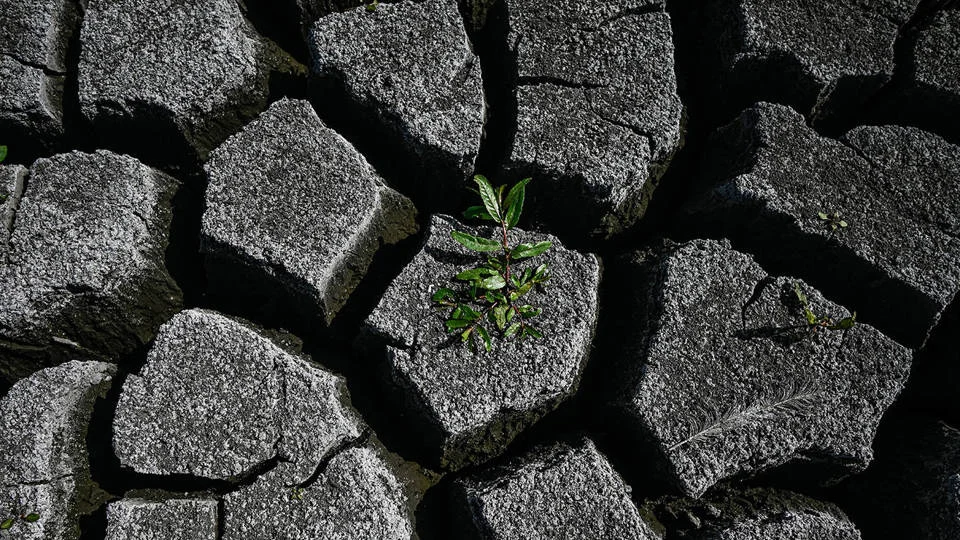
While geopolitically fraught supply chains for technological hardware frequently dominate headlines, a far more fundamental and irreversible crisis is unfolding quietly across the European countryside. Europe’s soil is gradually dying. Despite mounting scientific warnings and billions of euros in annual economic losses, the continent has still not formally recognized healthy soil as a core strategic asset.
Fortunately, the European Union possesses many of the regulatory and financial tools required to reverse this trajectory. However, doing so will demand a radical pivot: moving away from fragmented agricultural subsidies and toward a cohesive, overarching framework that actively rewards farmers for measurable, long-term soil health outcomes.
Main Facts: The Anatomy of a Continental Soil Collapse
At its core, soil is not merely a passive medium for growing crops; it is complex, living infrastructure. It forms the literal foundation of global and regional food systems, accounting for roughly 95% of the food consumed by humanity. Beyond agriculture, European soils act as massive carbon sinks, holding an estimated 75 billion tons of organic carbon—several times the amount stored in the living biomass of all the continent’s forests combined.
Furthermore, the porous, organic structure of healthy soil serves as a vital natural buffer against severe droughts and catastrophic floods. These extreme weather events have transformed from rare anomalies into routine, destructive features of European summers, carrying multi-billion-euro price tags.
Despite these indispensable functions, the European Commission estimates that an alarming 60% to 70% of EU soils are currently unhealthy. This widespread degradation is not an abstract environmental concern; it carries a staggering economic toll, costing the European economy more than €50 billion ($58 billion) annually in lost productivity, disaster recovery, and remediation. Because the formation of fertile topsoil is agonizingly slow—requiring up to a thousand years to generate just a few centimeters—the consequences of continued inaction threaten to become permanent.
Chronology of a Slow-Motion Crisis
To understand how Europe arrived at this precarious juncture, it is helpful to trace the intersecting policy milestones, global conferences, and climate shocks that have defined the soil debate over recent years:
- Pre-2022: Soil degradation is treated primarily as an agricultural or local environmental issue. Economic accounting models entirely omit soil natural capital, focusing solely on agricultural output and raw land values rather than ecosystem resilience.
- The 2022 Energy Shock: Following the Kremlin’s full-scale invasion of Ukraine and the subsequent cutoff of Russian natural gas, European governments are forced to allocate roughly €500 billion to cushion citizens and industries from soaring energy prices. This exposes the deep vulnerability of unaccounted-for dependencies, drawing quiet parallels to the hidden risks of soil degradation.
- November 2024: The EU formally adopts pioneering rules to better measure the environment’s contribution to the economy, requiring member states to compile accounts for seven specific ecosystem services—though the critical services provided by soil, particularly water retention, remain largely marginal.
- December 2024: The landmark Soil Monitoring Law enters into force, establishing a standardized common framework across member states for assessing carbon content, erosion, biological activity, and water infiltration capacity.
- July 2025: The European Commission takes a major step forward by adopting new certification methodologies under the Carbon Removal and Carbon Farming (CRCF) regulation, laying the groundwork for farmers to access financial rewards for verifiable carbon outcomes.
- August 2025: The 17th Conference of the Parties (COP17) to the United Nations Convention to Combat Desertification convenes in Ulaanbaatar, Mongolia, focusing heavily on land restoration and drought resilience. While new funding initiatives are mobilized, nations fail to reach a binding global framework on drought.
- Late 2025 (Expected): The European Commission is scheduled to release its comprehensive framework for European climate resilience and risk management, widely viewed as a critical opportunity to integrate soil health into macro-economic planning.
- October & November 2025: Upcoming international summits—including the UN Biodiversity Conference in Yerevan, Armenia, and the UN Climate Change Conference in Antalya, Turkey—present critical windows for Europe to champion a unified international soil alliance.
Supporting Data: The Cost of Ignoring What We Cannot Count
The fundamental paradox of soil degradation lies in economic measurement. In modern economics, what is not explicitly counted cannot be protected, and policymakers historically fail to price the intrinsic value of healthy land. When a nation’s soil ecosystem undergoes a catastrophic collapse, its gross domestic product (GDP) barely registers the shift in real time, masking the reality that the society has become profoundly poorer.
Europe is acutely familiar with the perils of ignoring hidden dependencies. When Russian gas supplies dried up, European nations scrambled to disburse half a trillion euros to avert societal collapse. Yet, soil degradation operates differently: it is a slow-motion, cumulative process for which human agricultural and land-management practices are wholly responsible. Because no foreign adversary is overnight flipping a switch to withhold fertile earth, policymakers routinely fail to recognize that healthy soil builds fundamental systemic robustness—the absolute capacity of an economy to continue functioning amidst severe environmental shocks.
Consider the compounding financial data surrounding the issue:
- 95%: The share of global food production dependent directly on soil health.
- 75 Billion Tons: The volume of carbon safely locked away in European soils, outstripping forest biomass.
- 60%–70%: The proportion of EU soils currently classified as officially unhealthy by the European Commission.
- €50+ Billion: The estimated annual cost of soil degradation to the European economy.
- 500 Years: The timespan required to naturally generate just a few centimeters of fertile topsoil.
Official Responses and Policy Gaps
Encouragingly, the European Union is not entirely unequipped. The legislative architecture is beginning to take shape. The Soil Monitoring Law provides diagnostic clarity, while the new carbon farming certification methodologies offer a template for monetization.
However, a glaring structural flaw remains: the bloc lacks an overarching strategic plan to connect these disparate measures and translate healthy soil into a tangible economic advantage for the landowners and farmers who maintain it.
The reigning titan of EU agricultural policy, the Common Agricultural Policy (CAP), continues to reward baseline sustainable practices, but it conspicuously fails to pay out for verifiable, measurable improvements in soil health and ecosystem services like water retention.
Business leaders, institutional investors, and agricultural advisers across European value chains argue that the European Commission’s forthcoming framework for climate resilience and risk management must bridge this gap. Specifically, experts are rallying around three non-negotiable commitments for the upcoming framework:
- Expand Mandatory Ecosystem Accounting: Extend formal economic accounting to the vital services provided by healthy soil, prioritizing water retention capacity, and mandate their inclusion in national economic metrics.
- Broaden Outcome-Based Rewards: Move beyond carbon credits to establish robust financial rewards for comprehensive soil health and water-retention metrics, ensuring farmers and land managers directly profit from measurable ecological restoration.
- Align Public Support with Resilience Indicators: Ensure that public subsidies, agricultural grants, and private investment decisions are strictly guided by soil health indicators, mirroring how carbon metrics currently dictate green finance flows.
Implications: A Regressive Hidden Tax on the Vulnerable
Skeptics within political circles frequently argue that Europe’s fragile economy and embattled agricultural sector simply cannot afford these aggressive new commitments. Proponents of systemic reform counter with the exact opposite conclusion: Europe cannot afford not to act.
Dead or degraded soil directly precipitates lower crop yields, inflated food prices, and heightened vulnerability to devastating droughts and floods. These crises do not impact populations equally. Instead, this form of systemic fragility acts as a regressive, hidden tax on society.
To prevent lower-income households from being ruthlessly squeezed by surging food inflation and exposed to intensifying climate disasters, policymakers must abandon the comforting fiction that degrading soil carries no real economic cost.
Globally, awareness is shifting. Nations across the Global South—particularly major exporters of coffee, cocoa, and tropical fruit—are increasingly treating soil health as an indispensable strategic asset to secure their export markets. Meanwhile, Europe risks lagging behind if it maintains fragmented, siloed approaches to land degradation.
To rectify this, Europe should spearhead a dedicated international Soil Alliance, backed by allied governments committed to rigorous measurement and binding incentives for soil restoration. By championing this agenda at the upcoming UN Biodiversity Conference in Armenia and the UN Climate Change Conference in Turkey, Europe can elevate soil from a local farming concern to a pillar of global security.
The French poet René Char once wrote: "Our inheritance was left to us by no testament." Soil passes silently from one generation to the next, yet it remains absent from our balance sheets and economic ledgers. For decades, Europe has diligently counted only what it manufactures and produces, completely ignoring what it possesses beneath its feet. Unless and until that fundamental mindset changes, the slow, silent death of the continent’s soil will march inexorably onward.