The Siege of Multilateralism: How the Trump Administration and Modern Warfare Are Paralyzing UN Peacekeeping
By Adekeye Adebajo
Published: September 24, 2026
Dateline: PRETORIA / NEW YORK
As global leaders converge on Turtle Bay for the annual United Nations General Assembly in New York, the international community finds itself standing at the precipice of a historic security crisis. The world is currently grappling with the highest volume of active armed conflicts since 1946, a staggering descent into global instability documented by the Peace Research Institute Oslo (PRIO), which counts 65 ongoing conflicts across 35 countries. Compounding this carnage, battle-related fatalities since 2021 have surpassed the death toll of the preceding two decades combined.
Yet, rather than serving as the premier forum for collective problem-solving and conflict mitigation, the United Nations finds its hands tied. The organization is facing an unprecedented institutional paralysis, driven not only by the brutal evolution of 21st-century warfare—marked by autonomous weapon systems, swarming drones, and AI-driven cyber warfare—but by a sustained, systemic assault from the United States under the Trump administration.
A stark report recently delivered by UN Secretary-General António Guterres exposes an organization stripped of its traditional levers of power, starved of financial resources, and politically marginalized by its most influential member state.
Main Facts: A Perfect Storm of Global Instability and Institutional Strangulation
The architecture of post-World War II global governance is cracking under the weight of simultaneous polycrises. The core facts defining the current geopolitical landscape point to an alarming systemic failure:
- Historic Conflict Spikes: According to PRIO data, the world has not seen this level of widespread warfare since the immediate aftermath of World War II. From the brutal fragmentation of Sudan and the relentless grinding war in Ukraine to protracted crises in the Democratic Republic of Congo, the Middle East, and the Horn of Africa, localized conflicts are metastasizing.
- Lethality Surge: The nature of modern combat has become exponentially deadlier. More people have died in battle-related contexts since 2021 than in the entire preceding twenty-year span, fueled by the proliferation of cheap, highly lethal military hardware and the total disregard for international humanitarian law by warring factions.
- The US Executive Assault: The Trump administration has weaponized American financial leverage and diplomatic hostility against the UN. By implementing aggressive funding freezes, withholding mandatory budget contributions, and pulling out of critical multilateral frameworks, Washington has effectively starved the UN of the oxygen it needs to sustain complex field operations.
- The Secretary-General’s Distress Signal: Secretary-General Guterres’ recent disclosures highlight an organization structurally ill-equipped to push back. With the UN Security Council perpetually deadlocked by great-power rivalries—exacerbated by Washington’s unilateralist foreign policy—the Secretariat has few operational levers left to enforce ceasefires or protect civilians.
Chronology of Crisis: From Multilateral Optimism to the Return of Unilateralism
To understand how the United Nations arrived at its current state of near-paralysis, it is necessary to trace the erosion of international cooperation over the past decade, culminating in the current standoff at the UN General Assembly.
- 2017–2021 (The First Trump Term): The groundwork for the current institutional crisis was laid during Donald Trump’s first presidency. Washington adopted an explicitly "America First" foreign policy, which manifested in the withdrawal from the UN Human Rights Council, the Paris Climate Agreement, the World Health Organization, and the Iran Nuclear Deal (JCPOA). Critical funding for UN peacekeeping and humanitarian agencies was slashed, signaling a shift from American leadership in multilateral institutions to overt hostility.
- 2022–2024 (The Post-Pandemic Resurgence of Conflict): As the global economy reeled from the COVID-19 pandemic, geopolitical fractures deepened. The Russian invasion of Ukraine in 2022 shattered European security architecture and paralyzed the UN Security Council, as veto-wielding permanent members engaged in reciprocal blockades. Concurrently, neglected conflicts in Africa and the Middle East exploded due to dwindling international attention and resources.
- 2025 (The Return of the Trump Administration): With the return of Donald Trump to the White House, the pressure on international bodies intensified exponentially. Rather than pursuing diplomatic re-engagement, the new administration accelerated its retrenchment from global commitments. Threats of total defunding for specialized agencies became routine, and diplomatic appointments sidelined career internationalists in favor of ardent nationalists bent on dismantling global governance structures.
- September 2026 (The General Assembly Showdown): As global diplomats assemble in New York, the UN finds itself at a historical low point. Secretary-General Guterres releases his damning assessment of global peace architecture, laying bare the reality that the world’s premier peace organization is financially starved, politically bypassed, and operationally impotent in the face of 65 simultaneous wars.
Supporting Data: The Numbers Behind the Collapse
The existential crisis facing the United Nations is not merely a matter of political rhetoric; it is quantified by hard data illustrating both the scale of human suffering and the systemic denial of resources.
- 65 Active Conflicts: PRIO’s tracking indicates that violence is geographically diffuse, touching 35 distinct nations. Many of these are internationalized civil wars involving proxy forces, making traditional UN mediation nearly impossible.
- Casualty Metrics: Documentation submitted to the UN General Assembly (
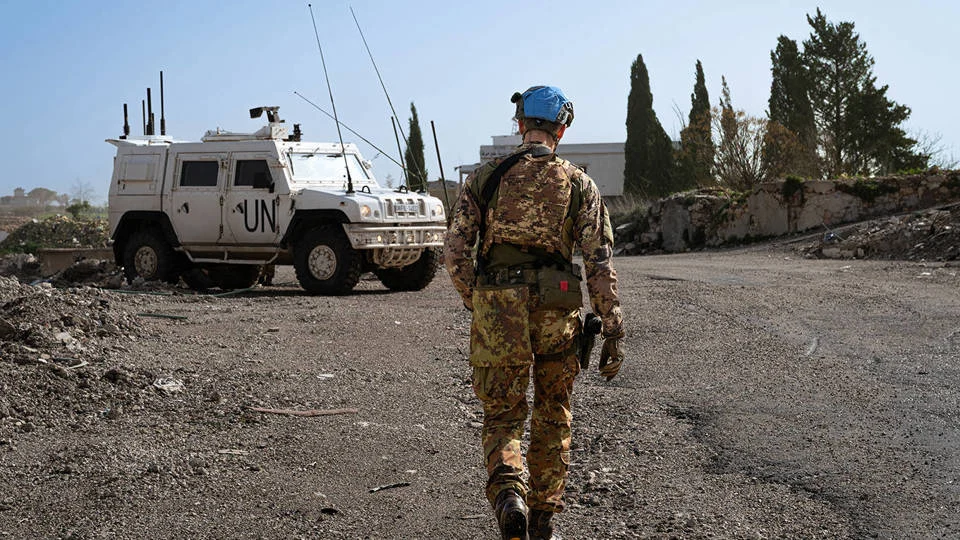
A/80/798) confirms that battle-related deaths have soared past historic baselines. Urban warfare, explosive weapons in populated areas, and deliberate targeting of humanitarian workers have driven civilian casualty rates to unprecedented highs. - The Technological Disconnect: Traditional UN peacekeeping missions—reliant on lightly armed blue helmets in white Toyota Land Cruisers—are fundamentally obsolete in theaters dominated by loitering munitions (suicide drones), commercial quadcopters dropping grenades, and AI-driven cyber operations.
- Financial Strangulation: The United States remains the largest assessed contributor to the UN budget, yet arrears and politically motivated payment delays have routinely pushed the organization to the brink of liquidity crises. During the current fiscal cycle, Washington’s withholding of assessed contributions has forced the Secretariat to freeze hiring, curtail non-essential travel, and scale back critical preventative diplomacy missions in fragile states.
Official Responses and Diplomatic Fallout
The growing chasm between Washington and Turtle Bay has provoked sharp reactions from across the global diplomatic community, splitting member states along traditional North-South and Western-non-Western lines.
The United States Defense
Defending the administration’s posture, senior U.S. diplomatic officials have argued that the American taxpayer should not endlessly bankroll an institution that they view as bloated, inefficient, and fundamentally incapable of holding human rights abusers accountable. In closed-door briefings leading up to the General Assembly, U.S. representatives emphasized a preference for bilateral diplomacy, ad-hoc coalitions of the willing, and burden-sharing that places primary security responsibilities on regional actors rather than distant global bureaucrats.
The Global South’s Alarm
For developing nations, particularly across Africa, Latin America, and parts of Asia, the American assault on the UN is viewed with profound alarm. Speaking on condition of anonymity, several African ambassadors in New York noted that the withdrawal of UN support leaves a dangerous security vacuum.
"When the UN is defunded and paralyzed, it is not Washington or Geneva that suffers first; it is the populations of the Global South caught in the crossfire of conflicts they did not start," one senior diplomat remarked in Pretoria. "By crippling the UN, major powers are effectively writing off multilateralism in favor of a lawless ‘might makes right’ international order."
The UN Secretariat’s Plea
Secretary-General Guterres, in his address to the General Assembly, issued a sobering warning against the creeping normalization of global lawlessness. While exercising diplomatic restraint regarding specific member states, Guterres made it clear that the organization cannot perform miracles while its hands are tied behind its back.
"We are asking peacekeepers to navigate the battlefields of the 21st century with the tools of the 20th, while simultaneously fighting off financial strangulation and political sabotage," Guterres stated. "If multilateralism fails, the alternative is not isolation; it is a descent into a darker, more volatile world where no nation is safe."
Implications: The Future of Global Order
The systematic weakening of the United Nations under the weight of U.S. hostility and technological warfare carries profound, long-term implications for global stability.
- The Rise of Regional Policing and Fragmentation: As the UN loses its capacity to project credible peacekeeping forces, regional organizations—such as the African Union, ECOWAS, or ad-hoc security pacts—will increasingly be forced to manage crises on their own. However, these bodies frequently lack the financial resources, logistical airlift capabilities, and diplomatic neutrality required to sustain long-term peace operations.
- Impunity for War Criminals: With the UN Security Council deadlocked and the Secretariat disempowered, major powers and their proxies face fewer deterrents against violating international law. The normalization of aggressive territorial conquest, extrajudicial killings, and the weaponization of civilian infrastructure sets a dangerous precedent for the remainder of the 21st century.
- The Erosion of International Law: The post-WWII international legal order—built on the pillars of sovereignty, human rights, and the peaceful settlement of disputes—is rapidly giving way to transactional diplomacy. When powerful nations treat international institutions as disposable conveniences rather than binding frameworks, the global commons devolves into an anarchic arena where small and middle powers are left utterly defenseless.
Conclusion
As the General Assembly debates drag on in New York, the stark reality on the ground remains unchanged. With 65 conflicts raging, millions displaced, and technology rendering traditional warfare infinitely more lethal, the world desperately needs a robust, empowered United Nations. Instead, it faces an organization under siege from within and without.
Unless member states—and most crucially, the United States—recognize that collective security is not a zero-sum game of national interests, the current paralysis of the UN will transform into a permanent collapse, leaving humanity to navigate an increasingly lawless and violent century alone.