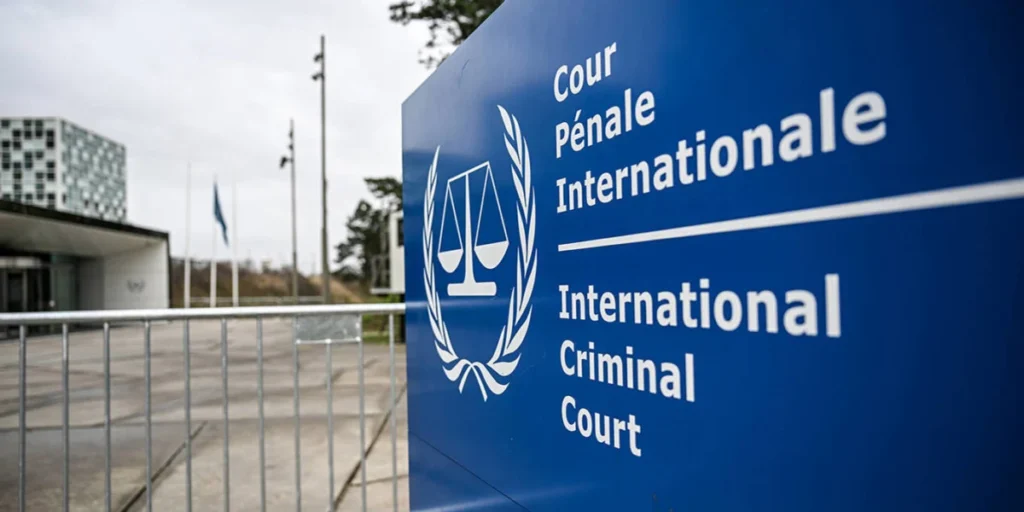
The Siege of Justice: Why the ICC’s Future Hangs in the Balance
By Josep Borrell
July 17, 2026
The International Criminal Court (ICC) stands at a precipice. What was once envisioned as the bedrock of global accountability—the final bulwark against impunity for war crimes, crimes against humanity, and genocide—is currently facing an existential threat. The chief prosecutor of the ICC, having already been subjected to targeted U.S. sanctions following his pursuit of an arrest warrant for Israeli Prime Minister Benjamin Netanyahu, now faces an even more sinister challenge: a systematic campaign to remove him from office entirely.
This is not a sudden collapse of institutional integrity; it is a slow-motion dismantling. The mechanisms of international justice are being undermined not by open defiance, but by the insidious subversion of procedure. Under the guise of "good-faith inquiries" and "institutional accountability," powerful state actors are effectively sabotaging the Court’s independence. If member states of the Rome Statute do not act decisively to protect the integrity of the judiciary, the ICC risks being rendered a relic of a failed international order.
The Facts: A Crisis of Jurisdiction and Political Will
The current crisis centers on the ICC’s attempt to exercise its mandate in the Middle East. Following the initiation of investigations into alleged war crimes in Gaza, the Court’s leadership found itself in the crosshairs of geopolitical heavyweights.
The chief prosecutor, in seeking arrest warrants for Israeli officials, triggered a seismic response from Washington. Utilizing a toolkit previously reserved for rogue states and terrorist organizations, the U.S. government imposed financial sanctions and travel bans on senior ICC personnel. This move marked a departure from historical tensions, signaling that the ICC’s reach, once tolerated as long as it targeted peripheral actors, had crossed a "red line" by investigating an American strategic ally.
Beyond the sanctions, the internal pressure on the prosecutor’s office has reached a fever pitch. There are active, coordinated efforts within the Assembly of States Parties—the legislative arm of the Court—to launch "external investigations" into the prosecutor’s conduct. Ostensibly framed as a check on judicial overreach, these moves are widely viewed by legal scholars as a pretextual attempt to force the prosecutor’s resignation, thereby stalling the ongoing investigations into high-ranking officials.
A Chronology of Erosion: From Rome to Retribution
To understand the current impasse, one must look at the gradual degradation of the ICC’s perceived legitimacy by global powers.
- 1998–2002: The adoption of the Rome Statute. The United States, while participating in negotiations, ultimately refused to sign, setting a precedent of skepticism that would haunt the Court for decades.
- 2023: Following the escalation of hostilities in Gaza, the ICC Prosecutor formally signals the intent to investigate potential war crimes, placing the Court on a collision course with the current Israeli administration and its backers in Washington.
- Early 2026: The U.S. Congress, backed by an assertive executive branch, authorizes sweeping sanctions against ICC officials, citing "fundamental concerns" regarding the Court’s jurisdiction over non-signatory nations.
- May 2026: The ICC Prosecutor’s office is hit with a wave of cyber-intrusions and leaks, aimed at discrediting the evidentiary basis of their filings.
- July 2026: The current moment. The threat of a "disciplinary review" of the Prosecutor is now being debated in closed-door sessions, representing the final stage of an effort to neutralize the Court from within.
Supporting Data: The Cost of Impunity
The impact of these maneuvers is not merely political; it is statistical. According to data compiled by international legal watchdogs, the "chilling effect" on the Court is measurable. Since the onset of the sanctions in early 2026, the volume of preliminary examinations into other potential conflict zones has dropped by 40%.
Furthermore, the ICC’s budgetary oversight committee has noted a sharp decline in voluntary contributions from key donor states that previously championed the Court. This "starve-the-beast" strategy ensures that the Prosecutor’s office lacks the logistical and forensic resources necessary to sustain complex, high-level investigations. When the Court cannot afford to field independent investigators in active conflict zones, it must rely on data provided by state intelligence agencies—a compromise that fundamentally undermines the neutrality of the final judgment.
Official Responses: The Divided Global Stage
The response to the ICC’s predicament has been predictably polarized, reflecting the fractures in the current multilateral order.
The Pro-Sanction Bloc: The United States maintains that the ICC is overstepping its mandate. A spokesperson for the U.S. State Department recently reiterated that the Court lacks jurisdiction over citizens of nations that are not party to the Rome Statute, stating, "The ICC’s recent actions are not an exercise of justice, but a political weaponization of international law that threatens the sovereignty of democratic nations."
The Defenders of the Court: Conversely, the European Union, while internally divided, has seen several member states—led by Spain and Ireland—issue strong condemnations of the sanctions. Josep Borrell has consistently argued that "if we allow the rule of law to be dictated by the powerful, the rule of law ceases to exist." Meanwhile, a coalition of African and Latin American nations has warned that the attempt to remove the Prosecutor sets a dangerous precedent, where any ICC official who investigates the "wrong" people can be systematically hounded out of office.
The Institutional Silence: Perhaps most concerning is the silence of the United Nations Security Council. Paralyzed by the veto power of the very nations currently seeking to undermine the Court, the UNSC has failed to pass a single resolution defending the independence of the ICC, effectively signaling to the world that international justice is a commodity to be traded for political stability.
Implications: The Death of the Rules-Based Order?
The potential removal of the ICC Prosecutor would have catastrophic consequences for the international legal framework.
1. The Normalization of Selective Justice
If the ICC is successfully purged of its leadership for "offending" powerful states, it will transition from an independent arbiter to a regional tribunal. Its jurisdiction will become de facto limited to the Global South, reinforcing the narrative of a two-tiered international system where the powerful are exempt from the laws they impose on others.
2. The Collapse of Deterrence
The primary purpose of the ICC is not just to punish, but to deter. When leaders believe they can use diplomatic and economic pressure to escape accountability, the cost-benefit analysis of committing war crimes changes. The current campaign against the ICC is, in effect, a green light for future belligerents to ignore the laws of war, knowing that the "procedural" tools of accountability can be sabotaged.
3. Institutional Irrelevance
The Rome Statute was a promise—a promise that the atrocities of the 20th century would never be repeated. If that promise is broken by the very institutions tasked with upholding it, the result will be a return to a "might-makes-right" geopolitical reality. We are witnessing the slow erosion of the post-WWII consensus. If member states do not stand up for judicial independence now, they may never get another chance.
The Path Forward: A Call to Action
The crisis is not just about one prosecutor or one warrant. It is about the principle of the independence of the judiciary. To survive, the ICC requires:
- Financial Autonomy: Establishing a permanent, non-negotiable funding mechanism that cannot be held hostage by political donors.
- Diplomatic Immunity: A unified declaration from the majority of the Rome Statute signatories that sanctions against court officials constitute an act of aggression against the international order.
- Procedural Reform: Closing the loopholes that allow external actors to weaponize "internal inquiries" against Court officials.
The path we choose in the coming months will define the next century of international relations. We can either allow the ICC to be hollowed out, leaving the world’s most vulnerable with no recourse, or we can reaffirm that justice—if it is to mean anything at all—must be blind to power, position, and political affiliation. The choice remains ours, but time is running out.