The Revolutionary Frontier: How Native American Leaders Are Redefining the American Experiment
As the United States approaches its 250th anniversary, the nation finds itself in a period of intense historical introspection. At the heart of this national reckoning lies a fundamental contradiction: the Declaration of Independence, a document that promised universal equality, simultaneously codified a system that restricted power to a privileged few.
Nearly three months before the ink dried on that founding document in 1776, Abigail Adams famously warned her husband, John, to "Remember the Ladies." Her plea was a prescient critique of a nascent democracy that sought liberation from a king while perpetuating the exclusion of its own citizens. Today, that critique resonates with renewed urgency, particularly regarding the indigenous peoples whose ancestors stewarded this land long before the American experiment began.
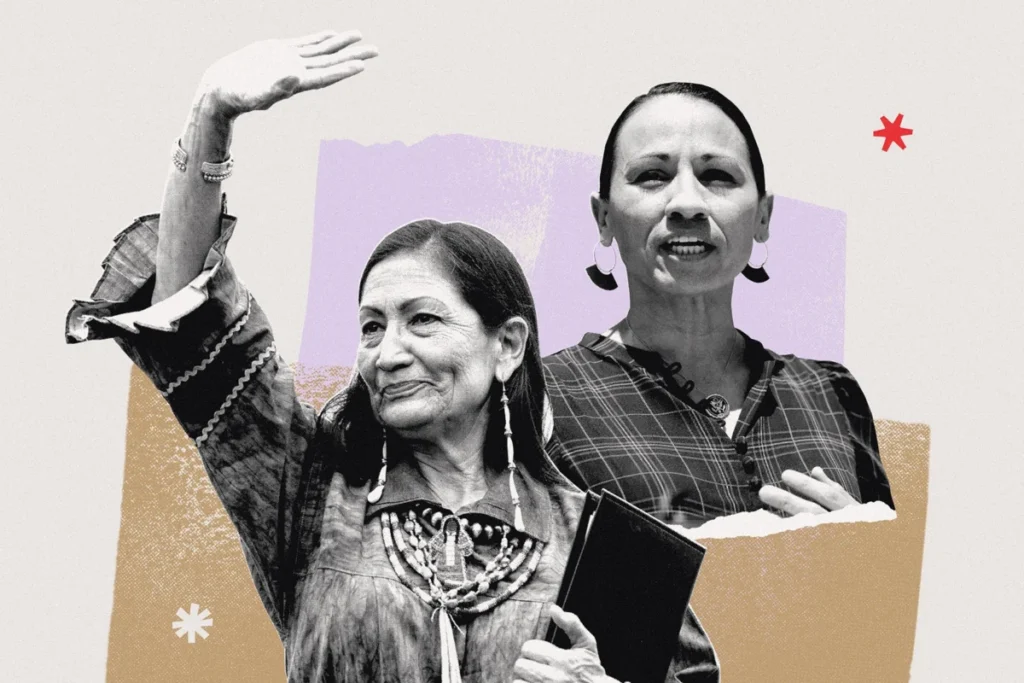
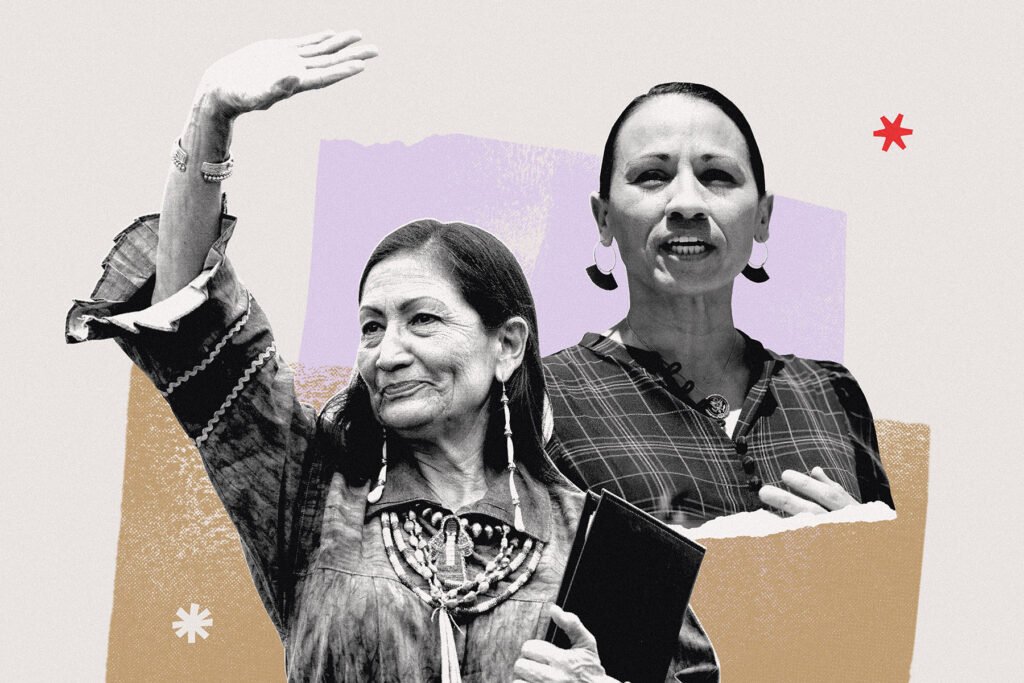
The story of the United States is incomplete—and perhaps misunderstood—without centering the endurance, sacrifice, and political contributions of Native Americans. From their role in the Revolutionary War to the historic leadership of women like Sharice Davids and Deb Haaland, Indigenous communities are not merely historical footnotes; they are the architects of a more inclusive future.
The Paradox of the "Frontier"
The Declaration of Independence famously categorized Native Americans as "merciless Indian savages" and "domestic insurrectionists." This language, used to justify the grievances of the colonies against the British Crown, set a tone of marginalization that would persist for centuries.
Yet, the historical reality is far more nuanced. Tribes such as the Catawba, Delaware, and Oneida actively participated in the American Revolution, scouting and fighting for the 13 colonies. They brought with them centuries of democratic traditions and governance structures that predated the U.S. Constitution. The irony remains stark: Native nations fought for the birth of a country that would not recognize them as citizens until 1924, and which would spend the subsequent century systematically attempting to dismantle their cultures and sovereignty.
Harvard political philosopher Danielle Allen, author of Our Declaration: A Reading of the Declaration of Independence in Defense of Equality, argues that the American project must evolve beyond symbolic gestures. "Respect for the dignity of others isn’t just about singing ‘Kumbaya,’" Allen notes. "It is about sharing power with others."
Chronology: A Legacy of Service and Resilience
To understand the current political landscape, one must look at the long trajectory of Indigenous engagement with the U.S. government:
- 1770s: Native American nations participate in the Revolutionary War, often navigating complex alliances to protect their ancestral lands and sovereignty.
- 19th–Early 20th Century: The federal government enacts policies of forced assimilation, including the creation of Indian boarding schools designed to eradicate Native language and culture.
- 1924: The Indian Citizenship Act is passed, finally granting citizenship to all Native Americans born in the United States.
- 1940s–1970s: Native Americans serve in U.S. military conflicts in disproportionately high numbers, despite the lack of full civil rights at home.
- 2018: Sharice Davids (Ho-Chunk Nation) and Deb Haaland (Laguna Pueblo) make history as the first two Native American women elected to the U.S. Congress.
- 2021: Deb Haaland is confirmed as the first Native American cabinet secretary in U.S. history, heading the Department of the Interior.
Supporting Data: The Military and Political Vanguard
The contribution of Native Americans to the American military is unmatched. Indigenous service members currently serve in the U.S. Armed Forces at five times the national average. Furthermore, the demographic profile of these service members is unique: they represent the highest concentration of women service members compared to any other racial or ethnic group in the country.
This commitment to service is deeply embedded in the families of contemporary leaders. Deb Haaland’s father was a decorated Marine combat veteran, and her mother served in the Navy before a 25-year career at the Bureau of Indian Affairs. Similarly, Sharice Davids comes from a family with a multi-generational legacy of military service, including her grandfather’s 23-year career in the Army and her mother’s enlistment.
"The biggest lesson from that was that you can be of service, and being of service doesn’t mean being oblivious," Davids reflects. "If there are things that I want to change, I have the opportunity to do that."
Official Responses and Policy Shifts
The transition from being the subjects of federal policy to the architects of federal policy has been transformative. As Secretary of the Interior, Deb Haaland utilized her position to confront the dark legacy of the boarding school system. Her department launched a federal initiative to investigate the conditions and mortality rates of these institutions, forcing a national reckoning with a policy that had been ignored by the executive branch for over a century.
"Nothing that the federal government did to break us apart and eradicate our tribes worked," Haaland stated during her tenure. "Everything they tried to do to get rid of us failed."
In Congress, Haaland held the first-ever House hearing on the crisis of Murdered and Missing Indigenous Women (MMIW), a move that brought national attention to the fact that Indigenous women are three times more likely to be sexually assaulted than their non-Indigenous peers.
Sharice Davids, serving her fourth term in Congress, has applied the lessons learned from her time living and working on the Pine Ridge Reservation. Her approach to governance emphasizes trust-building over top-down policy mandates. "My job is a lot of listening and not dictating to people what it is they should want or need," Davids says. "Instead, it’s more of building up trust."
Implications for the 250th Anniversary
As the United States approaches its semiquincentennial in 2026, the question of what we are celebrating is central to the national discourse. For Native Americans, the anniversary is not merely a celebration of the founding of the United States, but a testament to their own survival and enduring connection to the land.
The implications of this shift in leadership are profound. When Indigenous women occupy seats of power, they do not merely represent their own communities; they broaden the definition of what it means to be an American. They bring a perspective that values long-term stewardship, historical truth-telling, and a commitment to service that transcends partisan politics.
The New Revolutionary Front
The "revolutionary" nature of these leaders lies in their ability to use the tools of the state—the same state that once sought their erasure—to advocate for the rights of the marginalized. This is the "democratic frontier" that Danielle Allen describes: a space where equality is not just a theoretical promise but a functional reality.
As we look toward the 250th anniversary, the legacy of leaders like Davids and Haaland suggests that the true strength of the American experiment lies in its capacity for self-correction. By acknowledging the original inhabitants of this continent as active, revolutionary participants in our democracy, the United States may finally begin to reconcile its founding myths with its modern reality.
"We’re still here," Haaland said. "Because this is our land, and they can’t separate us from it."
Ultimately, the inclusion of Native American voices in the highest echelons of government serves as a reminder that the American project is not a fixed, static event that concluded in 1776. It is a living, breathing, and occasionally painful process—one that requires the vigilance, participation, and, as Abigail Adams urged, the "remembrance" of all its people. Whether through the legislative halls of D.C. or the grassroots movements in rural communities, the work of perfecting the union continues on the ground that has always been, and will always be, Indigenous land.