The Quiet Revolution: How Even Realities is Challenging Tech Giants in the Smart Glasses Arms Race
The global wearable technology sector is currently witnessing a high-stakes standoff. As tech titans Meta and Snap aggressively roll out new iterations of camera-equipped smart glasses, a quieter, more calculated revolution is taking place on the sidelines. Shenzhen-based startup Even Realities has emerged as a formidable dark horse, securing a $1 billion valuation in a $150 million pre-Series B funding round led by Meituan, with continued support from Tencent.
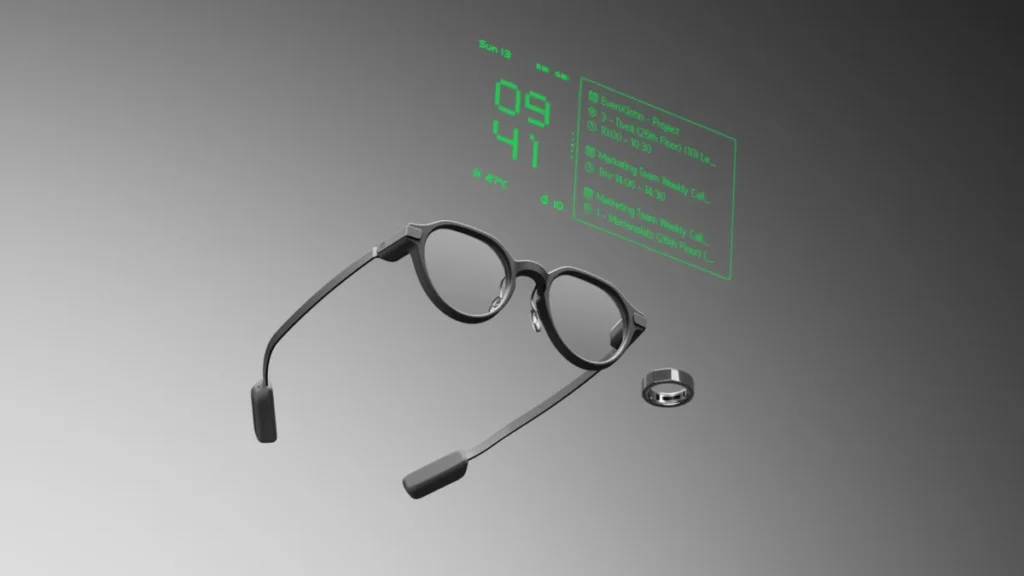
While the industry narrative has largely focused on "capture-first" devices—glasses designed to record the world—Even Realities is betting its future on a "display-first" philosophy. By eschewing cameras entirely in favor of high-fidelity heads-up displays, the company is carving out a niche that prioritizes professional utility, privacy, and optical elegance over social media content creation.
A New Contender in the Wearable Arena
The smart glasses market is currently defined by a clash of ideologies. On one side, companies like Meta are focused on AI assistants that "see" what the user sees, integrating cameras to facilitate real-time interaction with the physical environment. On the other side stands Even Realities, which argues that the most effective smart glasses are those that augment the user’s vision without turning the wearer into a walking surveillance node.
The startup’s recent $150 million funding round, which officially pushed its valuation into unicorn territory, underscores the confidence investors have in this alternative path. With backing from giants like Meituan and Tencent, and early support from Sequoia China, Even Realities is proving that it has the financial runway and institutional support to compete directly with Silicon Valley’s finest.
Chronology: From Apple DNA to Unicorn Status
The story of Even Realities is one of rapid acceleration. Founded in 2023, the startup was born from a specialized pedigree. Its founding team is comprised of former Apple engineers—including CEO Will Wang, who contributed to the development of the iPhone and Apple Watch—alongside veteran designers from luxury eyewear houses such as Lindberg.
The company’s trajectory has been remarkably swift:
- 2023: Even Realities is founded in Shenzhen, combining expertise in hardware engineering with high-end industrial design.
- 2024: The company launches the "Even G1," its debut product. Marketed as the lightest waveguide smart glasses at the time, it shattered internal sales targets, moving over 10,000 units and proving that there was genuine consumer appetite for the form factor.
- Late 2024: The "Even G2" flagship is launched. This model solidified the company’s "no-camera" privacy policy, opting for a companion ring interface (the R1) for navigation.
- 2026: The startup secures $150 million in a pre-Series B round, achieving a $1 billion valuation and scaling its workforce from a modest 40 employees to nearly 400 in under two years.
The Philosophy of "Privacy-First" Computing
For CEO Will Wang, the decision to exclude cameras from the G2 was not a technological limitation, but a fundamental design choice. Wang posits that smart glasses represent the most personal computing device in history. Because they are worn on the face for hours on end, they must respect the social contract between the wearer and their surroundings.
"Smart glasses are the first product category to rely on optical displays, which require an entirely different technology stack," Wang explains. "We believe privacy should be designed into both the hardware and the software."
To maintain this standard, the company has implemented a rigorous data architecture. Voice-based features, such as real-time translation, operate by transcribing audio into text locally rather than storing raw recordings. All user data is encrypted, and the company has built its infrastructure to comply with the stringent privacy mandates of the European Union. This approach appeals to a specific demographic: the "power user" who wants the benefits of a digital assistant—like the "Conversate" copilot that summarizes meetings and explains jargon—without the risks associated with constant, cloud-connected visual recording.
Optical Superiority: The "Even HAO" Stack
While competitors often repurpose off-the-shelf components, Even Realities has invested its capital into a proprietary optical technology stack known as "Even HAO" (Holistic Adaptive Optics).
In traditional consumer electronics, a display is a standard component. In the realm of smart glasses, the display is the experience. Even Realities’ approach is to treat the microchip, the waveguide, and the prescription lens support as a single, unified system. By designing these components in tandem rather than sourcing them separately, the company achieves a slimmer, more natural form factor that mimics conventional high-end spectacles.
This focus on the "optical stack" is what separates Even Realities from companies that treat glasses as a peripheral for a smartphone. The company’s investment strategy has been almost entirely tilted toward R&D in optics, ensuring that the visual overlay is crisp, low-latency, and comfortable for the human eye over long periods.
Market Positioning and Supporting Data
Despite its origins in China, the company’s market strategy is distinctly global. Over 50% of its user base is located in the United States, which also hosts the largest segment of its developer community. Curiously, the company has not yet launched its products in China, opting to refine its manufacturing and software ecosystem in international markets first.
The demographic profile of an Even Realities user is also telling. Unlike the younger, creator-focused demographic targeted by Snap or Meta, Even’s customers are largely male professionals between the ages of 30 and 50. A company-conducted survey revealed that approximately one-third of its users are senior corporate executives.
This high-end positioning is reflected in the price. With the G2 frames retailing at $599, and optional additions like the R1 ring and custom prescription lenses pushing the average order value toward $1,000, the company has successfully positioned itself as a premium, B2B-adjacent consumer brand. This pricing strategy has allowed the company to remain profitable while scaling—a rarity in the often cash-burning startup ecosystem.
Implications: A Bifurcating Industry
The success of Even Realities suggests that the smart glasses market is splitting into two distinct categories.
On one hand, the "Meta/Snap" model envisions glasses as an extension of social media—a way to capture memories and interact with the world through a camera lens. This path is high-risk, high-reward, as it faces significant regulatory and social hurdles regarding privacy and public recording.
On the other hand, the "Even Realities" model views smart glasses as an evolution of the workstation. By acting as a subtle, private, and powerful information layer, these devices are finding a home in the pockets—or rather, on the faces—of high-productivity professionals.
The implications for the broader tech industry are profound. If a startup with only 400 employees can successfully challenge the giants of Silicon Valley by focusing on optics and privacy, it suggests that the "arms race" for the face is not just about who has the best AI model, but who can best manage the psychological and physical comfort of the user.
As the industry moves toward 2027 and beyond, the success of Even Realities serves as a reminder that in the world of wearable tech, sometimes the most disruptive feature is the one you decide to leave out. The company’s ability to sell hardware at a premium, attract top-tier capital, and maintain a clear, ethical mandate in a crowded market makes it one of the most interesting companies to watch in the hardware space. Whether the "display-first" model becomes the dominant standard or remains a high-end niche will depend on the company’s ability to maintain its rapid pace of innovation while expanding its footprint beyond the professional demographic.