The Populist Pivot: How Modern Economic Interventionism Threatens Market Stability
For decades, the bedrock of Republican economic philosophy was built upon the principles of limited government, fiscal restraint, and an unwavering commitment to free-market capitalism. It was an ideology that viewed the state as an umpire—ensuring a level playing field—rather than a player determining the outcome of the game. However, a seismic shift has occurred within the modern Republican Party. The traditional laissez-faire orthodoxy has been largely discarded, replaced by a robust, multifaceted populist agenda that seeks to intervene directly in the mechanics of the American economy.
This pivot toward populism is not confined to rhetoric; it is manifesting in aggressive policy initiatives that span everything from pharmaceutical pricing and credit card interest rate caps to industrial policy and, most notably, the volatile sector of property and casualty insurance. By attempting to "manage" affordability through executive fiat and government intervention, the current administration risks repeating the economic failures of the past, creating market distortions that ultimately leave the average consumer worse off.
The Ghost of 1971: The Perils of Price Controls
The current administration’s reliance on price controls as a panacea for inflation is a strategy that history has already judged. To find a comparable period of broad, government-mandated price suppression, one must look back to 1971. In a desperate bid to curb rampant inflation, the Nixon administration imposed a nationwide 90-day freeze on wages and prices.
The results were catastrophic. Instead of stabilizing the economy, the freeze triggered the law of unintended consequences. Inflation, suppressed by artificial ceilings, eventually ballooned to 12%. Price controls created massive supply-side shortages, resulting in the iconic, demoralizing images of long gas station lines and barren supermarket shelves. Today’s attempts to address the "affordability crisis" through similar mechanisms—whether by capping credit card interest or dictating insurance premiums—ignore these hard-learned lessons. When government attempts to override the price mechanism, it effectively blinds the market to supply and demand realities, leading to inevitable shortages and diminished service quality.
A Chronology of Intervention: From Tariffs to Insurance
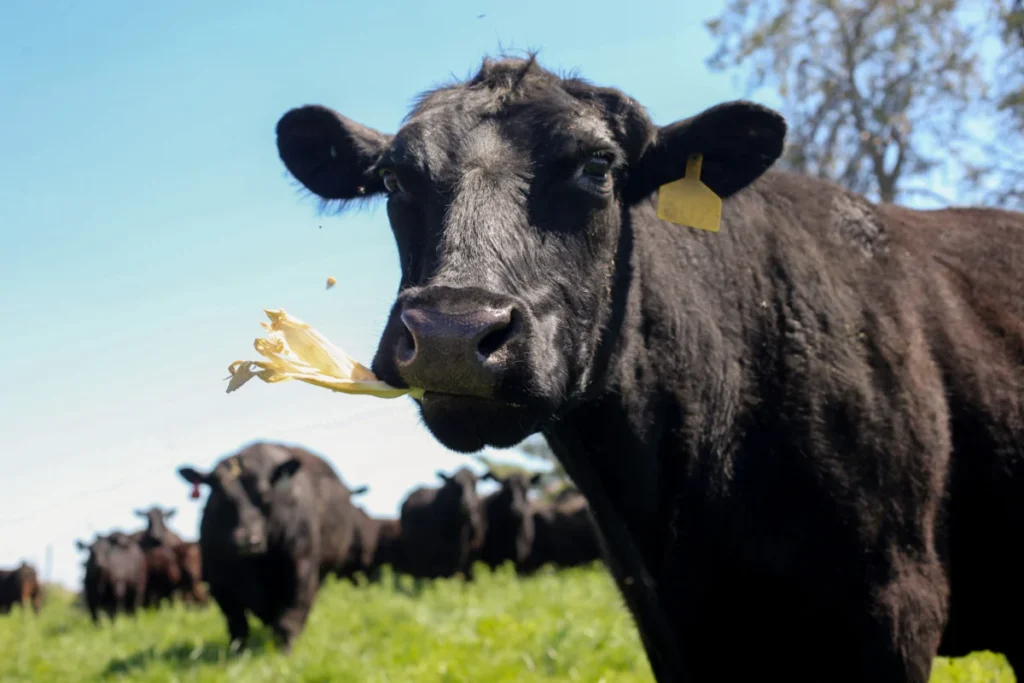
The administration’s interventionist streak is perhaps most visible in its recent, high-stakes gambit regarding the agricultural sector. Facing a 13% year-over-year rise in beef costs, the White House announced a three-month suspension of tariffs on 300,000 metric tons of Brazilian beef, effective September 1.
The Brazilian Beef Stampede
The decision to roll back the 26.5% tariff on Brazilian imports is a classic example of short-term political posturing. While the move aims to drive down beef prices at the grocery store, it sets off a chain reaction of federal liabilities. Under the federal Livestock Risk Protection Program (LRP), ranchers are protected by a "floor price." If the influx of cheap, subsidized Brazilian beef drives domestic market prices below this floor, the federal government is contractually obligated to pay out the difference to ranchers.
This creates a perverse incentive structure: the government subsidizes ranchers’ insurance premiums by 35% to 55%, with an additional 10% for veterans and young farmers, and then uses tariff policy to suppress the very market prices that trigger those insurance payouts. In effect, the taxpayer pays twice—once through tariff revenue loss and again through ballooning federal insurance subsidies.
The "Weak Meat" Scandal
The decision to prioritize Brazilian beef imports also raises significant public health concerns, given the country’s history of corruption within its meat-processing sector. In 2017, Brazil’s "Operation Weak Meat" investigation exposed a massive, collusive scheme involving meatpackers, lawmakers, and health inspectors. Corrupt officials were bribed to ignore the sale of rotten, salmonella-infected meat, and even to allow the use of acids to mask the stench of decaying product.
Major players, including JBS—the world’s largest meatpacker—were implicated in the scandal. The U.S. Department of Agriculture (USDA) responded with a two-and-a-half-year suspension of Brazilian beef imports, only lifting the ban in 2020 after implementing rigorous, 100% re-inspection and pathogen testing. Opening the gates to 300,000 tons of Brazilian beef—at a government-mandated "25% discount"—raises urgent questions about whether current inspection protocols can keep pace with such a surge.
The Populist Playbook: Insurance as a Political Target
If the beef tariff rollback is the administration’s attempt to manage food prices, its approach to the insurance industry is a masterclass in performative populism. The current rhetoric is reminiscent of the 2024 campaign, during which presidential candidates promised to slash automobile insurance premiums by 50%—a claim that, while politically potent, lacked any grounding in the actuarial reality of risk management.
The Illinois Precedent
The infection of populist price control has spread to the state level. In August 2026, Illinois Governor JB Pritzker signed legislation (HB 4273 and SB 714) granting state regulators the power to audit and block insurance rate hikes starting in July 2027. By removing the ability of insurers to price based on risk, these states are essentially forcing companies to either subsidize high-risk customers or exit the market entirely.
The Vanderbilt Proposal
The academic sector has also joined the fray. A recent report from Vanderbilt University advocates for a federal overhaul of the insurance industry, suggesting the creation of a national oversight body to dictate "allowable" profit margins and expense loads. The proposal argues that insurers have been "overcharging" for decades and calls for mandatory rebates if loss ratios are deemed "excessive." This ignores the fundamental nature of the insurance industry: that premiums must reflect the volatility of catastrophic risks, and that profit is the buffer that keeps companies solvent during record-breaking disaster years.
Legal and Economic Implications: Why Intervention Fails
The aggressive federal push into insurance regulation faces a significant constitutional hurdle: the McCarran-Ferguson Act of 1945. This landmark legislation explicitly delegates the authority to regulate insurance to the individual states. Federal attempts to override this via executive order or federal mandates represent an unprecedented expansion of Washington’s power into a domain historically managed at the local level.
Beyond the legal challenges, the economic implications are dire. The insurance market operates on the law of large numbers and accurate risk assessment. When the government mandates that prices remain low regardless of the underlying risk—be it climate change, inflation in auto repair parts, or rising litigation costs—the market signals are distorted.
- Capital Flight: When rates are capped below the cost of risk, insurers will simply stop writing policies in those regions, leading to an availability crisis.
- Quality Degradation: To maintain solvency under price caps, insurers may limit the scope of coverage or reduce customer service, leaving consumers with "cheap" insurance that is functionally useless during a crisis.
- Moral Hazard: Government-backed insurance programs, such as the LRP, remove the incentive for producers to adapt to changing market conditions, as the federal government essentially guarantees them against loss.
Conclusion: A Return to Classical Liberalism
The current administration’s strategy of "managing" the economy through subsidies, tariff manipulation, and price ceilings is akin to a captain trying to steer a ship by staring only at the wake. It is a series of reactive, disconnected actions that ignore the interconnected complexity of global markets.
The irony of the current populist movement is that it seeks to achieve prosperity through the same tools—government central planning—that have historically led to stagnation and crisis. True economic strength is not derived from the ability of a government to dole out subsidies or dictate the price of a pound of beef. It is built on the stability of the rule of law, the predictability of the market, and the freedom of individuals to negotiate exchange.
If the government wishes to address the "affordability crisis," it must stop attempting to be the architect of the market. Instead, it must clear the path, reduce the regulatory burden that drives up operational costs for businesses, and return to the classical liberal principles that emphasize the efficiency of the free market. As the old adage goes, the best way to help the economy is to simply get out of the way. Staging the economy through political theater is not governance; it is a distraction from the fundamental work of creating a sustainable, competitive, and resilient American economy.