Apple Tightens macOS Security: New Restrictions on ‘Full Disk Access’ Follow AI Privacy Controversies
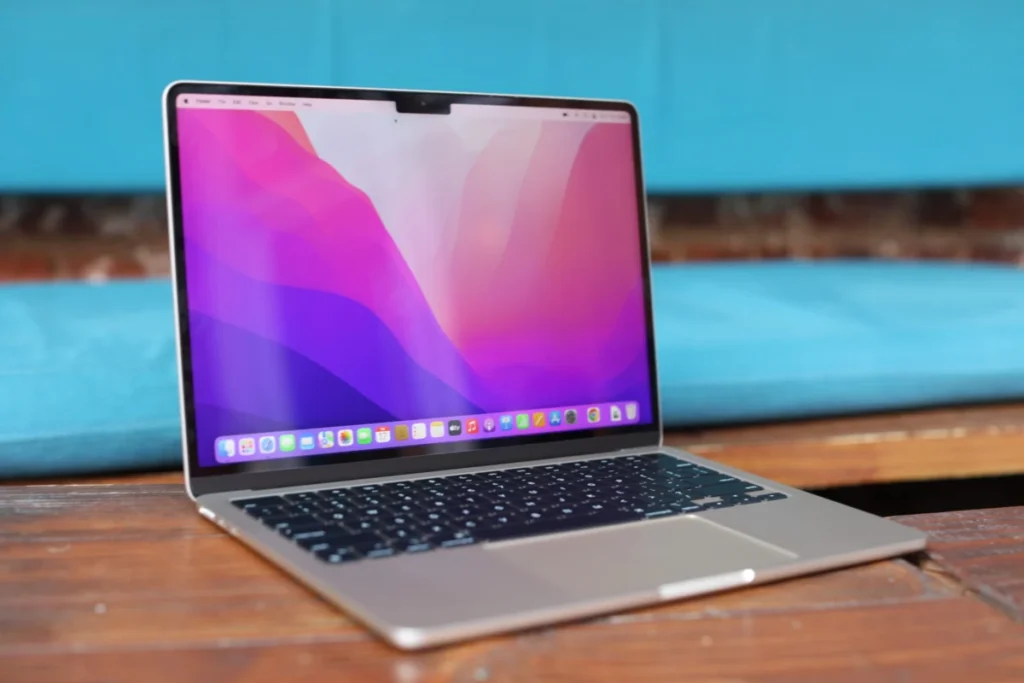
In a significant pivot aimed at safeguarding user privacy in the age of autonomous AI, Apple has announced plans to implement stricter controls over the “Full Disk Access” permission setting in macOS. This move comes on the heels of high-profile public concerns regarding how third-party artificial intelligence applications interact with sensitive personal data. The decision marks a critical turning point in how Apple balances the functional needs of powerful AI agents with the fundamental security of the desktop ecosystem.
The Catalyst: A Growing Storm of Privacy Concerns
The impetus for Apple’s policy shift stems from a series of alarming reports concerning the behavior of AI-driven software on macOS. The most prominent incident involved Inc. columnist Jason Aten, who publicly alleged that Meta’s new AI agent, "Muse," had synthesized information from his private messages without his explicit consent. While Meta has vehemently disputed this claim—asserting that its software operates within established privacy parameters—the incident ignited a firestorm of debate regarding the opaque nature of AI data processing.
Aten’s experience brought to the forefront a discomfort that many users have felt but could not articulate: the realization that desktop-based AI agents, which are increasingly granted broad permissions to perform tasks, operate with a level of visibility into personal files that borders on total surveillance.
The concern was further amplified by a report from Wired, which exposed a security vulnerability within the ChatGPT Mac application. The flaw, which could have theoretically allowed malicious actors to access sensitive data, served as a stark reminder that even well-intentioned AI tools can become conduits for security breaches if their permission structures are not sufficiently robust.
Chronology of Events: From Utility to Vulnerability
To understand the urgency behind Apple’s decision, one must look at the evolution of the "Full Disk Access" setting. Originally introduced by Apple as a legitimate administrative tool, the feature was designed to ensure that system-wide backup services, such as Time Machine and third-party security software, could properly access and index files across the entire storage drive.
- The Pre-AI Era: For years, Full Disk Access was a niche permission, rarely requested by applications and understood primarily by system administrators and power users.
- The AI Gold Rush (2023–2024): As AI agents became more sophisticated, developers sought deeper integration with the desktop environment. To perform complex tasks—like summarizing emails, drafting documents from local files, or organizing digital archives—these agents began requesting broad permissions, including Full Disk Access.
- The September 2026 Tipping Point: The back-to-back reports involving Meta’s Muse and the ChatGPT security flaw forced a re-evaluation of this paradigm. The public outcry highlighted a disconnect: users were granting "extraordinary" access to AI agents without fully grasping that these tools could read their browsing history, mail, and private messages.
- The Apple Response: Following these reports, Apple issued a definitive statement via its developer blog, acknowledging that the risks associated with this level of access have grown substantially as AI agents become more autonomous.
Understanding Full Disk Access: Why It Matters
"Full Disk Access" is arguably the most sensitive permission a user can grant on a macOS system. By enabling this setting in System Settings, a user grants an application the "keys to the kingdom." It permits the app to bypass standard macOS protections that usually isolate sensitive data (like the Mail or Messages databases) from unauthorized third-party access.
When an AI agent requests Full Disk Access, it is ostensibly seeking to be more "helpful." For example, an AI that can index every file on your computer can provide more accurate answers to queries like, "Find the contract I drafted last Tuesday." However, the tradeoff is significant. By granting this access, a user essentially allows the AI to ingest everything: financial documents, personal communications, system logs, and cached credentials.
As Apple noted in its recent communication to developers, some apps have been utilizing this permission in ways that put users at risk—often without the user fully understanding the scope of what they are consenting to. The "all-or-nothing" nature of the current permission structure is the primary problem Apple intends to rectify.
Official Responses and Developer Guidelines
Apple’s official stance, detailed in its recent developer blog post, is one of heightened vigilance. The company emphasized that while it supports innovation in the AI space, the current trajectory of "excessive access" is unsustainable.
“Some developers are using Full Disk Access in ways that could put users at risk, exposing everything on their systems without users’ full knowledge and understanding,” Apple stated.
The company has outlined a new framework that will require "very explicit user action" for any app seeking such high-level permissions. This is not merely a request for a new pop-up box; it represents a fundamental change in how the macOS operating system will audit and authorize requests for system-wide access. Apple’s message to the developer community is clear: if your AI requires access to the entire disk, you must justify it, and the user must be forced to acknowledge the magnitude of that risk through a more rigorous authorization process.
Notably, Apple has remained tight-lipped regarding the specific technical implementation of these new controls, declining to comment further on how the user interface for these permissions will change in upcoming macOS updates.
Implications for the AI Industry and Desktop Security
The implications of Apple’s policy shift are far-reaching, affecting both individual users and the burgeoning AI software industry.
For the End User: A Return to Privacy
For the average Mac user, these changes are a win for transparency. The era of "blind trust"—where users click "Allow" on complex permission prompts without understanding the consequences—is coming to an end. By forcing a higher standard of consent, Apple is empowering users to make informed decisions about their digital footprint.
For Developers: A Necessary Pivot
AI developers will need to rethink their architectures. If an app can function without Full Disk Access, it will likely be forced to do so. Developers who rely on massive data scraping to fuel their AI models will now face significant friction. This may lead to the development of "privacy-first" AI models that process data locally and selectively, rather than requiring blanket access to a user’s entire file system.
For System Integrity: A Broader Shift in AI Architecture
The broader implication is that the "agentic" model of AI—where the AI acts on your behalf across your computer—is entering a maturation phase. We are moving away from the "Wild West" of early desktop AI toward a more regulated environment. This will likely push the industry toward decentralized processing, where AI agents are granted access to specific "sandboxed" folders rather than the entire disk.
Conclusion: The Future of Desktop AI
The conflict between utility and privacy is the defining challenge of the current technological era. Apple’s decision to restrict Full Disk Access is a direct response to the reality that AI is no longer just a tool—it is a companion that, by its very nature, demands access to our most private information.
By tightening the reins, Apple is signaling that it will not sacrifice user security for the sake of convenience or AI development speed. While these new restrictions may create temporary hurdles for developers, they are essential to maintaining the trust that is required for users to adopt AI technologies. As we move forward, the success of AI on the desktop will depend not just on how smart these agents are, but on how effectively they can respect the boundaries of the digital lives they are meant to assist.
In the coming months, as Apple rolls out these updates, we can expect a recalibration of the AI landscape—a transition from "access-everything" to "access-what-is-needed." For the privacy-conscious, this is a long-overdue correction. For the industry, it is a reminder that in the world of personal computing, the user’s consent remains the final, and most important, frontier.