Regulatory Pressure Mounts: Senators Warren and Van Hollen Demand OppFi Abandon Bank Acquisition Bid
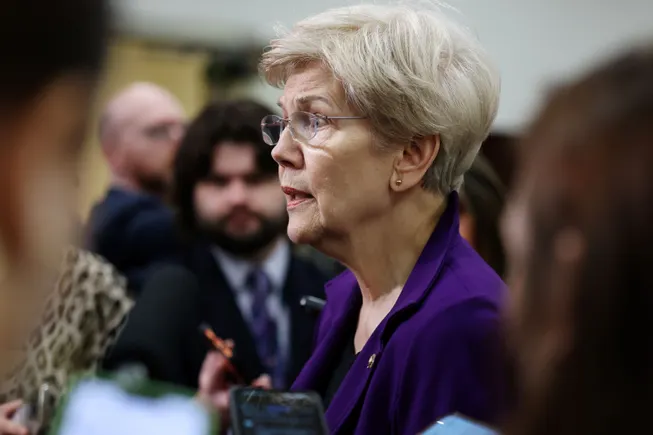
In a significant escalation of the ongoing battle between federal regulators, progressive lawmakers, and the fintech industry, U.S. Senators Elizabeth Warren (D-MA) and Chris Van Hollen (D-MD) have formally called on the nonbank lender OppFi to immediately withdraw its application to acquire Arizona-based BNCCORP and its subsidiary, BNC National Bank.
The letter, sent this past Wednesday, serves as a sharp rebuke of the "fintech-to-bank" pipeline. The lawmakers argue that OppFi’s business model—which frequently offers personal installment loans with annual percentage rates (APRs) reaching as high as 195%—is fundamentally incompatible with the obligations and ethical standards expected of a federally regulated banking institution. This latest move places OppFi at the center of a national debate regarding "rent-a-bank" schemes and the regulatory oversight of high-interest lenders attempting to formalize their status within the traditional financial system.
The Push for Regulatory Accountability
The core of the senators’ argument is that OppFi’s pursuit of a national bank charter is an attempt to achieve legitimacy for a business model that they classify as predatory. By securing a banking charter, nonbank lenders can leverage "preemption," which potentially allows them to export interest rates from the state where the bank is headquartered to states that have enacted strict usury caps to protect consumers from predatory lending.
"OppFi brands itself as a lender that ’empowers everyday consumers to overcome financial hurdles and build long-term financial stability,’" the senators wrote. "But a closer look into its business model reveals persistent, predatory financial strategies."
The lawmakers further highlighted the systemic risks posed by such acquisitions, noting that both OppFi and Enova—another prominent fintech that recently withdrew its own acquisition bid—target the same demographic: consumers whom they label as "underserved" by traditional banking institutions due to low credit scores or thin credit histories.
Chronology of a Regulatory Standoff
The pressure on OppFi did not emerge in a vacuum; it is the culmination of years of scrutiny from both state and federal officials.
- The 2021 Legal Challenge: The D.C. Attorney General filed a lawsuit against OppFi, alleging that the company’s underwriting models were designed with the expectation that a significant percentage of borrowers would default, thereby creating a cycle of debt.
- The July 2024 Whistleblowing: A coalition of 20 state attorneys general sent a joint letter to the Office of the Comptroller of the Currency (OCC), the Federal Deposit Insurance Corporation (FDIC), and the Federal Reserve. They argued that partnerships between fintechs and banks in states without interest rate caps were a "deliberate effort to avoid state usury laws" and a means to extract exorbitant profits from vulnerable populations.
- The Enova Precedent: In a watershed moment for the industry, Enova International terminated its bid to acquire Grasshopper Bank weeks ago. CEO Steve Cunningham cited a lack of "clear standards for nonbanks that want to become banks," and explicitly pointed to "political pressure" as a contributing factor in the failed deal.
- The Current Ultimatum: With the recent intervention by Sens. Warren and Van Hollen, the scrutiny has reached the highest echelons of the U.S. Senate, effectively signaling to regulators that any approval of the OppFi-BNC deal would face intense congressional oversight.
Supporting Data and the Conflict of Metrics
A significant point of contention between the senators and OppFi involves the interpretation of financial health and borrower outcomes. The lawmakers cite a 55% charge-off rate as evidence of a predatory model that relies on high-interest margins to offset the inevitable default of a third of their customer base.
OppFi has vehemently disputed these figures, arguing that the senators are utilizing "annualized" data that fundamentally misrepresents the nature of short-term installment lending.
"Annualizing quarterly charge-offs makes it appear as though actual charge-offs are up to three times greater than they really are," an OppFi spokesperson stated. The company contends that because their average loan duration is approximately four months, a quarterly snapshot creates a distorted picture. According to the firm, their actual lifetime charge-off rate over the last three years sits in a more moderate range of 18% to 25%.
However, the lawmakers remain unconvinced, asserting that regardless of the exact percentage, the company’s reliance on high-cost refinancing tactics—where borrowers are encouraged to extend debt cycles—constitutes a predatory strategy designed to maximize revenue at the expense of long-term consumer stability.
Official Responses: The Battle Over "Access to Credit"
The response from OppFi has been swift and defensive. The company portrays itself not as a predator, but as a necessary provider of financial services to those abandoned by the traditional banking sector.
"Politicizing and attacking OppFi’s bank charter application does a disservice to consumers who need access to credit," the spokesperson argued. The company further emphasized that moving into the regulated banking system would actually subject them to more rigorous federal oversight, which they claim would reinforce their commitment to compliance.
This defense highlights the fundamental tension in the debate:
- The Fintech Perspective: By becoming a bank, a lender becomes subject to federal regulatory examination, which they argue is a sign of maturity and a commitment to transparency.
- The Regulatory Perspective: By becoming a bank, a lender gains the "privilege" of the banking charter, which carries the power of federal preemption. Regulators and lawmakers like Warren and Van Hollen argue that this power should not be granted to companies whose primary revenue stream is derived from high-interest, high-default lending.
Broader Implications for the Fintech Sector
The demand for OppFi to withdraw its application has profound implications for the future of the fintech industry. If the deal is blocked, or if OppFi chooses to withdraw under political pressure, it may establish a "de facto" rule that high-APR lenders are unwelcome in the traditional banking space.
1. The Death of the "Charter Pipeline"
For many years, the "fintech-to-bank" transition was viewed as the "holy grail" for nonbank lenders. It promised lower costs of capital and the ability to operate across state lines without navigating a patchwork of 50 different state-level interest rate caps. The collapse of the Enova deal, followed by the current pressure on OppFi, suggests that this pipeline is effectively closing.
2. Heightened Regulatory Scrutiny
Even for companies not seeking a charter, the heightened visibility brought by the 20 state attorneys general and the Senate banking committee members ensures that "rent-a-bank" partnerships will face increased scrutiny from the OCC and the FDIC. The days of operating under the radar via bank-partnership models are likely coming to an end.
3. The Definition of "Underserved"
The debate has sparked a philosophical clash over who constitutes an "underserved" borrower. OppFi argues that they provide a lifeline to those with poor credit who are ignored by traditional banks. Conversely, lawmakers argue that "access to credit" is a misnomer if the product offered is a debt trap. This conflict will likely force a broader conversation at the federal level regarding the definition of fair lending in the digital age.
Conclusion
The letter from Senators Warren and Van Hollen is more than just a request; it is a clear warning shot. By drawing a direct line between the failed Enova acquisition and the pending OppFi application, the senators are signaling that the regulatory environment has hardened.
As the debate continues, the financial sector will be watching closely to see if OppFi opts to persist in its pursuit of BNC National Bank, potentially inviting a protracted legal and regulatory battle, or if it will bow to the mounting political pressure, signaling a quiet retreat that may mark a permanent shift in how fintechs attempt to integrate with the traditional banking system. For now, the future of the deal—and perhaps the viability of the nonbank lending model—remains in a state of deep uncertainty.