The Perils of Financial Forecasting: Why McKinsey, Billionaires, and Market Gurus Keep Getting the Future Wrong

Main Facts: The Illusion of Long-Term Certainty
In the intricate and often anxiety-inducing world of personal finance and global investing, few things capture the public imagination quite like a sweeping macroeconomic forecast. When authoritative institutions issue warnings about the future of wealth accumulation, investors listen.
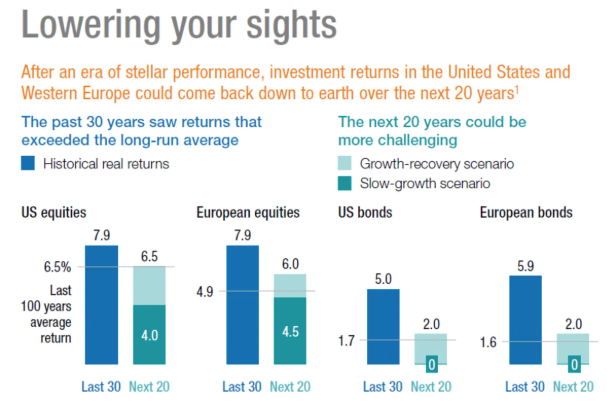
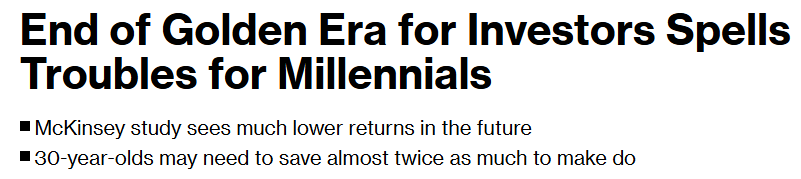
In April 2016, a headline from Bloomberg sent a shiver down the spines of young professionals everywhere. Published alongside a comprehensive research report by the McKinsey Global Institute, the message was stark: the golden era of investing was over. The report warned that millennials and younger generations turning thirty faced a daunting financial landscape characterized by structurally lower returns. According to McKinsey’s models, these investors would either need to delay retirement by working an extra seven years or nearly double their personal savings rates simply to match the nest eggs of their parents’ generation.
The rationale behind the warning seemed sound at the time. McKinsey argued that the previous thirty years had represented an anomalous "golden era" driven by a rare alignment of falling inflation, declining interest rates, surging corporate profits, and expanding price-earnings ratios in the equity markets. Because these tailwinds were unlikely to repeat themselves, the consulting firm projected a prolonged period of diminished investment gains.
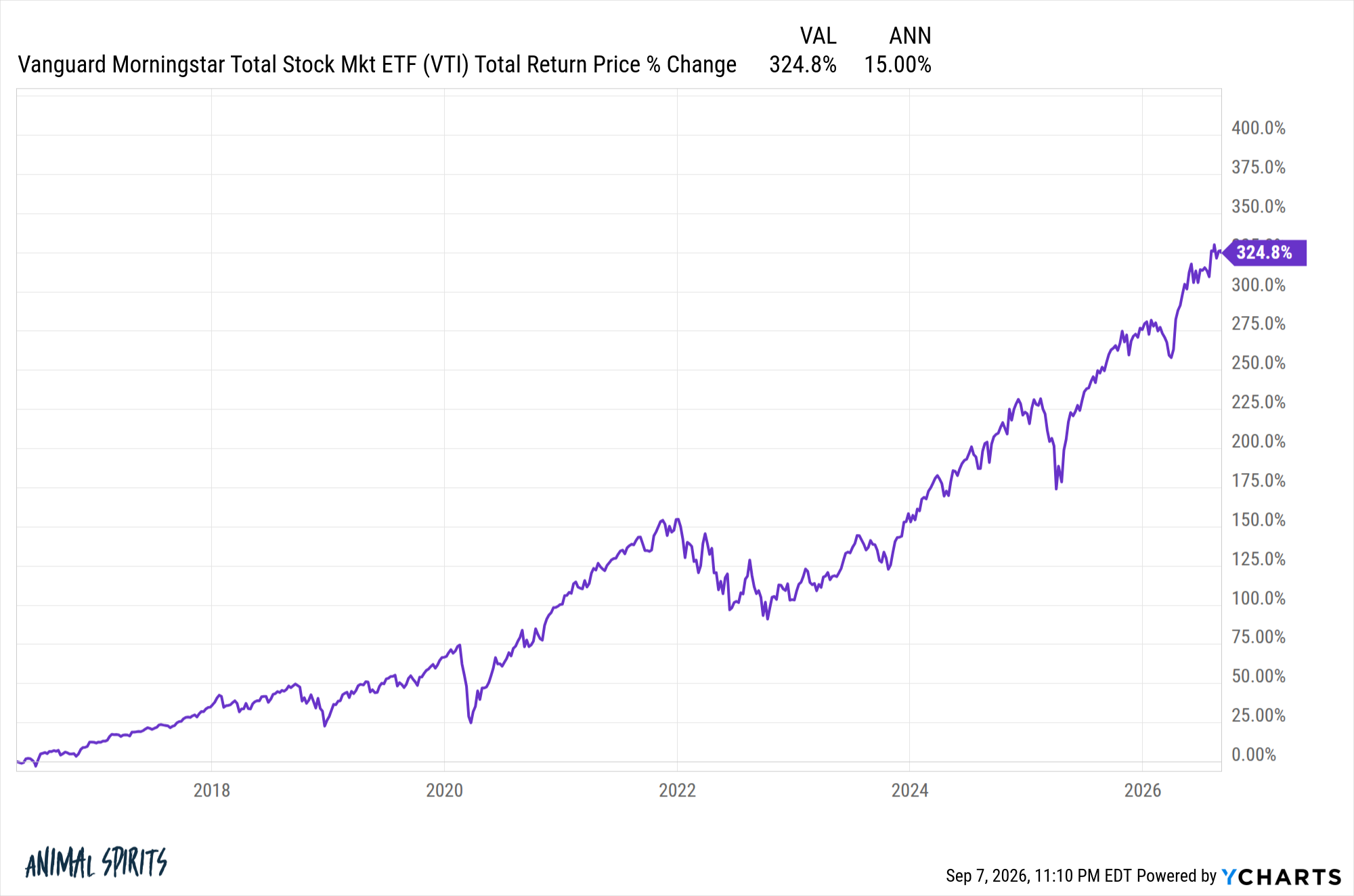
Yet, nearly a decade later, the reality of the market has starkly contradicted those dire predictions. Far from entering a stagnant or anemic growth phase, the U.S. stock market embarked on one of the most ferocious bull runs in modern history. The total return of the broad U.S. market since that 2016 report has exceeded 300%, compounding at roughly 15% annually. Even when adjusting for a post-pandemic spike in inflation, real returns over the subsequent decade managed to outperform the legendary "golden era" of the late 20th century.
This glaring discrepancy highlights a fundamental truth of the financial markets: long-term forecasting is an exercise in humility. From top-tier consulting firms to legendary billionaire hedge fund managers, the collective intelligence of Wall Street consistently struggles to predict the trajectory of the economy. The history of market forecasting is littered with pessimistic proclamations made by brilliant minds at market bottoms, followed immediately by historic economic expansions.
Chronology: A History of Misplaced Market Panic
To understand why long-term prognostications so frequently miss the mark, it is instructive to examine a timeline of major macroeconomic warnings issued over the past two decades—and what actually happened next.
May 2010: Seth Klarman’s Post-Crisis Dread
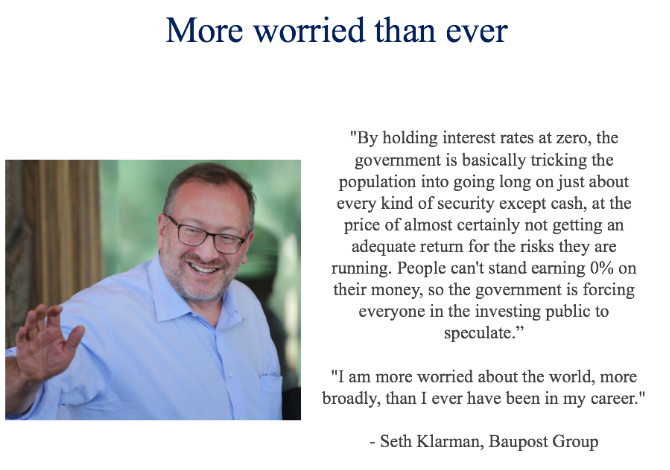
In the wake of the 2008 global financial crisis, market sentiment remained fragile and deeply scarred. In May 2010, legendary value investor Seth Klarman—founder of Baupost Group and one of the most respected minds in finance—told The Wall Street Journal that he was more worried than he had ever been in his entire career. Coming from a disciplined, risk-averse investor, the warning carried immense weight.
- What actually happened: Klarman’s warning coincided almost precisely with the initiation of one of the longest secular bull markets in U.S. history. Since he voiced those concerns, U.S. stocks have skyrocketed by more than 800%, compounding at an annual rate of nearly 15%. Investors who panicked and moved to the sidelines following his warning missed out on generational wealth creation.
April 2016: The McKinsey "Lower Return" Warning
McKinsey & Co. released its widely publicized research paper predicting a dramatic compression in asset returns over the subsequent two decades, arguing that the 1985–2015 era of high returns was gone forever.
- What actually happened: Far from a prolonged slump, the U.S. stock market surged over 300% in the years following the report. Even European equities, frequently dismissed as structural underperformers, managed to generate nearly 10% annualized returns from the spring of 2016 onward.
May 2020: Stanley Druckenmiller’s Pandemic Despair
As the global economy reeled from the sudden onset of the COVID-19 pandemic, legendary investor Stanley Druckenmiller took to the virtual stage at The Economic Club of New York. Painting a grim picture of unprecedented monetary expansion and economic dislocation, he declared that the "risk-reward for equity is maybe as bad as I’ve seen it in my career."
- What actually happened: Druckenmiller’s warning marked a generational buying opportunity. Prompted by massive fiscal and monetary stimulus, the stock market bottomed out and surged by nearly 200% from those levels, compounding at an astonishing annual rate of nearly 18% over the next several years.
2022–2023: The Consensus Recession Call
Following a historic spike in inflation in 2022—which forced the U.S. Federal Reserve into its most aggressive interest rate hiking cycle in decades—wall street consensus declared a U.S. recession an absolute foregone conclusion. Yield curves inverted, leading economic indicators flashed red, and forecasters at major banks assigned near 100% probabilities to an impending economic contraction.
- What actually happened: The predicted recession failed to materialize. Driven by resilient consumer spending, robust labor markets, and productivity gains, the U.S. economy continued to expand, confounding pessimists yet again.
Supporting Data: The Great Disconnect Between Models and Reality
The failure of long-term predictive models does not occur because forecasters lack intelligence; rather, it happens because complex adaptive systems like the global economy are inherently non-linear.
When McKinsey drafted its 2016 report, its forward-looking twenty-year annualized return models anticipated a starkly muted environment across asset classes:
- Equities: Projected to deliver real returns significantly lower than historical averages, forcing savers to dramatically increase contributions.
- Fixed Income: Forecasted to yield minimal returns in a structurally low-interest-rate environment.
While McKinsey was partially correct regarding fixed income—the Bloomberg U.S. Aggregate Bond Index posted an anemic annualized return of roughly 1.5% over the subsequent decade, losing ground to inflation—its equity models were completely overwhelmed by technological innovation, corporate margin expansion, and unexpected liquidity infusions.
Consider the performance of a broad U.S. stock index fund (such as Vanguard’s VTI) over the timeline of the McKinsey forecast. Past the halfway point of the projected twenty-year window, total cumulative gains have obliterated baseline expectations. Even with a 10-year inflation rate running at an annualized average of 3.3%, the real annual return of equities over the past decade has hovered near 11.7%—matching or exceeding the performance of the historical "golden era" that McKinsey claimed was lost forever.
+-----------------------------------+------------------------+------------------------+
| Asset Class / Period              | McKinsey 20-Yr Outlook | Actual Performance     |
+-----------------------------------+------------------------+------------------------+
| U.S. Equities (Real Returns)      | Moderately Low / Guarded| ~11.7% Annualized (10Y)|
| Fixed Income (Bloomberg Agg)      | Subdued                | ~1.5% Annualized (Lagged)|
| Broad Market Index (Cumulative)   | Conservative Growth    | Up 300%+ Since 2016    |
+-----------------------------------+------------------------+------------------------+
The data demonstrates a clear pattern: macroeconomic projections consistently anchor on current prevailing conditions, extrapolating temporary headwinds or tailwinds indefinitely into the future. When interest rates are low, models assume they will stay low forever. When inflation spikes, models price in permanent stagflation. The market, however, constantly adapts, innovates, and surprises.
Official Responses and Institutional Perspectives
Financial institutions, asset managers, and macroeconomic forecasters occupy a strange paradox in modern capitalism: their business models require them to project absolute certainty, even though the empirical record proves that certainty is impossible.
When questioned about predictive failures, economists and strategists typically point to the concept of risk mitigation. Reports like the one published by McKinsey are not intended to serve as crystal balls, but rather as analytical stress tests. By modeling worst-case scenarios—such as a prolonged low-return environment—consultants aim to encourage institutional funds, pension systems, and individual savers to build safety margins into their financial planning.
From an institutional perspective, conservatism is a professional virtue. A wealth manager or pension fund trustee who plans for a low-return environment and is proven wrong simply ends up with a surplus of capital. Conversely, a trustee who assumes a roaring bull market and is proven wrong risks catastrophic insolvency.
Yet, when these institutional warnings leak into the public consciousness via mainstream media headlines, the nuance is lost. "Be afraid, be very afraid" becomes the dominant narrative. Savers are left with the psychological burden of believing that financial security is perpetually slipping out of reach, driving them either toward paralyzing inaction or reckless speculation in search of elusive alpha.
Implications: The Power of "I Don’t Know"
What are individual investors supposed to take away from a decades-long trail of missed predictions, broken models, and confounded billionaires?
The primary implication is that intellectual honesty is far more valuable in finance than intellectual bravado. The most liberating three words an investor, analyst, or economic commentator can utter are simply: I don’t know.
- I don’t know when the current bull market will finally exhaust itself and transition into a cyclical downturn.
- I don’t know whether artificial intelligence will usher in a utopian era of hyper-productivity or create systemic labor market disruptions.
- I don’t know whether the global economy will expand smoothly through the end of the decade or stumble into a recession next year.
- I don’t know whether massive capital expenditure in AI infrastructure will yield transformative rewards for hyperscalers or trigger a speculative bust.
Accepting one’s own ignorance is not a mandate for passivity; rather, it is the foundation of a robust investment strategy. Because nobody can consistently forecast the macroeconomic weather, sensible investors build portfolios designed to withstand a variety of weather patterns. They diversify across asset classes, maintain appropriate liquidity reserves, automate their savings, and maintain a long-term time horizon that absorbs short-term volatility.
The greatest risk in investing is not the inherent uncertainty of the future—it is the hubris of believing that a guru, a predictive algorithm, or a consulting firm has decoded it. The future remains unwritten, and within that blank space lies both risk and opportunity for those disciplined enough to admit they don’t know what comes next.