The Orbital Data Center Debate: Visionary Engineering or a Circular Business Strategy?
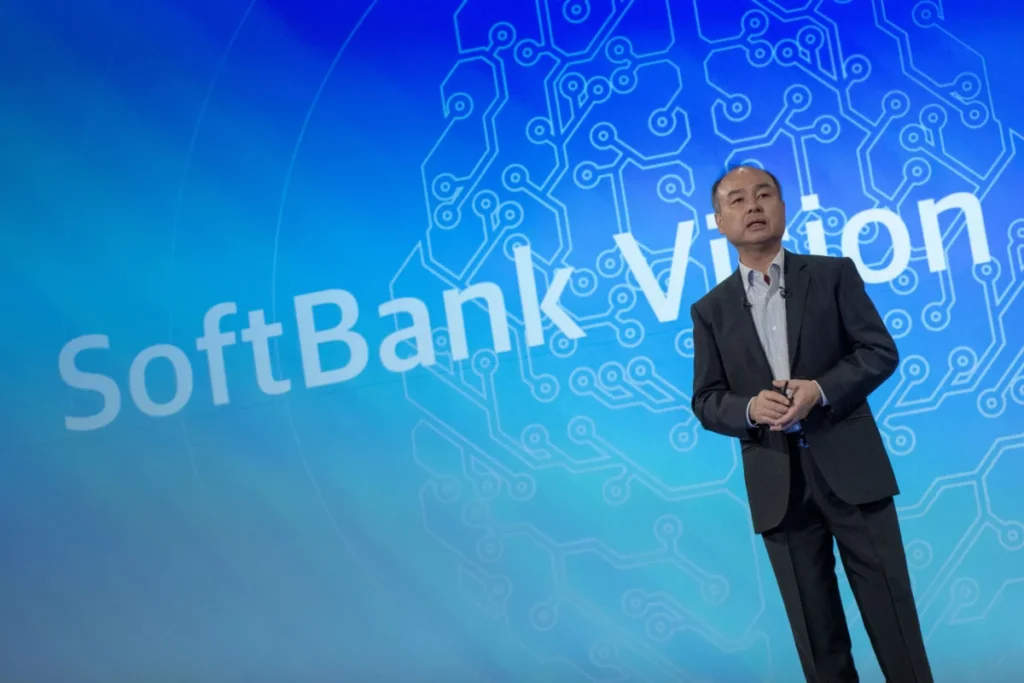
In the rapidly evolving theater of artificial intelligence, where compute capacity is the new global currency, Elon Musk has proposed a provocative solution to the planet’s energy and infrastructure bottlenecks: moving data centers into orbit. However, the audacious vision has met with significant pushback from industry titans and analysts alike. Among the most vocal skeptics is Masayoshi Son, the founder and CEO of SoftBank, whose recent critique of the concept has reignited a debate about the practical, economic, and temporal realities of the AI arms race.
As the industry grapples with a massive, persistent compute deficit, the question of where to build the infrastructure of the future has become a battleground of conflicting business interests, engineering feasibility, and strategic posturing.
The Core Conflict: Earth-Bound Urgency vs. Orbital Ambition
The primary tension in this discourse lies in the timeline. The AI sector is currently experiencing a period of intense, immediate pressure. Companies are desperate for high-performance computing (HPC) clusters to train large language models, and the "compute constraint" is the single greatest inhibitor to progress.
Masayoshi Son’s argument against orbital data centers is fundamentally rooted in the calendar. During a recent shareholder meeting, Son dismissed the feasibility of extraterrestrial data processing, arguing that in the current "battle for AI," the next few years are infinitely more critical than technological milestones that might only mature a decade or more from now. For Son, who has committed SoftBank to massive terrestrial data center projects—including a multi-billion dollar investment in French infrastructure—the focus must remain on immediate, scalable solutions on Earth.
Musk’s vision, by contrast, relies on the premise that Earth-bound data centers are eventually going to hit an insurmountable ceiling of power availability, cooling challenges, and regulatory "red tape." By moving to orbit, Musk posits that SpaceX could leverage the unlimited vacuum of space for thermal management and solar energy collection, bypassing the NIMBY (Not In My Backyard) protests that frequently stall terrestrial data center construction.
A Chronology of the Compute Crunch
To understand why this debate has reached such a fever pitch, one must look at the recent trajectory of the AI infrastructure market:
- Early 2024–2025: The "Compute Crisis" intensifies. Major AI labs and tech giants realize that existing GPU supplies cannot keep pace with the demand for model training, leading to massive capital expenditure spikes.
- Late 2025: SpaceX begins framing its Starlink constellation not just as a global internet provider, but as a potential backbone for distributed, orbital edge computing.
- Early 2026: OpenAI signals its intent to verticalize by developing custom chips, highlighting the industry-wide move toward hardware-software co-design.
- June 2026: Groq secures $650 million in funding, underscoring the investor appetite for companies that can promise high-speed inference, even as Nvidia dominates the training market.
- Late June 2026: Masayoshi Son publicly questions the logic of orbital data centers, aligning his critique with other industry leaders like Sam Altman, who has long expressed doubt regarding the viability of space-based compute.
The Economic Implications: "Talking Your Own Book"
A recurring theme in the discussions surrounding these developments is the concept of "talking your own book"—the tendency for executives to advocate for futures that directly benefit their own corporate bottom lines.
The TechCrunch Equity podcast, featuring Kirsten Korosec, Sean O’Kane, and Anthony Ha, recently dissected these motives. O’Kane noted that for SpaceX, an orbital data center strategy serves a dual purpose: it solves a hypothetical future problem while guaranteeing a permanent, massive revenue stream for the company’s launch division.
"If you make a constellation of satellites that need to be replaced every few years to make up an ‘orbital data center,’ you are just guaranteeing that much more business for your launch business," O’Kane observed. Currently, SpaceX dominates the global launch market, with a significant percentage of its flight manifest driven by the deployment and replenishment of its own Starlink constellation. Expanding this into a data center architecture would essentially create a self-sustaining cycle where SpaceX provides the infrastructure to build the network, the hardware to process the data, and the rockets to keep that hardware aloft.
Kirsten Korosec highlighted the irony in SoftBank’s position. Given SoftBank’s history of "wild bets"—ranging from the high-profile rise and fall of WeWork to massive, speculative investments in robotics and ride-sharing—Son is an unlikely voice of conservative caution. However, his skepticism carries weight precisely because he has spent billions on terrestrial infrastructure. He is, in effect, defending his own investment thesis: that the future of AI will be built on the ground, and that the race to achieve AGI (Artificial General Intelligence) will be won by whoever controls the most efficient physical data centers today, not tomorrow.
Engineering and Strategic Realities
Beyond the economics, the engineering hurdles are staggering. Data centers require massive, stable power grids and ultra-high-speed connectivity. While orbital solar energy is abundant, the latency involved in beaming data to and from low-earth orbit (LEO) creates significant challenges for real-time AI inference.
Furthermore, the "neo-cloud" trend—a shift where non-traditional tech companies are pivoting to lease out compute capacity—has created a fragmented market. We are seeing shoe companies, telecom giants, and logistics firms all attempting to position themselves as cloud providers. This "compute-all-the-things" mentality suggests that the current scarcity is so acute that every available transistor is being pressed into service.
Musk’s disregard for red tape is well-documented, and his push toward space is as much a political statement as an engineering one. He views the regulatory environment on Earth as a fossilized relic that prevents rapid innovation. By shifting the frontier to orbit, he effectively enters a jurisdiction where he is the primary operator, a move that aligns perfectly with his historical preference for vertical integration.
Conclusion: The Impartiality Gap
Ultimately, the debate over orbital data centers reveals that there are no truly impartial observers in the AI space. Every CEO, investor, and pundit is operating with significant "baggage" and billions of dollars in potential valuation at stake.
When Sam Altman rolls his eyes at Musk’s space ambitions, it is informed by their complex, litigious history. When Masayoshi Son dismisses the idea, it is informed by his massive, ground-based capital commitments. When Elon Musk pushes the idea, it is informed by the necessity of sustaining SpaceX’s launch dominance.
As the industry navigates the next decade, the "orbital vs. terrestrial" debate serves as a microcosm for the larger AI revolution: a high-stakes, high-cost gamble where the winners will likely be those who can best balance the immediate, crushing demand for compute with a long-term strategy that avoids the pitfalls of their own biased predictions. Whether orbital data centers become a reality or remain a visionary footnote, the attempt itself will likely transform the economics of space and earth-based infrastructure forever.