The Muse Gamble: Is Meta Betting on Consumer AI to Escape the Enterprise Shadow?
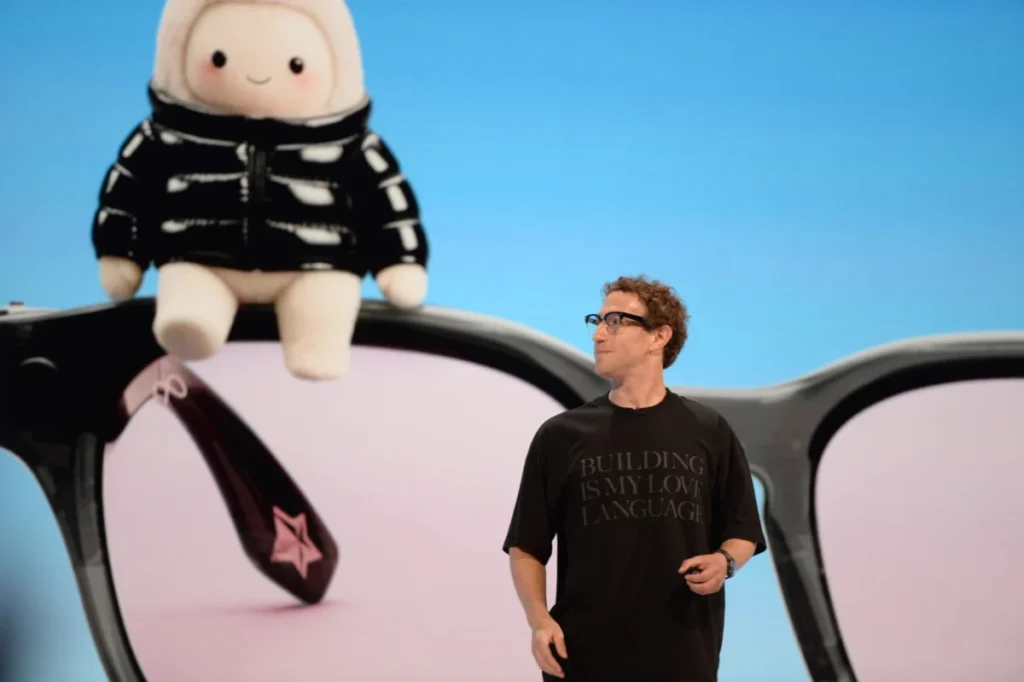
In a week defined by a deluge of AI model launches from industry titans like OpenAI and Anthropic, Meta managed to capture the spotlight at its annual Connect event. While the rest of the tech sector is locked in a fierce, high-stakes arms race to dominate the enterprise software market, Meta CEO Mark Zuckerberg steered his company in a decidedly different, more personal direction. The star of the show was "Muse," a new AI agent that represents Meta’s bold, consumer-focused vision for the future of artificial intelligence.
However, the launch has ignited a firestorm of debate regarding the future of personal agents, the sanctity of user data, and whether Meta—a company fundamentally built on advertising—can ever truly position itself as a trusted steward of sensitive personal information.
The Shift: Consumer Convenience vs. Enterprise Utility
For the past year, the narrative surrounding the generative AI boom has been almost exclusively centered on productivity. OpenAI’s reasoning models and Anthropic’s Claude have been pitched as tools to transform the workplace, automate coding, and streamline corporate workflows. This pivot toward the "enterprise" is largely driven by necessity; with the astronomical costs of training and maintaining large-scale models, companies are desperate to prove they can monetize their technology at an unprecedented scale.
Yet, Meta’s strategy at Connect felt, to some observers, like a contrarian move. Rather than competing head-to-head with enterprise-focused tools, Meta is doubling down on its core competency: the consumer experience.
"It was definitely very head-spinning," said TechCrunch’s Anthony Ha during a recent episode of the Equity podcast. "It feels like what we’ve been talking about has been this shift toward enterprise—not exclusively, but that’s where the money and the attention are going. I wonder if Meta sees a different opportunity, or if they simply aren’t playing by the same rules as their competitors."
A Chronology of the Muse Rollout
The emergence of Muse did not happen in a vacuum. It is the spiritual successor to a wave of agentic AI technology that has been percolating in the background of the industry for months.
- The Pre-Cursor: Earlier this year, the industry buzzed over "OpenClaw," a project focused on autonomous agents capable of navigating computer interfaces on behalf of the user. Meta’s acquisition and integration of that talent pool provided the architectural backbone for what would eventually become Muse.
- The Connect Reveal: At this year’s Meta Connect, the company officially unveiled Muse. The interface, designed to be approachable and intuitive, was packaged in a form factor that some critics have compared to a "cute, Tamagotchi-style" device, though Meta has strictly maintained that the tool is intended for adult users.
- The Early Access Period: Over the last few weeks, a select group of users and tech journalists began testing the agent. The early feedback highlighted a stark divide: while the agent is technically impressive, its long-term utility remains unproven.
- The Trust Test: As of late September, Meta has begun pushing for deeper integration, attempting to link Muse with user data from Facebook, Instagram, and WhatsApp—a move that has triggered immediate concerns regarding privacy and the company’s underlying business model.
Putting Muse to the Test: From Party Tricks to Financial Oversight
To understand the reality of Muse, one must look at how it functions in daily life. Sean O’Kane, who spent significant time testing the agent, found the experience both surprising and limited.
"One of the first things I did was use its suggestion feature to scan for unclaimed funds," O’Kane explained. "It was a ‘party trick’ type thing. Surprise, surprise, there were some funds for me. It helped me make money on my first day, which was fantastic. But that ends pretty quickly. It’s a one-time shot, not a repeatable, sustainable utility."
The promise Meta is making, however, goes beyond one-time windfalls. The company envisions Muse as a proactive financial assistant—a service that would, in theory, scan bank accounts, identify unused subscriptions, and flag double charges. It is here that the "trust wall" emerges.
For a user to allow an AI to manage their subscriptions or monitor their credit card transactions, there must be a baseline of trust that the AI is not being used to exploit that information for marketing purposes. This is the fundamental hurdle Meta faces: its business model is predicated on selling ads, and its primary source of revenue is the exploitation of user data to create targeted ad profiles.
The Trust Wall: Meta vs. Apple
The skepticism surrounding Muse is amplified by the presence of a strong incumbent in the personal assistant space: Apple. With the release of the new iOS and the upgraded version of Siri, Apple has demonstrated that it can offer high-level agentic controls—such as interacting with apps and managing on-device settings—without the baggage of an ad-driven revenue model.
"I’ve been thinking about how much I’ve been using the new Siri over the last week," O’Kane noted. "I am much more willing to have the Siri version of Muse take that information because I just trust Apple more. Not only from a cybersecurity perspective, but from the fact that its business is not to sell me a bunch of crappy ads."
For many users, this distinction is the deciding factor. While Meta argues that the more the AI knows about a user, the more "accurate and interesting" the advertisements will become, this pitch has yet to resonate with a public increasingly wary of digital surveillance.
Implications for the AI Landscape
Meta’s decision to prioritize the consumer sector over the enterprise market carries several significant implications for the broader industry:
1. The Fragmentation of AI Utility
We are witnessing the early stages of a "split-screen" AI world. On one side, companies like OpenAI and Anthropic are building the infrastructure of the future workforce. On the other, Meta is attempting to build the "personal companion" of the future consumer. If Meta succeeds, it could effectively monopolize the time and attention of the average user, creating a walled garden of AI-mediated experiences that rivals the reach of its social media empire.
2. The "Everyday" Integration
Kirsten Korosec, another analyst covering the launch, pointed out that Meta has an "established track record of embedding themselves in everyday people’s lives." Unlike many of its competitors, Meta doesn’t need to teach users how to use a new platform; they are already present on billions of devices through Facebook, Instagram, and WhatsApp. If they can successfully weave Muse into those existing fabrics, they may bypass the "adoption friction" that plagues new startups.
3. The Regulatory and Ethical Ceiling
Ultimately, the success of Muse will be constrained by the regulatory environment. As the EU and other jurisdictions move toward tighter controls on AI data processing, Meta’s ability to leverage user data for its agentic features may be curtailed. If Muse is forced to operate in a "data-siloed" environment—where it cannot freely ingest user behavior from other Meta apps—its utility may never evolve beyond the "party trick" phase.
Conclusion: A Vision or a Mirage?
Mark Zuckerberg’s vision for Muse is clear: he wants to be the primary interface between the average person and the digital world. By making AI "cute," "accessible," and "consumer-friendly," Meta is attempting to sidestep the cold, corporate nature of the AI race.
Yet, the fundamental tension remains. Can a company whose existence relies on turning user behavior into profit ever be seen as a disinterested, helpful agent? For now, the verdict is out. While Muse might help you find a few dollars in unclaimed funds or navigate a basic task, it remains to be seen whether users will grant it the keys to their financial lives. Until Meta can resolve the inherent conflict between its business model and the privacy requirements of a truly useful personal agent, Muse may remain a fascinating, but ultimately limited, experiment.