The Erosion of Exceptionalism: Why the US and Russia are Slipping into the Ranks of Middle Powers
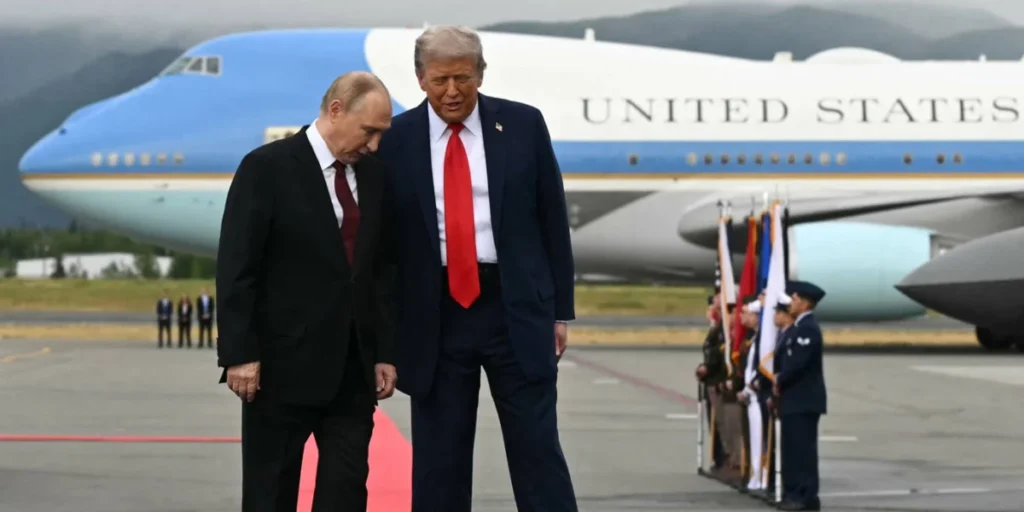
STOCKHOLM — For decades, the architecture of international relations has been anchored by a singular assumption: the enduring dominance of superpowers. Throughout the Cold War and the unipolar moment that followed, the United States and the Soviet Union—later succeeded by the Russian Federation—stood apart from the rest of the global community. They possessed structural weight, economic gravity, and military reach that rendered them fundamentally different from every other nation on Earth.
Yet, as the geopolitical landscape shifts dramatically in 2026, that foundational premise is facing an unprecedented challenge.
According to veteran Swedish statesman and diplomat Carl Bildt, writing from Stockholm, both Washington and Moscow are experiencing a profound contraction of global status. Defined increasingly by strategic failure, political constraint, and systemic limitations, neither the United States nor Russia can safely claim unassailable superpower status anymore. Instead, a provocative thesis is gaining traction among foreign policy analysts: both nations may now belong to the same broad grouping as traditional middle powers like Canada, Brazil, and India.
As the concept of "middle powers" dominates diplomatic discourse this year, it forces a fundamental reckoning with the definitions of modern statecraft. If the United States and Russia are constrained by the same systemic realities that limit regional heavyweights, the entire hierarchy of international power requires rewriting.
Main Facts
The core argument surrounding the deflation of superpower status rests on a divergence between raw capabilities and actual geopolitical outcomes.
- The Illusion of Absolute Might: While the United States remains extraordinarily powerful in terms of technological innovation, financial leverage, and blue-water naval projection, and Russia continues to command vast conventional arsenals alongside the world’s largest nuclear stockpile, neither state can consistently translate these assets into desired political outcomes.
- Strategic Overreach and Impasse: The U.S. finds its global agenda persistently checkmated by domestic political polarization, institutional decay, and a growing reluctance among allies and adversaries alike to follow its unilateral lead. Concurrently, Russia’s protracted military entanglements have exposed deep structural vulnerabilities, isolating its economy and drastically reducing its diplomatic maneuvering room.
- The "Middle Power" Realignment: Rather than operating as unchallenged global directors, Washington and Moscow increasingly find themselves reactive—managing crises rather than shaping global governance, much like traditional middle powers that must navigate constraints rather than dictate terms.
- Semantic and Conceptual Shift: The term "middle power," long used to describe economically advanced, diplomatically active states that punch above their weight, is expanding. It now encapsulates a broader reality: the era of uncontested superpower dominance is giving way to a fragmented, multipolar ecosystem where even historical giants face severe operational ceilings.
Chronology of Decline: From Unipolarity to the Current Impasse
To understand how the United States and Russia arrived at this juncture of constrained influence, it is necessary to trace the erosion of their respective global statuses over the past three decades.
1. The Post-Cold War Apex (1991–2001)
Following the collapse of the Soviet Union, the United States stood as the world’s sole undisputed hyperpower. Washington enjoyed unprecedented economic dominance, cultural hegemony, and military supremacy. Russia, meanwhile, experienced a chaotic, decade-long transition marked by economic collapse, state fragmentation, and a drastic contraction of its international footprint.
2. The Overreach Decade (2001–2014)
The September 11 attacks drew the United States into protracted, costly counterinsurgency campaigns in the Middle East. While Washington remained militarily dominant, these conflicts drained fiscal resources and squandered political capital. Concurrently, under Vladimir Putin, Russia began rebuilding its state capacity, leveraging soaring global energy prices to reclaim regional clout, culminating in the 2008 war in Georgia and the 2014 annexation of Crimea.
3. The Multipolar Fracture and Strategic Paralysis (2014–2024)
This period exposed the growing limits of both nations. The U.S. pivot to Asia bogged down amid domestic political turmoil, shifting isolationist currents, and the rise of a technologically ascendant China. Russia, constrained by Western sanctions and structural economic stagnation, increasingly relied on asymmetric warfare, cyber operations, and mercenary deployments to project power on the cheap—signals of a state lacking true comprehensive strength.
4. The 2026 Reality: The Convergence of Limits
Today, the distinction between superpower and middle power has blurred. The systemic shocks of regional conflicts, supply-chain weaponization, and the rise of the Global South—spearheaded by actors like India, Brazil, and Indonesia—have forced both Washington and Moscow to operate within tightly defined boundaries. Neither can unilaterally write the rules of the international system anymore, nor can they enforce compliance from hesitant allies or defiant rivals.
Supporting Data and Comparative Metrics
Evaluating the shift of the U.S. and Russia toward middle-power dynamics requires examining the structural indicators that define national power in the mid-2020s.
| Metric / Dimension | United States | Russia | Traditional Middle Powers (e.g., India, Brazil, Canada) |
|---|---|---|---|
| GDP (Nominal & PPP) | Massive, tech-driven, but burdened by a national debt exceeding $35 trillion. | Heavily resource-dependent, constrained by Western sanctions and technological isolation. | Expansive growth in emerging economies (India/Brazil); stable, mature growth (Canada). |
| Global Alliances | Relies heavily on traditional NATO and Indo-Pacific alliances, which face internal strain and burden-sharing debates. | Increasingly dependent on asymmetric partnerships (e.g., North Korea, Iran) and transactional ties with Beijing. | Pragmatic, multi-vector foreign policies focusing on strategic autonomy and transactional coalitions. |
| Military Utility | Unmatched global force projection, yet constrained by recruitment shortfalls, industrial base bottlenecks, and political aversion to protracted casualties. | Vast nuclear arsenal and legacy conventional platforms, but severely degraded modern force capacity and high attrition rates. | Regional defense capabilities designed for territorial deterrence rather than global power projection. |
| Diplomatic Leverage | Frequently deadlocked by hyper-partisan domestic politics, limiting long-term international commitments and treaty ratifications. | Excluded from Western-led financial and diplomatic architectures; restricted to alternative blocs like BRICS. | Increasingly vocal in demanding reform of global governance institutions (UNSC, IMF, WTO). |
Official Responses and Diplomatic Reactions
The proposition that the world’s foremost traditional military powers are slipping into a de facto middle-power tier has elicited sharp responses from foreign policy establishments worldwide.
Washington’s Defense of Exceptionalism
Unsurprisingly, official circles in Washington reject any categorization that equates American power with that of a middle power. State Department and Pentagon spokespersons frequently emphasize that the U.S. remains the indispensable nation, citing its unmatched network of alliances, technological supremacy in artificial intelligence and aerospace, and the central role of the U.S. dollar in the global financial system.
However, behind closed doors, pragmatic diplomats acknowledge the reality of "strategic restraint." A senior foreign policy official, speaking anonymously, noted:
"We are no longer living in the immediate post-Cold War moment where we can reshape regions at will. Our domestic political polarization is our greatest vulnerability, and our international partners know it. We have to negotiate, compromise, and build coalitions in ways we simply didn’t have to thirty years ago."
Moscow’s Rhetoric of Multipolarity
In Moscow, the framing is starkly different. The Kremlin has long championed the concept of a "multipolar world," actively attempting to delegitimize Western hegemony. Russian official statements frequently frame the nation not as a diminished power, but as the vanguard of a sovereign, post-Western global order alongside rising non-Western states.
Yet, independent analysts and exiled Russian economists point out that Moscow’s embrace of multipolarity is largely a marriage of necessity. Stripped of access to Western capital markets and advanced technologies, Russia’s economic and geopolitical orbit has shrunk, forcing it into a junior-partner dynamic with Beijing—a far cry from the parity it once enjoyed with the United States during the Soviet era.
Perspectives from the Global South
Capitals like New Delhi, Brasília, and Pretoria have viewed the blurring lines between superpowers and middle powers with a mixture of vindication and caution. For years, these nations argued that international relations should not be dictated by a bipolar or unipolar diktat.
An Indian Ministry of External Affairs advisor remarked:
"The illusion that two or three capitals can manage the affairs of the entire planet is finally shattering. Power is diffusing. Whether the U.S. or Russia chooses to label themselves as superpowers matters less than their daily need to engage with nations like India, Brazil, or South Africa on equal terms to achieve any meaningful global consensus."
Geopolitical Implications
The realization that the United States and Russia share characteristics of middle-power constraint carries profound implications for the future of international stability and global governance.
1. The End of Bipolar and Unipolar Nostalgia
Policymakers must abandon the mental models of the 20th and early 21st centuries. Future global crises—whether related to climate change, artificial intelligence regulation, or maritime security—cannot be resolved through bilateral deals between Washington and Moscow (or even Washington and Beijing alone). Global governance must evolve into a genuinely networked, multilateral architecture that reflects decentralized power.
2. The Rise of Variable-Geometry Coalitions
As superpowers find their unilateral initiatives blocked, international relations will increasingly be driven by issue-specific, transactional coalitions. Middle powers will play a decisive swing-vote role, partnering with the U.S. on certain technological standards, aligning with China on trade frameworks, or cooperating globally on environmental protocols.
3. Increased Systemic Volatility
When dominant powers experience relative decline while maintaining massive military capabilities, the risk of miscalculation spikes. Both the U.S. and Russia face domestic incentives to project strength abroad precisely because their structural leverage is contracting. This "status anxiety" can lead to dangerous flashpoints, as seen in recent proxy conflicts and gray-zone aggressions.
4. Institutional Reform Pressures
The paralysis of traditional international bodies, particularly the United Nations Security Council—where both the U.S. and Russia frequently wield vetoes while struggling to solve major crises—will only intensify. If Washington and Russia are increasingly viewed as operating under middle-power constraints, their historical entitlement to permanent, outsized privileges in global institutions will face mounting legislative and diplomatic challenges from the Global South.
Conclusion
Carl Bildt’s observation from Stockholm captures a defining truth of our era: power is no longer merely about the sheer volume of warheads in a silo or the nominal size of an economy. It is about efficacy, adaptability, and the capacity to shape a stable, cooperative international order.
By these modern metrics, both the United States and Russia find themselves hemmed in by internal dysfunction, strategic overreach, and systemic limits. As the distinction between superpowers and middle powers continues to blur, the world is entering a more complex, pluralistic, and demanding phase of history—one where no single nation, no matter how formidable its past, can afford to ignore the collective agency of the rest of the world.