The Elusive Definition of Wealth: Beyond Appearances and Numbers
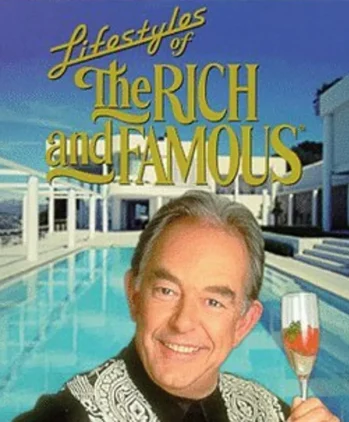
In an era increasingly dominated by visual culture and instant gratification, the concept of "being rich" has become a complex, often contradictory, phenomenon. While traditional financial wisdom posits wealth as accumulated assets and prudent management, societal perceptions frequently equate riches with outward displays of luxury and status symbols. This fundamental divergence creates a fascinating paradox, prompting a deeper examination of what truly constitutes a rich life.
Main Facts: Unpacking the Paradox of Riches
The core dilemma lies in reconciling two distinct interpretations of wealth. On one hand, the financial community champions net worth – the sum of assets minus liabilities – as the ultimate metric. This perspective values savings, investments, and long-term financial security. On the other, popular culture often elevates conspicuous consumption, showcasing lavish lifestyles, high-end possessions, and exclusive experiences as the quintessential markers of affluence.
Consider the hypothetical tale of Dan and Dave, two individuals in their mid-fifties, both successful tech professionals earning substantial annual salaries and bonuses. Their diverging financial philosophies, however, paint vastly different pictures of their respective "riches." Dan, a proponent of understated wealth, drives an older, reliable vehicle and resides in a comfortable, well-maintained home rather than a sprawling mansion. His spending on material possessions, clothing, and vacations is modest, reflecting a disinterest in ostentation. This disciplined approach allows him to save and invest a significant portion of his income, culminating in a robust net worth of $5 million.
Dave, conversely, embraces a more flamboyant lifestyle. His garage houses a luxury automobile, his home is a testament to modern upscale design with all the accoutrements seen on aspirational design shows, and his leisure activities include jet-skiing, dining at gourmet restaurants, and a wardrobe of designer apparel. While he also earns a significant income and manages to save, his profligate spending habits mean his accumulated net worth stands at $2 million – still substantial, but considerably less than Dan’s.
The question then arises: Who is richer? Financial advisors would unequivocally point to Dan, emphasizing that true wealth lies in unspent capital and financial independence. Society, however, might lean towards Dave, whose visible prosperity aligns more closely with the popular image of success. This dichotomy forms the bedrock of a critical discussion about financial literacy, societal values, and personal fulfillment.
A Tale of Two Fortunes: Dan, Dave, and the Modern Dilemma
The contrasting lives of Dan and Dave serve as a potent allegory for the choices individuals make when faced with financial prosperity. Their stories, though fictional, resonate with countless real-world scenarios, illustrating the tension between present gratification and future security.
Dan’s Prudent Path: Dan embodies the principles of delayed gratification and financial foresight. His choice of an older vehicle, while perhaps lacking the prestige of a luxury car, represents a conscious decision to prioritize function and cost-efficiency over status. His home, described as "nice but not a mansion," signifies a comfortable living space free from the burden of excessive mortgage payments or the exorbitant maintenance costs associated with larger, more opulent residences. Dan’s disinterest in extravagant material possessions is not a sign of deprivation but rather a deliberate allocation of resources towards long-term wealth accumulation. He understands that every dollar saved and wisely invested today has the potential to multiply, offering greater financial freedom tomorrow. His $5 million net worth is a testament to years of consistent saving, strategic investing, and a disciplined avoidance of lifestyle inflation. For Dan, wealth is a shield against uncertainty, a means to provide comfort and safety, and a pathway to ultimate financial independence, where money works for him rather than dictating his choices.
Dave’s Conspicuous Consumption: Dave, on the other hand, exemplifies a different philosophy. His luxury automobile, upscale home, jet ski, designer clothes, and frequent visits to fancy restaurants are not merely preferences but rather instruments of self-expression and social signaling. He actively "flaunts" his money, perhaps seeking external validation or adhering to a societal expectation of what a successful person "should" possess. While there’s nothing inherently wrong with enjoying one’s earnings, Dave’s habits suggest a propensity towards the "hedonic treadmill" – a psychological phenomenon where increased consumption provides only temporary spikes in happiness, requiring ever-greater levels of spending to maintain the same level of satisfaction. Despite a high income, his substantial expenditures erode his savings potential. His $2 million net worth, while respectable, reflects a lower capacity for future financial resilience compared to Dan. For Dave, wealth might be less about security and more about experiencing life in the present, though this often comes with the implicit risk of future financial constraints or a constant pressure to maintain an elevated lifestyle.
The fundamental question – "who’s richer?" – thus becomes less about a simple number and more about individual values and definitions of a "rich life." Is it the peace of mind derived from robust financial security, or the immediate pleasure and perceived status derived from lavish spending? Perhaps Dan values the freedom that comes from knowing his future is secure, while Dave prioritizes the experiences and material joys of the present. Or, a more cynical view might suggest Dan is overly anxious about money, preventing him from enjoying it, while Dave is trapped in an endless cycle of consumption, unable to truly find contentment. Ultimately, from an objective financial standpoint, Dan possesses greater wealth, but the subjective experience of "being rich" remains open to interpretation.
The Illusion of Opulence: When Status Symbols Deceive
The distinction between actual wealth and the appearance of wealth is often stark, yet frequently misunderstood by society. Our inherent tendency to judge by outward signs can lead to significant misinterpretations, as vividly illustrated by a personal anecdote involving a seemingly affluent individual.
The author recounts meeting a man who drove an "insanely nice car," so luxurious that its estimated cost, upon a quick Google search, exceeded $200,000. The immediate, almost instinctive, reaction from onlookers and the author alike was that this man must be "rich beyond his wildest dreams," "rolling in the dough." This assumption is deeply ingrained in our collective consciousness: expensive possessions equate to boundless wealth.
However, as the author, a "resident finance guy," got to know the individual better, a different reality emerged. The man, despite his gleaming vehicle and other trappings of luxury (nice house, flashy clothes), was grappling with significant financial strain. He sought advice on how to fund a large home repair, inquiring about borrowing against his 401(k) or taking out a personal loan. This stark contrast between outward appearance and internal financial reality is a powerful lesson. The man, by all external measures, projected an image of extraordinary wealth, with "status symbols screaming rich guy." Yet, beneath the veneer of opulence, he was potentially "in debt up to his eyeballs," sacrificing liquidity and financial stability to maintain a high-status lifestyle.
This anecdote underscores a critical point: conspicuous consumption often masks underlying financial fragility. The pressure to "keep up with the Joneses" – or, in today’s digital age, to curate an enviable online persona – can drive individuals to spend beyond their means. Easy access to credit, personal loans, and the ability to leverage future earnings for current consumption contribute to this phenomenon. The psychological burden of maintaining such an illusion can be immense, leading to chronic stress, anxiety, and a perpetual chase for the next status symbol to validate one’s perceived success. This highlights the dangerous trap where appearing rich becomes more important than actually being rich, often at the expense of genuine financial security and peace of mind.
The Evolving Metrics of Success: Net Worth’s Recent Rise
The modern obsession with "net worth" as a definitive marker of success is a relatively new phenomenon, a concept that has gained widespread traction only in recent history. This is a point eloquently argued by Joseph Moore in his insightful book, How to Get Rich in American History.
Moore’s research reveals that the term "net worth" was conspicuously absent from financial discourse for the vast majority of U.S. history. He notes, "You will search in vain across the first 200 years of U.S. history to find ‘net worth’ mentioned once. It did not occur in a single family finance book before World War I." This historical vacuum suggests that previous generations focused on different metrics of prosperity. The closest historical term, "an estate worth," primarily referred to landed wealth – the value of property and assets that could be passed down through generations – rather than a precise calculation of total market value or liquid assets.
Moore contends that net worth, in its current pervasive usage, is relevant in only three specific contexts: "when you die (who gets what?), when you borrow (can you pay us back?), and when men feel the need to impress one another (whose is bigger?). That’s it. There is no other time when net worth is a relevant stat." This perspective challenges the contemporary notion that one’s net worth is a constant, ever-important barometer of personal achievement or happiness.
The rise of net worth as a dominant metric can be attributed to several factors. The post-World War I economic boom, the growth of the stock market, the proliferation of financial products, and the increasing accessibility of personal finance information likely contributed to its emergence. In an economy where wealth became increasingly tied to liquid assets and investment portfolios rather than purely physical property, a quantifiable measure of one’s total financial holdings became more pertinent. The digital age, with its ease of tracking investments and comparing financial figures, further cemented net worth’s place in popular consciousness.
However, this newfound emphasis on a singular number also carries potential pitfalls. It can foster an unhealthy comparison culture, where individuals constantly benchmark their financial standing against others, leading to feelings of inadequacy or an insatiable desire for more. It risks reducing the complex tapestry of a fulfilling life to a mere numerical value, overlooking the qualitative aspects of well-being, relationships, and personal growth. While net worth is undoubtedly a crucial tool for financial planning and assessment, its elevation to the sole arbiter of "richness" can distort our understanding of true prosperity.
The Perils of Extremes: Anxiety, Consumption, and the Search for Balance
Working within the wealth management industry offers a unique vantage point, exposing the myriad ways individuals interact with money – often revealing the psychological complexities beneath the surface of financial figures. This perspective frequently underscores that neither extreme of wealth management – excessive accumulation without enjoyment, nor lavish spending without prudence – leads to a truly "rich" life.
The "Hoarder" of Wealth: Consider the individual with a substantial net worth, perhaps even exceeding Dan’s $5 million, who lives in perpetual fear of spending. This person might possess significant assets but is constantly plagued by anxiety about running out of money, market downturns, or unforeseen emergencies. Every expenditure, no matter how small, becomes a source of stress. Such an individual, despite their objective wealth, is not "rich" in any meaningful sense. Their money, rather than being a tool for freedom and enjoyment, becomes a source of constant worry, effectively imprisoning them in a gilded cage of their own making. This reflects a scarcity mindset, where the fear of loss overshadows the potential for joy and experience, ultimately negating the very purpose of accumulating wealth.
The "Perpetual Spender": Conversely, take the individual who spends prodigiously to project an image of wealth, much like the man with the $200k car. This person’s focus is on acquiring status symbols, often at the cost of financial stability. They might live paycheck to paycheck, or worse, accumulate significant debt, all to maintain an outward appearance of success. The constant pressure to "keep up" and the underlying financial precariousness generate immense stress and anxiety. This lifestyle, driven by external validation and the relentless pursuit of material possessions, is also far from a "rich" life. It represents a different form of imprisonment – one where freedom is sacrificed for fleeting prestige, and true contentment remains elusive.
The goal, therefore, lies in finding a harmonious middle ground. This balanced approach acknowledges the importance of both accumulation and enjoyment, planning and present living. A truly rich life involves:
- Possessing a good financial number AND enjoying your money. Wealth should serve as a means to enhance life, not as an end in itself or a source of perpetual worry.
- Saving for the future AND spending on your priorities. Prudent saving ensures security and future opportunities, while intentional spending aligns resources with personal values and brings joy.
- Planning for tomorrow AND embracing today. A balanced perspective prevents both reckless abandon and crippling apprehension, fostering a life lived fully in the present while responsibly preparing for the future.
- Maintaining a burn rate that consistently falls below your income level. This fundamental principle ensures sustainable financial health, allowing for continuous savings and investment without sacrificing current quality of life.
This equilibrium provides genuine financial freedom – the ability to make choices aligned with one’s values without being dictated by financial constraints. It offers peace of mind, reduces stress, and allows individuals to pursue passions and experiences that truly enrich their lives, far beyond the superficiality of status symbols or the cold comfort of an ever-growing number.
The True Measure: Contentment and Financial Freedom
Living a truly rich life, as defined by this harmonious balance, is by no means an easy feat. It requires discipline, self-awareness, and a conscious decision to resist societal pressures that often push us towards either excessive austerity or unchecked consumption. The question of whether everyone else considers you rich ultimately becomes secondary; what truly matters is your own internal definition of richness.
The ultimate sign of wealth, transcending net worth figures or displays of luxury, is contentment with what you have, regardless of the number. This isn’t to say that ambition or striving for financial improvement is negative. Rather, it means cultivating an appreciation for one’s current circumstances, finding satisfaction in one’s journey, and being free from the constant yearning for "more."
Contentment in this context implies:
- Freedom from chronic financial anxiety: Knowing that your basic needs are met and you have a buffer for unforeseen circumstances.
- The ability to pursue meaningful experiences: Investing in personal growth, relationships, and activities that bring genuine joy and purpose.
- A sense of control over one’s financial destiny: Making intentional choices about how money is earned, saved, and spent, rather than being a slave to debt or societal expectations.
- An understanding that true fulfillment extends beyond material possessions: Recognizing that while money can facilitate comfort and opportunity, it cannot buy happiness, love, or inner peace.
This philosophical perspective on wealth emphasizes internal well-being over external validation. It recognizes that genuine prosperity is a holistic state, encompassing financial security, emotional peace, and a sense of purpose. Achieving this level of contentment amidst the constant barrage of consumerist messages and the inherent human tendency for comparison is undeniably challenging. It requires a deliberate shift in mindset, a clear understanding of one’s values, and consistent effort.
However, the reward is profound: a life lived with less stress, more joy, and a deep sense of security and fulfillment that no amount of money or material possessions alone can provide. It is in this nuanced and deeply personal definition that the true essence of "being rich" truly lies.
Further Insights and Resources
For those seeking to delve deeper into these crucial discussions about wealth, financial philosophy, and the pursuit of a balanced life, additional resources offer valuable perspectives. Michael Batnick and Ben Carlson frequently explore these themes on their "Animal Spirits" podcast and video series, providing actionable insights and challenging conventional wisdom within the financial landscape. Their discussions, such as the one mentioned in the original article, titled "What it means to be rich," offer practical guidance and thought-provoking analysis. Similarly, articles like "Why You Don’t Feel Rich" provide further avenues for reflection on the psychological underpinnings of our relationship with money. Engaging with these resources can help individuals navigate the complexities of personal finance and ultimately define what a truly rich life means for them.