The Digital Wealth Revolution: A Comprehensive Evaluation of Modern Net Worth Tracking and Personal Finance Management Platforms
Main Facts: The Paradigm Shift in Personal Wealth Monitoring
In an increasingly complex macroeconomic environment, tracking personal net worth has transitioned from an annual bookkeeping chore into a dynamic, real-time strategy for long-term financial security. At its core, net worth calculation is straightforward: subtracting total liabilities (what an individual owes) from total assets (what an individual owns). However, the modern digital landscape has fundamentally transformed how this math is executed, visualized, and utilized.
Historically, retail investors relied on static spreadsheets or manual calculations to gauge their financial health. Today, a highly competitive sector of financial technology (fintech) applications offers automated, multi-asset data aggregation. These platforms securely synchronize with bank accounts, investment portfolios, retirement vehicles, credit card ledgers, real estate values, and even alternative assets like cryptocurrencies and luxury collectibles.
According to financial technology analysts, the modern consumer demands platforms that go beyond simple arithmetic. The top-performing applications in today’s market integrate advanced asset allocation analysis, portfolio fee diagnostics, AI-driven budgeting assistance, subscription management, and retirement projection modeling. This comprehensive evaluation details the leading wealth-tracking solutions available to consumers, analyzing their features, cost structures, and target demographics to help investors select the optimal tool for their financial journeys.
Chronology: The Evolution of Personal Finance Technology
To understand the current state of net worth tracking, it is essential to trace the technological milestones that paved the way for modern automated platforms.
+-----------------------------------------------------------------------------+
|                                CHRONOLOGY                                   |
+-----------------------------------------------------------------------------+
|                                                                             |
|  [Pre-2000s: The Manual Ledger Era]                                         |
|  Consumers rely on physical double-entry bookkeeping, ledger books, or      |
|  basic, offline desktop software like early iterations of Quicken.          |
|                                       │                                     |
|                                       ▼                                     |
|  [2000s–2010s: The Rise of Aggregation and Mint.com]                        |
|  Web-based aggregators emerge. Screen scraping technology allows platforms   |
|  like Mint.com and Personal Capital (now Empower) to consolidate multiple   |
|  financial accounts into a single dashboard.                                |
|                                       │                                     |
|                                       ▼                                     |
|  [Mid-2010s: Secure API Integration (The Plaid Era)]                       |
|  The industry shifts from fragile screen scraping to secure, standardized   |
|  API connections managed by third-party aggregators like Plaid, Yodlee,     |
|  and Finicity, drastically improving data accuracy and security.             |
|                                       │                                     |
|                                       ▼                                     |
|  [2020–2023: Market Consolidation and Subscription Shifts]                  |
|  Major acquisitions reshape the landscape. Personal Capital is rebranded as  |
|  Empower. The sunsetting of pioneering free apps like Mint.com forces users |
|  to migrate to premium, subscription-based models.                          |
|                                       │                                     |
|                                       ▼                                     |
|  [2024–Present: The AI and Multi-Asset Era]                                 |
|  Modern platforms integrate machine learning for automated transaction      |
|  categorization, natural language AI assistants, and automated tracking of  |
|  alternative assets (Zillow home values, VIN-based car valuations, crypto). |
|                                                                             |
+-----------------------------------------------------------------------------+
Supporting Data: Comparative Analysis of Top Net Worth Trackers
To assist consumers in navigating the crowded fintech marketplace, we have analyzed the six leading net worth and personal finance tracking platforms. These tools represent various operational philosophies, ranging from fully automated premium dashboards to highly customizable, spreadsheet-driven utilities.
+------------------+-------------------+----------------------+------------------------------------+
| Platform         | App Store Rating  | Pricing Structure    | Primary Focus / Best For           |
+------------------+-------------------+----------------------+------------------------------------+
| Empower          | 4.8 (378k reviews)| Free                 | Free Investment & Wealth Tracking  |
| Monarch Money    | 4.9 (88k reviews) | Paid Subscription    | Premium Budgeting & Collaborative  |
| Rocket Money     | 4.7 (100k+ rev.)  | Hybrid (Free/Paid)   | Subscription Management & Budgeting|
| Kubera           | N/A (Web-focused) | Paid Subscription    | Advanced Multi-Asset & Privacy     |
| Simplifi         | 4.1 (10k+ reviews)| Paid Subscription    | Mobile-First Budgeting & Tracking  |
| Tiller           | N/A (Spreadsheet) | Paid Subscription    | Spreadsheet Automation & Control   |
+------------------+-------------------+----------------------+------------------------------------+
1. Empower (Editor’s Choice)
- Platforms: Apple iOS, Android, Web
- Cost: Free
- Best For: Free wealth tracking and robust investment analysis
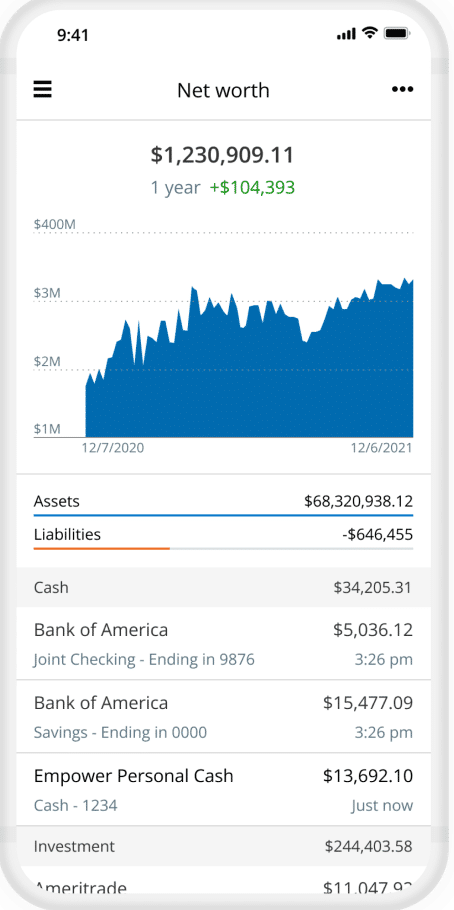
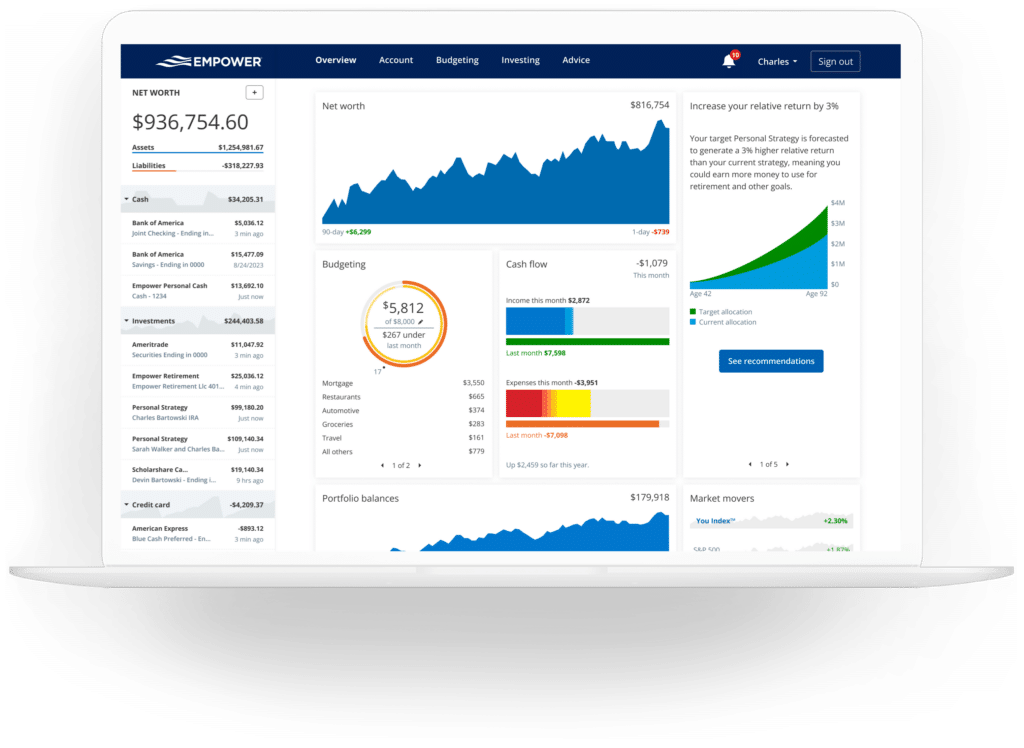
Previously known as Personal Capital, Empower remains the gold standard for free net worth tracking. It operates on a freemium model: the software is completely free to use, while the company generates revenue by offering optional wealth management services to high-net-worth users.
Core Capabilities:
- Automated Syncing: Connects to bank accounts, credit cards, mortgages, student loans, and investment accounts.
- Alternative Asset Integration: Integrates with Zillow to pull real-time estimated home values and allows manual tracking of physical assets such as art, jewelry, and private equity.
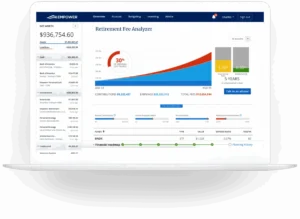
- Investment Diagnostics: Features an Asset Allocation Inspector, an Investment Fee Analyzer (which highlights hidden 401(k) and mutual fund fees), and a highly sophisticated Retirement Planner that runs Monte Carlo simulations to forecast retirement success.
2. Monarch Money
- Platforms: Apple iOS, Android, Web
- Cost: Free Trial; $99.99/year (or $14.99/month); introductory discounts available (e.g., promo code
MONARCHVIPorROB50for 50% off the first year) - Best For: Comprehensive budgeting, collaborative household finance, and AI integration
Developed by some of the original creators of Mint.com, Monarch Money was built from the ground up to address the reliability and interface issues of legacy personal finance apps. It has rapidly become a favorite for couples and household managers.
Core Capabilities:
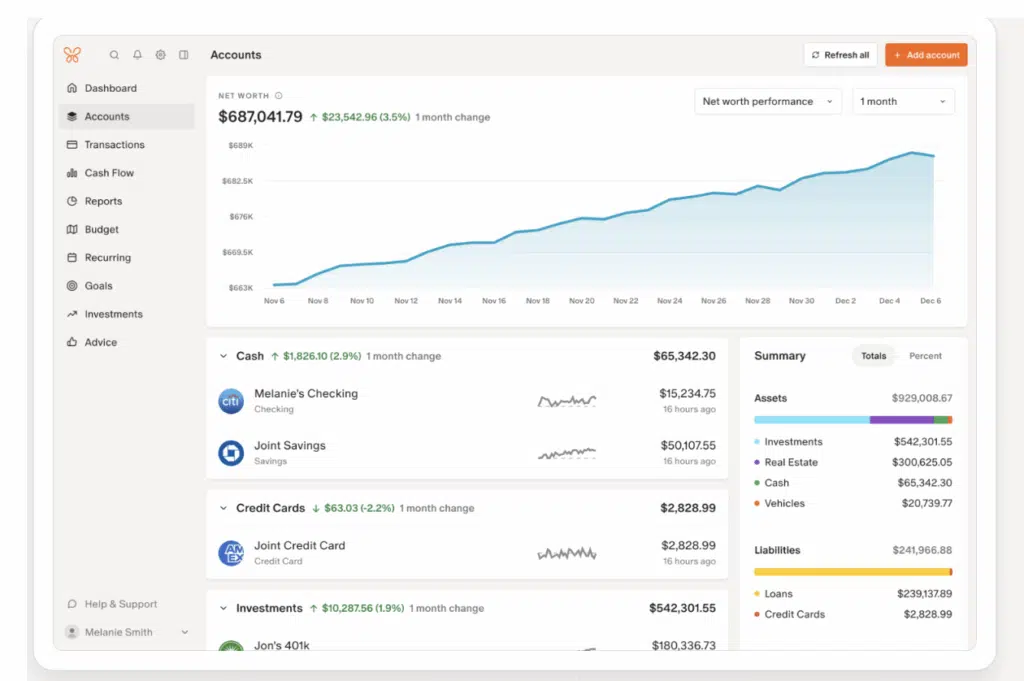
- Advanced Multi-Asset Tracking: Syncs with bank accounts, investment portfolios, Coinbase accounts, and Apple Card. It also tracks vehicle values using the car’s Vehicle Identification Number (VIN) and real estate via Zillow.
- Modern Budgeting Features: Offers "Flex Budgeting" to separate fixed overhead from variable, discretionary expenses.
- Cutting-Edge AI Utilities: Features an interactive AI Assistant that allows users to ask natural language questions about their spending trends, net worth history, and custom transaction categories. It also includes an automated receipt scanner that matches uploaded images directly to line-item transactions.
3. Rocket Money
- Platforms: Apple iOS, Android, Web
- Cost: Free basic tier; Premium tier features a pay-what-you-want sliding scale ($6 to $12 per month, or $4 per month billed annually)
- Best For: Cash flow tracking, bill negotiation, and automated subscription cancellation
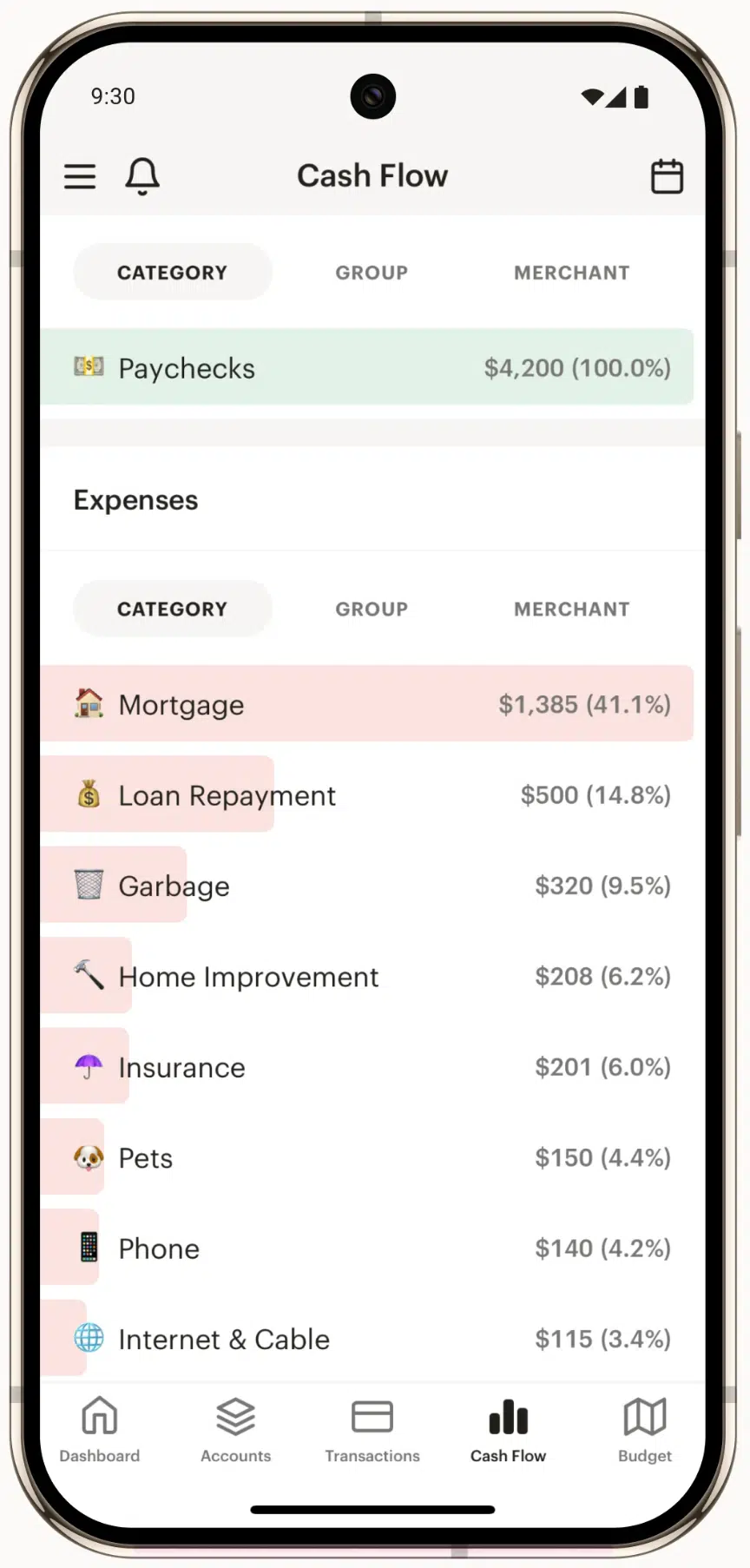
Acquired by Rocket Companies (formerly Truebill), Rocket Money is designed for consumers focused on optimizing their monthly cash flow, identifying recurring waste, and establishing foundational budgets.
Core Capabilities:
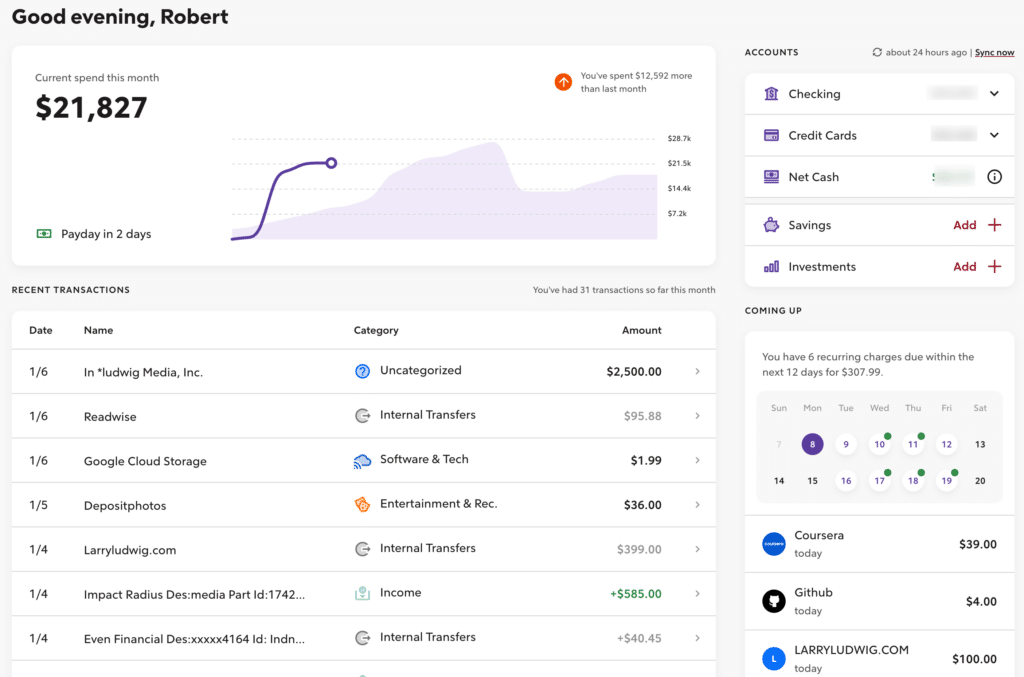
- Subscription Management: Automatically scans recurring transactions, lists active subscriptions, and offers a concierge service to assist users in canceling unwanted services.
- Bill Negotiation: Identifies opportunities to lower recurring bills (such as telecom, internet, and security systems) and negotiates with service providers on the user’s behalf in exchange for a percentage of the annual savings.
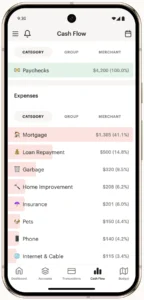
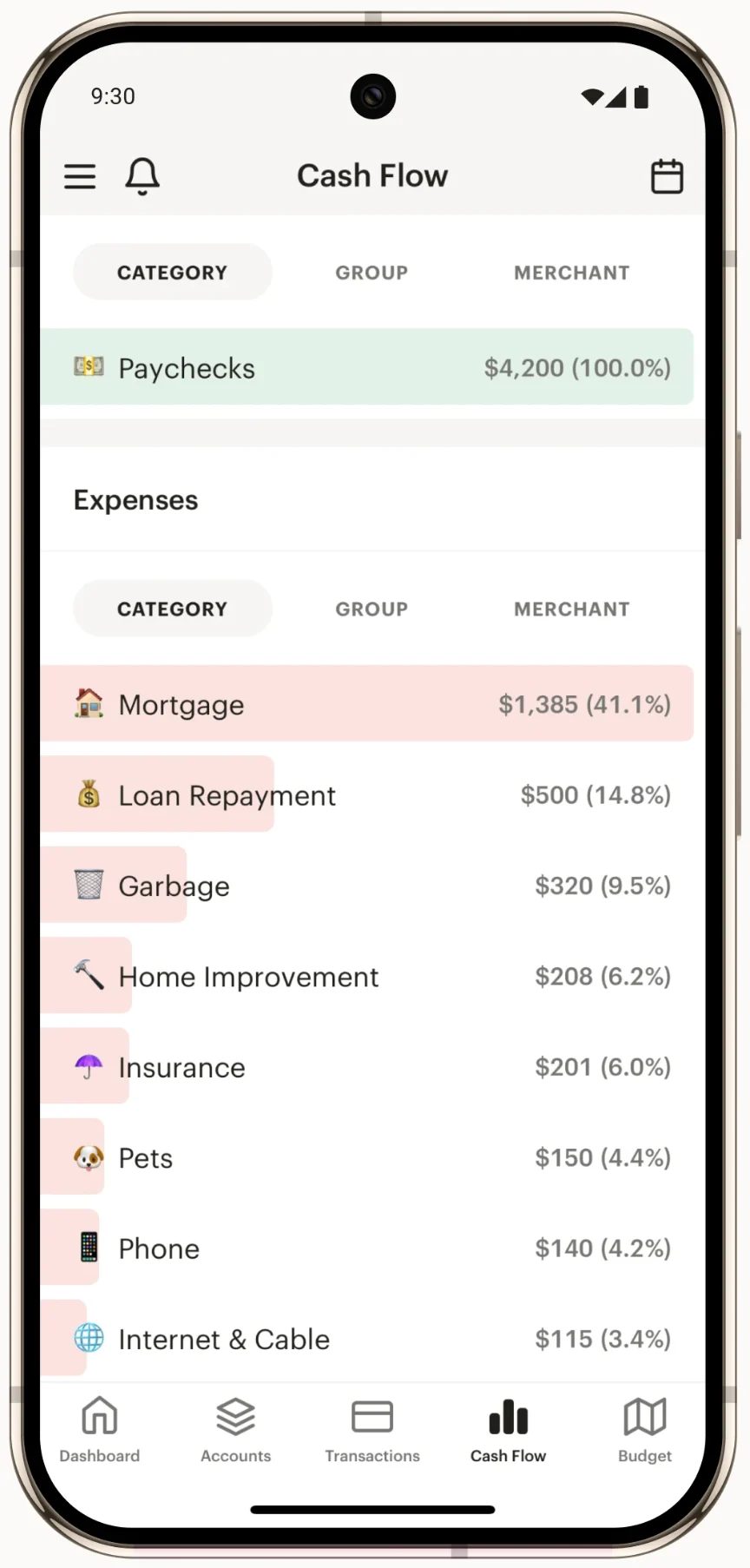
- Visual Dashboard: Provides an exceptionally clean, easy-to-read user interface that details upcoming bills, historical spending patterns, and current net worth.
4. Kubera
- Platforms: Web, Apple iOS, Android
- Cost: 14-day free trial; $249/year
- Best For: High-net-worth individuals, global asset tracking, and strict data privacy
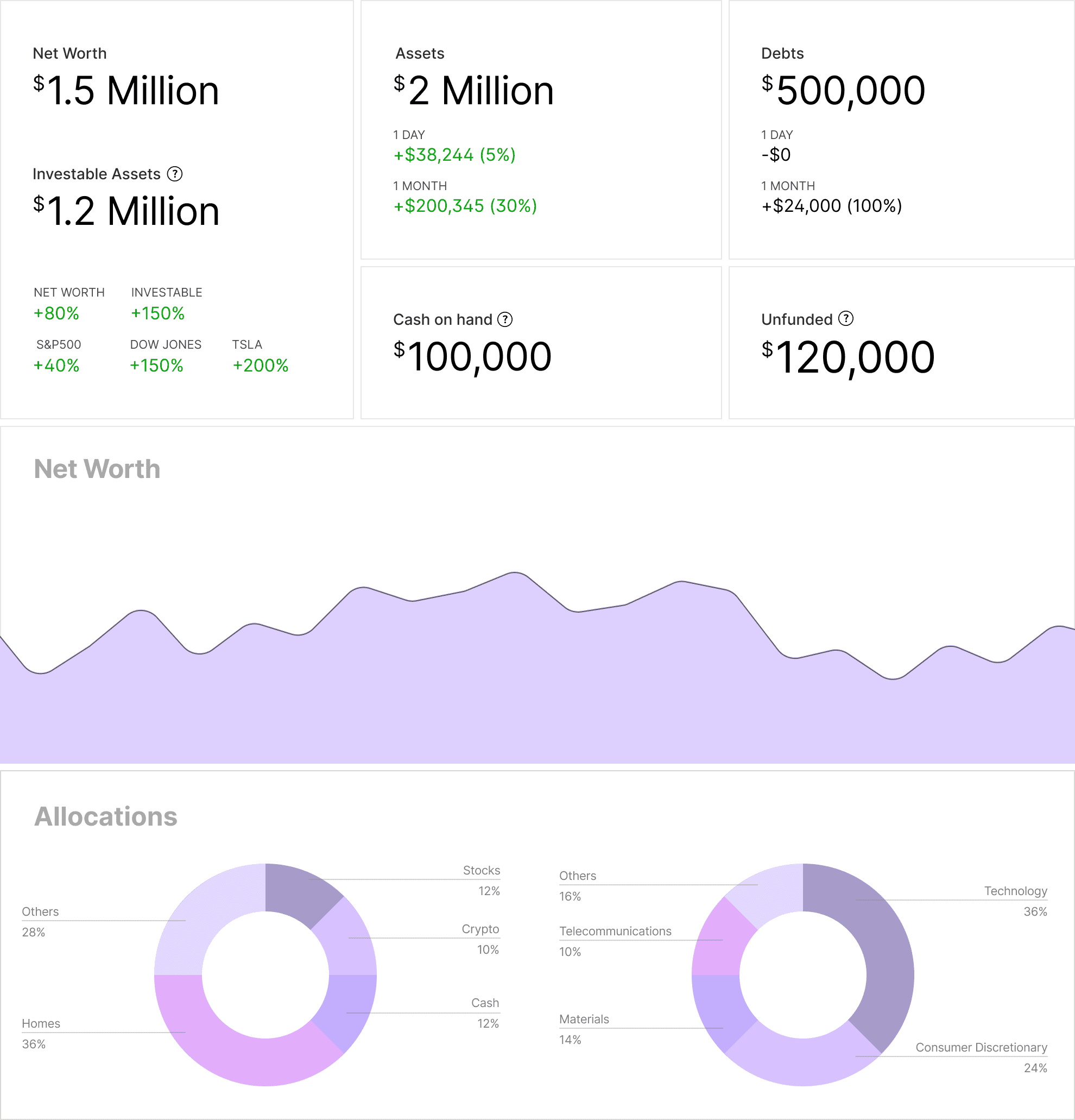
Kubera is a premium, specialized net worth tracker built specifically for users who prioritize extreme privacy and have complex, international, or alternative asset portfolios. Unlike free platforms, Kubera does not sell user data or cross-sell financial products.
Core Capabilities:
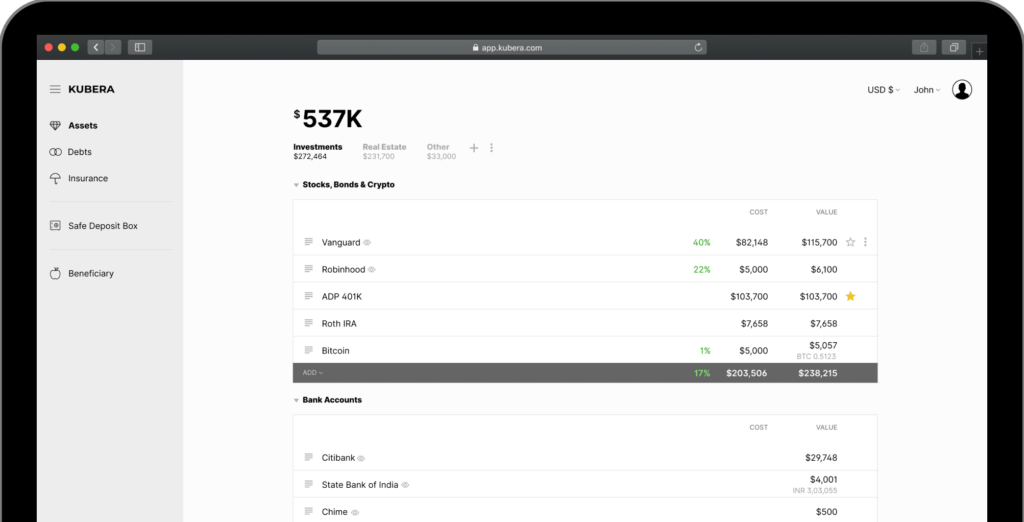
- Global Asset Aggregation: Supports multiple currencies and integrates with international banks, brokerage firms, crypto wallets, DeFi platforms, domain name registrars, and real estate databases.
- Estate Planning & Document Vault: Includes secure digital storage for insurance policies, trusts, and deeds, alongside a "Life Insurance" feature—a dead man’s switch that automatically sends financial portfolio details to designated beneficiaries if the account holder becomes inactive.
- Clean, Spreadsheet-Style Interface: Focuses entirely on clear ledger presentations, asset allocation ratios, and clean net worth trend lines without the distractions of budgeting alerts or promotional ads.
5. Simplifi (by Quicken)
- Platforms: Apple iOS, Android, Web
- Cost: Billed annually (typically $3.49/month for the first year, renewing at $6.99/month)
- Best For: Mobile-first users seeking Quicken-grade power in a modern interface
Simplifi is Quicken’s modern, cloud-based answer to mobile-first personal finance tracking. It strips away the bloat of legacy desktop software while retaining powerful transaction-matching and budgeting rules.
Core Capabilities:
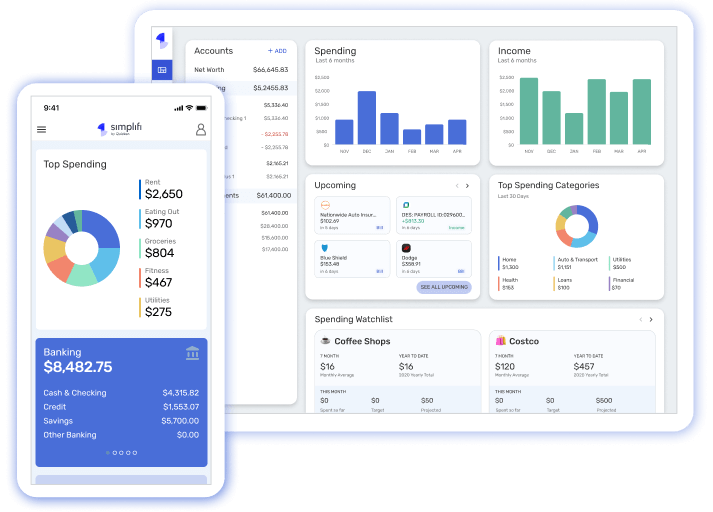
- Custom Spending Plans: Rather than relying on rigid monthly categories, Simplifi calculates a dynamic "available to spend" balance based on income, bills, and savings goals.
- Investment Portfolio Syncing: Offers clean tracking of brokerage balances, investment performance, and retirement funds, providing a comprehensive snapshot of overall net worth.
- Highly Rated Mobile Experience: Frequently cited as one of the most stable and visually intuitive smartphone budgeting interfaces on the market.
6. Tiller
- Platforms: Google Sheets, Microsoft Excel (via automated add-ons)
- Cost: 30-day free trial; $79/year
- Best For: Spreadsheet enthusiasts who demand absolute control over their data
For investors who prefer the infinite customizability of spreadsheets but dislike the chore of manual entry, Tiller bridges the gap. It securely pulls transaction and balance data from financial institutions and populates it directly into Google Sheets or Microsoft Excel.
Core Capabilities:
- Automated Feed Delivery: Updates spreadsheet ledgers daily with cleared transactions, account balances, and historical data.
- Template Library: Provides pre-built, professional templates for monthly budgeting, yearly planning, and debt payoff trackers, alongside a robust automated net worth tracking sheet.
- Uncompromising Data Ownership: Users retain complete ownership of their financial history. If they cancel the subscription, they keep their spreadsheets and all historical data intact.
Official Responses and Security Frameworks
As financial tracking platforms collect sensitive login credentials and asset details, data privacy and cybersecurity have become central concerns for consumers, financial institutions, and regulatory bodies.
Industry Security Standards
Major platforms, including Empower, Monarch Money, and Simplifi, secure user credentials using bank-grade AES-256 encryption. These apps operate on a "read-only" basis; they can display balances and aggregate transactions, but they cannot initiate transfers, pay bills, or move funds out of any connected accounts.
The Role of Financial Data Aggregators
To sync data securely, fintech applications rely on third-party data aggregators such as Plaid, Yodlee, and Finicity.
- Plaid has repeatedly emphasized its shift toward open-banking APIs, which allow users to authenticate directly with their banks without sharing raw usernames and passwords with the fintech applications.
- Yodlee, owned by Envestnet, operates under strict supervision from federal banking regulators, undergoing regular audits to maintain compliance with the Gramm-Leach-Bliley Act (GLBA) and the Fair Credit Reporting Act (FCRA).
In statement updates regarding data security, fintech platforms emphasize that user credentials are encrypted at the device level and are never stored on their servers. Multi-factor authentication (MFA) is now standard across the industry, mitigating the risk of unauthorized access even in the event of local device theft.
Implications: The Broader Impact of Automated Wealth Tracking
The rise of automated net worth tracking has significant implications for consumer behavior, financial literacy, and the broader fintech industry.
1. The Democratization of Wealth Advisory Services
Historically, advanced financial planning tools—such as Monte Carlo retirement simulations, asset allocation analysis, and portfolio fee diagnostics—were only accessible through expensive, professional wealth advisors. By delivering these tools directly to retail investors’ smartphones, platforms like Empower have democratized sophisticated financial planning, enabling everyday savers to identify and eliminate high mutual fund fees and optimize their asset distributions independently.
2. Behavioral Finance and the "Gamification" of Saving
Psychological studies in behavioral finance show that consumers who regularly monitor their net worth are far more likely to make positive adjustments to their spending and saving habits. Visualizing a real-time, upward-trending net worth graph provides positive reinforcement, turning the abstract concept of long-term wealth accumulation into a tangible, motivating objective.
3. The Shift to Subscription-Based Fintech Models
The sunsetting of Mint.com in early 2024 marked a turning point in the business models of personal finance applications. The industry has largely moved away from free, ad-supported software—which often relies on selling user data or aggressively pitching credit cards—toward subscription-based models.
Platforms like Monarch Money, Kubera, and Tiller demonstrate that consumers are increasingly willing to pay a premium for software that aligns its incentives with user privacy. This subscription-driven revenue model ensures continuous platform development, faster customer support, and more stable API connections, securing the future of automated personal wealth management.