The Best Investment Tracking Apps: A Comprehensive Review of Retail Portfolio Management Tools
In an era of market volatility and increasingly fragmented asset classes, managing a diversified investment portfolio has become both more critical and more complex. Modern investors no longer rely solely on traditional stocks and mutual funds; instead, they balance portfolios containing exchange-traded funds (ETFs), cryptocurrencies, real estate, private equity, and foreign currencies.
To maintain target asset allocations, minimize fee drag, and track net worth in real-time, choosing the right digital portfolio tracker is paramount. This comprehensive analysis evaluates the market’s leading investment tracking applications based on cost, integration capabilities, analytical depth, and ease of use.
1. Main Facts: The Current State of Digital Portfolio Tracking
Retail wealth management has undergone a profound digital transformation. With the proliferation of zero-commission brokerages and alternative asset classes, the average retail investor’s net worth is often distributed across multiple platforms—ranging from workplace 401(k) accounts and individual retirement accounts (IRAs) to crypto wallets and real estate crowdfunding portals.
![8 Best Investment Tracking Apps [2026 Guide] – ROB BERGER](https://robberger.com/wp-content/uploads/2024/02/Empower-Logo.jpeg)
This fragmentation has created a high demand for unified portfolio trackers. These applications compile disparate financial data into a single, cohesive dashboard. While simple net worth tracking can be achieved via manual spreadsheets, sophisticated investors require dynamic tools that offer:
- Automated Data Aggregation: Real-time syncing with global brokerages, banks, and custodians.
- Asset Allocation Analysis: Granular look-through capabilities that expose overlapping holdings across different mutual funds and ETFs.
- Fee Optimization: Tools that identify high expense ratios and project their compounding impact over decades.
- Performance Benchmarking: Time-weighted and money-weighted return calculations measured against standard indexes (e.g., the S&P 500).
The leading platforms in this space target distinct investor profiles, ranging from the hands-off retirement planner to the active high-net-worth individual (HNWI) and the dividend-growth strategist.
2. Chronology: The Evolution of Portfolio Management Technology
To understand the current state of investment tracking apps, it is useful to trace their technological lineage.
![8 Best Investment Tracking Apps [2026 Guide] – ROB BERGER](https://robberger.com/wp-content/uploads/2025/11/monarch-money-logo.png)
[1980s–1990s: Desktop Era]
   │  • Quicken introduces localized desktop personal finance software.
   │  • Data entry is entirely manual; security is self-contained.
   ▼
[2000s: Web 1.0 & Early Aggregation]
   │  • Yodlee and early screen-scraping technologies emerge.
   │  • Mint.com launches (2006), popularizing automated bank-feed aggregation.
   ▼
[2010s: The Rise of Wealthtech & Advisory Models]
   │  • Personal Capital (now Empower) launches in 2011, blending free tracking with wealth advisory.
   │  • Plaid emerges, standardizing secure API connections for fintech apps.
   ▼
[2020s: Multi-Asset, AI, & Privacy-First SaaS]
   │  • Crypto, real estate, and global assets drive the need for multi-currency trackers (Kubera).
   │  • Rise of ad-free, subscription-based models (Monarch Money) following Mint's decline.
│ • Integration of AI for document scanning, automated categorizations, and predictive modeling.- The Desktop Era (1980s–1990s): Localized software like Quicken pioneered personal financial management. While revolutionary, these programs required manual transaction entry and physical software updates via floppy disk or CD-ROM.
- The Aggregation Era (2000s): The emergence of financial data aggregators like Yodlee enabled applications to "scrape" data from banking websites. Mint.com, founded in 2006, popularized this model, showing users their bank balances and basic investment holdings in a web browser.
- The Wealthtech Boom (2010s): Personal Capital (founded in 2011 and later rebranded as Empower) shifted the focus from simple budgeting to deep portfolio analysis. They offered institutional-grade tools—such as fee analyzers and retirement planners—entirely for free, monetizing the platform by cross-selling human financial advisory services.
- The Modern Multi-Asset & AI Era (2020s): The modern era is characterized by asset diversification (cryptocurrency, private equity, venture capital) and a shift in consumer preferences toward data privacy. Paid software-as-a-service (SaaS) models like Monarch Money and Kubera have gained market share by promising not to sell user data, utilizing advanced APIs (like Plaid, Finicity, and MX) and AI engines to deliver secure, real-time, and cross-border financial tracking.
3. Supporting Data: Detailed Profiles of the Top Investment Trackers
To assist investors in identifying the tool that best fits their financial profile, we analyze the top eight investment tracking applications on the market today.
1. Empower: The Best Free Portfolio Manager
Formerly known as Personal Capital, Empower remains the gold standard for free, automated investment tracking. It is designed primarily for long-term, buy-and-hold investors who want a macro view of their financial health.
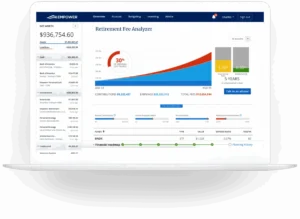
- Key Features: Once financial accounts are linked, Empower automatically pulls transactions, balances, and cost basis. Its standout feature is the Retirement Fee Analyzer, which scans mutual fund and ETF holdings to reveal hidden expense ratios and project their long-term impact on net worth. The platform also includes a robust, Monte Carlo-based Retirement Planner and an interactive asset allocation map.
- Target Audience: General investors looking for a comprehensive, set-it-and-forget-it tracking tool.
- Cost: Free.
- Limitations: The platform frequently prompts users with high net worths to schedule consultations with Empower’s in-house financial advisors.
2. Kubera: The Best for High-Net-Worth Individuals (HNWIs)
For investors with complex, global portfolios, Kubera offers an unparalleled level of sophistication. It is built as a modern balance sheet rather than a traditional budgeting app.
![8 Best Investment Tracking Apps [2026 Guide] – ROB BERGER](https://robberger.com/wp-content/uploads/2024/01/Kubera-Logo.jpeg)
- Key Features: Kubera utilizes multiple financial aggregators to connect to global banks and brokerages, reducing sync errors. It allows users to track non-traditional assets: real estate (using custom valuation tools beyond simple Zillow estimates), domain names, vehicles (via VIN tracking), and private equity. It features deep integration with cryptocurrency exchanges and cold wallets, supports dozens of fiat currencies, and tracks physical assets like gold and silver. It also offers a secure digital "Safe Deposit Box" for estate planning documents and a beneficiary transfer protocol in the event of the account holder’s death.
- Target Audience: HNWIs, expatriates, crypto investors, and estate planners.
- Cost: $249 per year (following a 14-day free trial).
- Limitations: There are no budgeting or cash-flow tracking tools, and it is strictly desktop-first in its visual layout.
3. Monarch Money: The Best All-in-One App
Formed by key members of the original Mint.com product team, Monarch Money is designed to bridge the gap between day-to-day budgeting and long-term investment tracking.
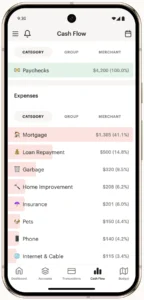
- Key Features: Monarch allows users to sync their banking, credit card, and investment accounts to a highly customizable dashboard. While it excels at transaction categorization, budgeting, and recurring bill tracking, its investment module is clean and intuitive. It tracks portfolio performance, asset balances, and net worth history over time.
- Target Audience: Households and couples seeking a shared platform to manage both their monthly cash flow and their investment portfolios.
- Cost: $99 per year (or $14.99 per month), with a 7-day free trial.
- Limitations: Its asset allocation analysis is relatively basic compared to dedicated investment tools like Empower.
4. Stock Rover: The Best for Advanced Stock Research
For active equity investors and researchers, Stock Rover functions as a highly sophisticated terminal packed with institutional-grade data.
- Key Features: Stock Rover offers unparalleled stock screening, portfolio charting, and research capabilities. It integrates directly with brokerage accounts to track performance, but its true strength lies in its analytical engine. It offers earnings calendars, automated portfolio rebalancing alerts, historical financial data sheets, and dividend income projections.
- Target Audience: Active stock traders, value investors, and quantitative researchers.
- Cost: Free tier available; paid premium tiers range from $79.99 to $279.99 per year.
- Limitations: The user interface has a steep learning curve and looks more like a financial terminal than a consumer app.
5. Snowball Analytics: The Best for Rebalancing and Dividend Tracking
Snowball Analytics has emerged as a favorite for dividend-growth investors and those who actively manage their portfolio weights.
![8 Best Investment Tracking Apps [2026 Guide] – ROB BERGER](https://robberger.com/wp-content/uploads/2025/08/Snowball-Analytics-logo.png.webp)
- Key Features: The platform specializes in visualizing dividend income, displaying past payments, projecting future dividend yields, and listing upcoming ex-dividend dates. Additionally, it offers a built-in Rebalancing Tool that calculates exactly how much capital an investor needs to allocate to specific assets to return to their target asset allocation.
- Target Audience: Dividend-income investors and passive indexers who manage their own rebalancing.
- Cost: Free tier available (for up to 10 holdings); paid plans range from $6.00 to $18.80 per month.
- Limitations: Its automated sync options can occasionally struggle with smaller, regional banks or international brokerages.
6. Simply Wall St: The Best Visual Portfolio Analyzer
Simply Wall St translates complex financial statements and stock data into highly intuitive, interactive infographics.
- Key Features: The platform represents stock portfolios using its signature "Snowflake" analysis, a visual chart that rates a company across five key metrics: value, future growth, past performance, financial health, and dividend yield. It supports over 2,000 brokers globally and provides immediate visual feedback on a portfolio’s diversification and risk profile.
- Target Audience: Visual learners and stock investors who want quick, digestible fundamental analysis.
- Cost: Free plan available; premium tiers start at $10.95 per month.
- Limitations: It does not support mutual funds, focusing exclusively on individual equities and ETFs.
7. Morningstar Investor: The Best for Fund Research
Morningstar is the historical gold standard for mutual fund and ETF analysis. Its premium digital platform, Morningstar Investor, provides retail users with institutional-grade research.
- Key Features: Users gain access to Morningstar’s proprietary Star Ratings, Analyst Ratings, and deep-dive fund reports. The platform’s Portfolio X-Ray tool is the industry benchmark for asset allocation analysis, showing users exactly where their money is invested down to the individual stock holdings buried inside broad mutual funds.
- Target Audience: Mutual fund, ETF, and retirement account investors who want to eliminate overlapping holdings.
- Cost: $249 per year (often discounted to $199 for the first year), with a 7-day free trial.
- Limitations: Automated account syncing does not support performance tracking; users must enter their transactions manually to view historical returns on the platform.
8. Quicken Premier: The Best Legacy Desktop Software
Quicken Premier is the longest-surviving personal finance brand, offering a robust desktop program for users who prefer localized data control.
![8 Best Investment Tracking Apps [2026 Guide] – ROB BERGER](https://robberger.com/wp-content/uploads/2023/02/desktop-invst-chek-stock-EMP-1024x748.png)
- Key Features: Quicken Premier provides extensive portfolio tracking, realized and unrealized gain calculations, and powerful tax-planning tools (such as Schedule D preparation). It pulls in fund ratings and data from Morningstar and allows users to run hypothetical "what-if" investment scenarios.
- Target Audience: Traditional investors who prefer localized desktop software over pure cloud-based applications.
- Cost: Approximately $75 annual subscription.
- Limitations: The interface can feel dated, and syncing across multiple mobile devices can be clunky.
Portfolio Trackers: Comparative Reference Table
| Investment Tracking App | Best For | Pricing Structure | Key Differentiation |
|---|---|---|---|
| Empower | Free Portfolio & Fee Tracking | Free | Outstanding fee analyzer and retirement planning tools. |
| Kubera | High-Net-Worth Individuals | $249 / year (14-day trial) | Global asset tracking (crypto, VINs, real estate, currencies). |
| Monarch Money | All-in-One Wealth & Budgeting | $99 / year (7-day trial) | Excellent modern interface combining budgeting and investing. |
| Stock Rover | Quantitative Stock Research | Free to $279.99 / year | Deep stock screening and institutional-grade financial data. |
| Snowball Analytics | Rebalancing & Dividend Income | Free to $18.80 / month | Advanced dividend projections and automated rebalancing tools. |
| Simply Wall St | Visual Fundamental Analysis | Free to $10.95+ / month | Highly visual "Snowflake" charts evaluating stock health. |
| Morningstar Investor | Institutional Mutual Fund Research | $249 / year (7-day trial) | Legendary "Portfolio X-Ray" tool for exposing fund overlaps. |
| Quicken Premier | Desktop-First Local Tracking | ~$75 / year | Robust tax reporting, localized data, and legacy reliability. |
4. Security & Technical Architectures: How Portfolio Trackers Access Financial Data
A primary concern for retail investors utilizing tracking applications is data security. Connecting a lifetime of savings to a third-party application requires an understanding of how these platforms retrieve and protect user information.
[User Brokerage Account] (Vanguard, Fidelity, Schwab, etc.)
         │
         ▼  (Credential Handshake / OAuth Token)
[Data Aggregator API] (Plaid, Yodlee, Finicity)
         │
         ▼  (Read-Only Data Transmission)
[Investment Tracking App] (Empower, Kubera, Monarch)
         │
         ▼  (AES-256 Encryption & MFA Protection)
[User Dashboard View]
The Role of Financial Data Aggregators
Modern tracking apps rarely build direct pipelines to individual banks and brokerages. Instead, they utilize specialized aggregators such as Plaid, Yodlee, Finicity, and MX. These services act as secure intermediaries, translating financial data from thousands of institutions into a standardized format.
- Read-Only Access: The connections established between tracker apps and financial institutions are strictly "read-only." This means that even if a portfolio tracker’s servers were compromised, an unauthorized actor could not execute trades, move funds, or withdraw capital.
- OAuth Integrations: Leading platforms are transitioning away from credential-sharing (where users enter their bank passwords directly) to OAuth (Open Authorization). OAuth redirects users to their institution’s secure portal to authorize access, generating a secure token for the tracking app without exposing passwords.
- Encryption Standards: Industry-standard tracking applications employ bank-grade security protocols, including AES-256 encryption for data at rest and TLS (Transport Layer Security) for data in transit, coupled with multi-factor authentication (MFA).
The Business Model Dichotomy: Free vs. Paid
Investors must also weigh how a platform is funded.
![8 Best Investment Tracking Apps [2026 Guide] – ROB BERGER](https://robberger.com/wp-content/uploads/2024/01/Kubera-Investment-Dashboard-983x1024.png)
- The Free Model (e.g., Empower): The software is offered entirely free of charge, but the provider monetizes the user base by identifying accounts that cross a specific net worth threshold (typically $100,000 or more) and pitching them proprietary wealth management services.
- The SaaS Model (e.g., Monarch, Kubera): The user pays a recurring subscription fee. In exchange, the platform guarantees a completely ad-free experience, does not upsell advisory services, and pledges never to sell user transaction data to third-party marketing firms.
5. Implications: The Future of Portfolio Tracking and Retail Wealth Democratization
The rapid advancement of portfolio tracking software has significant implications for individual investors and the broader wealth management industry.
The Democratization of Financial Advice
Historically, sophisticated asset allocation analysis, portfolio rebalancing, and tax-drag calculations were the exclusive domain of professional wealth advisors charging asset-under-management (AUM) fees. By placing these tools directly into the hands of retail investors, tracking apps have democratized wealth management, allowing self-directed investors to build and maintain complex portfolios at a fraction of the traditional cost.
The Integration of Artificial Intelligence (AI)
The next frontier for investment tracking is the integration of generative AI and machine learning. Platforms are already beginning to use AI to:
![8 Best Investment Tracking Apps [2026 Guide] – ROB BERGER](https://robberger.com/wp-content/uploads/2025/08/Screenshot-2025-08-03-at-1.10.26-PM-1024x455.png.webp)
- Automate Document Processing: Kubera’s ability to scan a PDF or screenshot of a physical stock certificate and instantly integrate it into a digital balance sheet is a prime example.
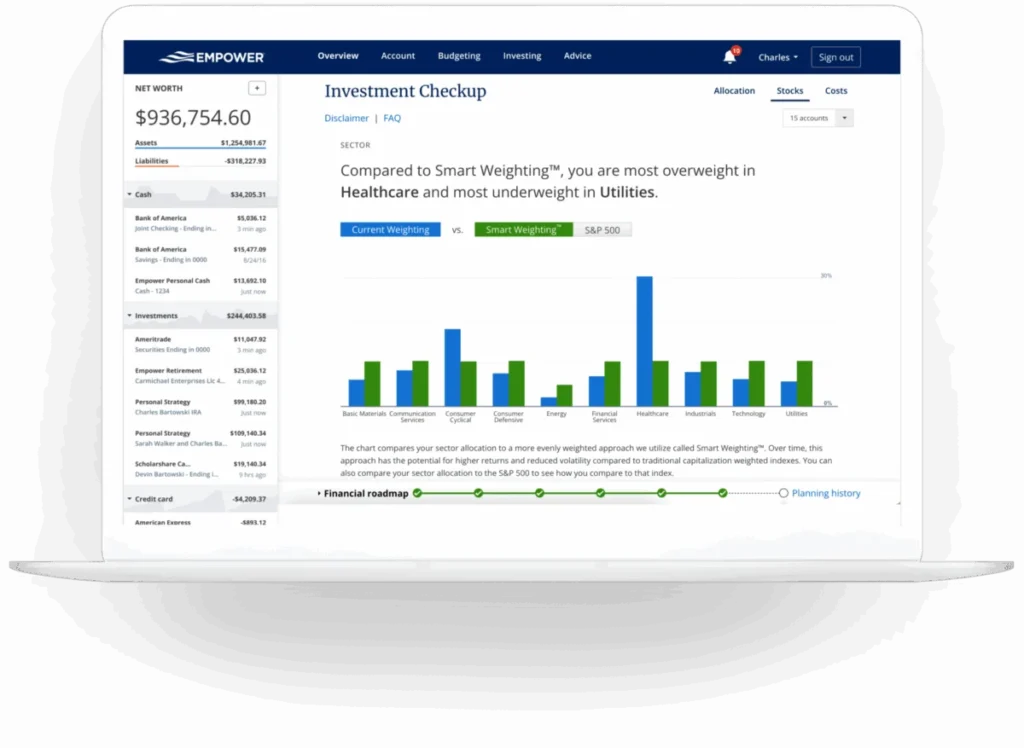
- Deliver Personalized Portfolio Insights: Future iterations of these tools will likely analyze a user’s asset allocation and automatically flag tax-loss harvesting opportunities, identify sector overexposure, and suggest optimal cash-drag investments based on real-time market data.
Ultimately, the best investment tracking app is the one that aligns with an individual’s specific financial workflow. Whether using the free, comprehensive retirement tools of Empower, the multi-currency, multi-asset balance sheet of Kubera, or the cash-flow-centric dashboards of Monarch Money, modern investors now have access to unprecedented financial clarity.
6. Frequently Asked Questions (FAQs)
What is the single best investment tracking app?
For the majority of retail investors, Empower is the best choice. It is automated, completely free, and offers institutional-grade portfolio analysis, including its highly regarded Retirement Fee Analyzer and Monte Carlo retirement simulators. For high-net-worth individuals with diverse assets (like crypto, real estate, and private equity), Kubera is the superior, albeit paid, alternative.
Are investment tracking apps difficult to set up?
Most modern apps are designed with user-friendly interfaces. Setting up tracking is generally as simple as logging into your financial institutions through a secure API portal (such as Plaid). Once connected, the app automatically downloads historical transactions, current balances, and cost basis, instantly building your financial dashboard. Only legacy or highly specialized tools (like Quicken or Morningstar) require manual data entry to track performance.
![8 Best Investment Tracking Apps [2026 Guide] – ROB BERGER](https://robberger.com/wp-content/uploads/2024/07/2024-07-16_07-42-34-1024x743.png.webp)
Can I set up transaction and portfolio alerts?
Yes. Most leading platforms allow you to configure custom alerts. For example, Empower can send daily, weekly, or monthly email summaries of transactions across all linked accounts. Advanced tools like Stock Rover and Snowball Analytics can alert you when individual stock prices hit specific targets, when your portfolio drifts from its target asset allocation, or when dividends are paid out.