The Digital Lifeline: How Watch Duty is Revolutionizing Emergency Response in an Era of Climate Chaos
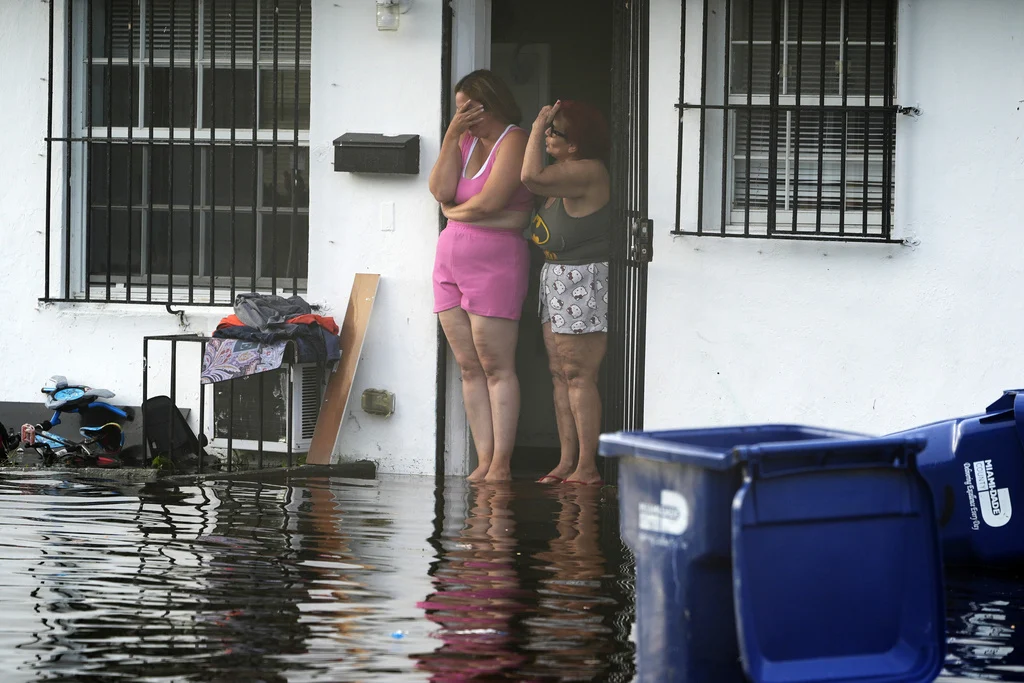
When a fire roared to life just miles from his Altadena, California, residence on the evening of January 7, 2025, Matt Blea was faced with the most harrowing decision a homeowner can make: hunker down and hope for the best, or abandon his life’s work to the flames. As the sky turned an apocalyptic orange, confusion reigned. Local sirens were distant, and official communication channels were sluggish.
It was a tip from a friend involved in mountain rescue that ultimately saved his family. The friend urged Blea to download "Watch Duty," a free, crowdsourced app that had become the unofficial pulse of the region’s emergency response. Through the app, Blea was able to visualize the fire’s precise perimeter, monitor real-time evacuation orders, and parse through verified updates from emergency radio traffic and aircraft reports.
"It influenced me to leave the home sooner than later," Blea said, recounting the frantic hours before the Eaton Fire ultimately razed his property. By acting on the data provided by the app, he, his wife, and their son escaped unharmed. Blea was just one of more than 2.5 million users who relied on the platform during that single week of terror in Los Angeles County—a testament to a growing trend of citizens turning to private, tech-driven solutions to fill gaps in public safety infrastructure.
A New Era of Data Democratization
The rise of Watch Duty marks a fundamental shift in how the public consumes emergency information. By utilizing a network of two dozen staff members and over 100 dedicated volunteers—many of whom are retired firefighters, meteorologists, or emergency radio enthusiasts—the nonprofit synthesizes raw, chaotic data into actionable intelligence.
David Hertz, a Malibu resident and captain of his community’s volunteer fire brigade, describes the phenomenon as a "democratization of data." In the face of the Eaton and Palisades fires, which claimed 31 lives, Hertz noted that the official warnings were, in many instances, dangerously delayed or nonexistent. Watch Duty provided the clarity that bureaucratic systems often lacked.
This month, in a bid to address the escalating threats posed by climate change, Watch Duty expanded its mission beyond wildfires to include a new, critical hazard: flooding. As peak flash flood season arrives in the United States, the expansion comes at a moment of heightened anxiety, arriving nearly one year after the catastrophic Texas floods of July 2024, which killed over 130 people and sparked a national outcry regarding the failures of existing warning systems.
Chronology of a Digital Grassroots Movement
The origins of Watch Duty are rooted in personal trauma. CEO and co-founder John Mills, a software engineer and entrepreneur, launched the platform in 2021 after his own terrifying experience during a Northern California wildfire. Despite the proximity of the blaze, Mills found himself in a vacuum of information, receiving no official alerts or guidance on whether to evacuate.
"The systems are really struggling to meet people where they are," Mills said. "We’re not spreading enough information fast enough on as many channels as humanly possible."
During the 2021 fire, Mills observed that the most reliable information was coming not from government agencies, but from volunteer radio operators monitoring scanners. These individuals were posting updates to social media, but those platforms were fraught with misinformation and cluttered with non-essential content. Recognizing the need for a focused, reliable, and high-speed alternative, Mills recruited a cohort of engineers and volunteers to build Watch Duty.
Since its inception, the organization has pivoted to a nonprofit model, a strategic move that has bolstered user trust. In 2025 alone, the platform secured nearly $6 million in grants and donations, allowing it to scale its operations to meet the unprecedented demand of a warming planet.
Supporting Data and Technological Infrastructure
Watch Duty operates on a model of extreme vigilance. With approximately 300 volunteer "reporters" stationed across the country, the app processes data from a multi-modal input system: police and fire radio scanners, high-definition wildfire cameras, satellite imagery, and verified user-generated reports.
The app’s architecture is designed to overcome the "alert fatigue" and "bureaucratic lag" that plague official systems. According to Pete Curran, a retired firefighter and current meteorologist for the app, the advantage lies in specialization.
"Our only responsibility is to watch and listen," Curran explained. "We’re not in charge of the incident. We don’t have to worry about the logistics of putting out the fire—we only worry about the communication of the threat."
By distilling complex data into plain, five-language alerts, the app ensures that information can reach a diverse demographic. The push notifications are engineered to override phone silence settings, ensuring that critical warnings—whether for fire or the newly implemented flood alerts—actually wake the user in the middle of the night.
Regarding the expansion into flood tracking, the app integrates sophisticated modeling from the National Weather Service (NWS), the National Oceanic and Atmospheric Administration (NOAA), and the U.S. Geological Survey. Users can now view real-time river gauge levels, identify if they are in FEMA-designated flood zones, and set custom alerts for when water levels reach dangerous thresholds.
Official Responses and the Burden of Responsibility
While the app’s success is undeniable, it has prompted a broader conversation about the state of American emergency management. Dr. Lori Moore-Merrell, the U.S. Fire Administrator under the Biden administration and a board member at Watch Duty, emphasizes that the necessity of such tools is a direct reflection of our changing climate.
"We are seeing crazy rainfall in places where it’s not normal," Moore-Merrell noted. "Maybe it’s never happened before, but it’s happening now, so you need to be aware."
However, experts caution against viewing any app as a panacea. Chad Berginnis, executive director of the Association of State Floodplain Managers (ASFPM), warns that information is only as valuable as the action it prompts. "A warning is only as good as the knowledge to do something about it," Berginnis said. "One of the massive failures is not knowing what to do."
He advocates for a "preparedness-first" approach, where households practice evacuation routes and maintain emergency kits, rather than relying solely on a screen. Furthermore, the infrastructure behind these alerts is currently facing severe pressure. Proposed federal budget cuts threaten the very agencies—the NWS and NOAA—that provide the base data Watch Duty relies upon. "At the end of the day, if you want eyes and ears out there, you’ve got to pay for it," Berginnis added.
Implications for the Future of Public Safety
The existence of Watch Duty highlights a significant gap in the social contract: when the government fails to provide timely, life-saving information, private, volunteer-driven entities will inevitably step in. However, both Mills and the experts he consults are quick to clarify that Watch Duty is not a replacement for state-run systems.
"We need the National Weather Service, we need the fire service, we need all this infrastructure to operate," Mills emphasized. He encourages users to maintain enrollments in their local alerting systems while using Watch Duty as a secondary, redundant layer of protection.
The reality of modern disaster management is that there is no single source of truth. As weather patterns become more volatile and destructive, the consensus among emergency managers is that "redundancy is survival." This means using every tool available—from smartphone apps and social media to old-fashioned NOAA weather radios, which remain a vital, low-tech fallback when cell towers go down during disasters.
Ultimately, the growth of Watch Duty is a symptom of a world in flux. As communities face more frequent and intense climate hazards, the reliance on crowdsourced, rapid-response networks will likely continue to grow. It is a digital manifestation of a classic survival strategy: neighbors looking out for neighbors, now empowered by the speed of the internet and the precision of modern data science.
For survivors like Matt Blea, the app was the difference between a narrow escape and a tragedy. As the climate continues to shift, the platform stands as a critical, albeit auxiliary, component of a new, complex landscape of survival.