The AI Frontier: Investors Carter Reum and Chang Xu Decode the Bubble, Defensibility, and the Future of LA

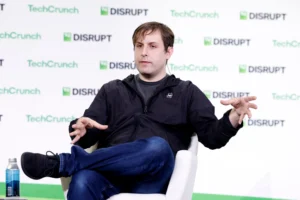
The rapid ascent of generative AI has transformed the venture capital landscape, creating a high-stakes environment where growth curves defy historical precedent and traditional valuation metrics are being rewritten in real-time. Last week, during TechCrunch’s StrictlyVC event in El Segundo, California, two of the industry’s most prominent voices—Carter Reum, co-founder of M13, and Chang Xu, partner at Basis Set Ventures—offered a candid analysis of the current market frenzy.
The conversation, held in a sun-drenched venue that serves as a hub for aerospace and tech innovation, bridged the gap between raw technical optimism and the pragmatic skepticism required to survive a cycle that moves at an unprecedented velocity.
Main Facts: The State of the AI Market
The current investment climate is defined by a paradox: while the sheer speed of revenue growth for top-tier AI companies is unprecedented, the long-term sustainability of these firms remains a subject of intense debate.
- The M13 Perspective: Carter Reum’s firm, which manages $2.5 billion, approaches the market with a seasoned eye, having backed 17 unicorns. Reum argues that while this cycle is faster than the cloud or mobile booms, the fundamental dynamics—innovators competing against incumbents—remain the same, albeit with higher stakes.
- The Basis Set View: Chang Xu’s firm, one of the first to focus exclusively on AI, is currently investing from its fourth fund with nearly $1 billion under management. Xu emphasizes that the growth metrics of successful AI startups—such as companies scaling from $1 million to $70 million in ARR in two years—have rendered old "good growth" benchmarks obsolete.
Chronology of a Tech Gold Rush
To understand the current state of AI, one must look at the progression of the last few years. The trajectory has moved from simple, consumer-facing generative models to complex, agent-driven architectures.
- The Early Exploration (2017–2021): Basis Set Ventures launched with a thesis on AI at a time when many firms were still hesitant. This era focused on identifying the foundational blocks of AI.
- The Generative Explosion (2022–2023): The arrival of DALL-E and Stable Diffusion shifted the narrative from "what can AI analyze?" to "what can AI create?" Companies like OpenArt demonstrated that even nascent, "no-business-model" tools could scale rapidly if they hit the right nerve with users.
- The Agentic Wave (2024–Present): The industry has moved toward autonomous agents. Infrastructure is being rebuilt from the ground up, not for human users, but for autonomous systems that require new versions of GitHub, databases, and deployment tools.
- The Future (2025 and Beyond): Investors now look toward "second and third ripples"—the secondary industries that will be transformed by AI, ranging from healthcare regulation to high-complexity manufacturing.
Supporting Data: By the Numbers
The debate over whether we are currently in an "AI bubble" remains contentious. However, the data provided by these investors suggests that the traditional "bubble" definition may not apply.
- Growth Velocity: Xu highlighted a portfolio company, OpenArt, which saw its Annual Recurring Revenue (ARR) leap from $1 million to $10 million in year one, and from $10 million to $70 million in year two, all while remaining largely cash-flow positive. This level of compounding growth suggests that high valuations are, in some cases, mathematically justified by terminal value projections.
- The Incumbent Advantage: Reum noted that this cycle is unique because innovators are not just competing with other startups, but with the largest, most well-funded tech giants in history. Unlike previous cycles, the "Big Tech" incumbents possess significant advantages in data, talent, and distribution, making the path to exit significantly more precarious for smaller players.
Official Responses: Strategies for Survival
When asked how to price deals in a market that moves by the week, the two investors offered distinct frameworks.
The "Friction as a Moat" Strategy (Reum)
Reum warns against companies in "obvious" markets that are easily disrupted by hyperscalers like Google or OpenAI. Instead, he advocates for focusing on regulated industries. "We love friction," he noted. By targeting industries like 911 emergency services or healthcare, startups build a moat through regulatory compliance and specialized integration that hyperscalers find difficult to penetrate in the short term.
The "Above and Below" Framework (Xu)
Xu’s firm categorizes investments into "below the AI" (infrastructure tools like version control and databases built for agents) and "above the AI" (applications that provide defensible value). The goal is to avoid "velocity markets"—where fast followers can quickly erode a lead—in favor of "depth markets," where the difficulty of the task acts as a natural barrier to entry.
Implications for the Ecosystem
The conversation concluded with a forward-looking analysis of how the impending liquidity events—specifically the SpaceX IPO—will reshape the Southern California tech ecosystem.
The "SpaceX Effect" on Los Angeles
Reum suggested that the SpaceX IPO will trigger a massive wealth transfer into the hands of employees, which will catalyze a secondary wave of startups. "Every major liquidity event generates a second wave," Reum explained, noting that the sheer magnitude of this event will likely eclipse previous LA success stories like Tinder or Snap.
From Compute to Taste
Perhaps the most striking prediction came from Xu, who argued that the next frontier in AI is not more processing power, but "taste." As models become capable of automating technical tasks, the value will shift toward those who can curate content that resonates emotionally and culturally.
"San Francisco has extraordinary technical talent," Xu observed, "but Los Angeles has taste in spades."
The Founder’s Mindset
For those currently navigating this volatile landscape, the advice from the panel was unified: founders must adopt a dual-vision approach.
- The Microscope: Used for day-to-day execution and survival in a hyper-competitive market.
- The Telescope: Used to watch the horizon, as the "board" of the game is constantly shifting.
As Reum concluded, the "second and third ripples" of this technological wave are where the greatest opportunities lie. While these bets are notoriously difficult to time, they offer the best potential for long-term ROI. For the venture capital community, the message is clear: the AI boom is not merely a technical phenomenon—it is a cultural and economic shift that requires a blend of rigorous math, deep sector expertise, and an uncanny ability to predict the next pivot point in a rapidly evolving world.