The Art of the Pivot: Amazon’s Panos Panay on Why Failure is the Engine of Innovation
In the high-stakes ecosystem of Silicon Valley and the global technology sector, failure is often treated as a scarlet letter—a career-ending catastrophe that founders are conditioned to hide behind polished pitch decks and curated PR narratives. However, for Panos Panay, the current Senior Vice President of Devices, Alexa, and Leo at Amazon, failure is not an anomaly to be feared; it is a fundamental, non-negotiable requirement for anyone attempting to push the boundaries of innovation.
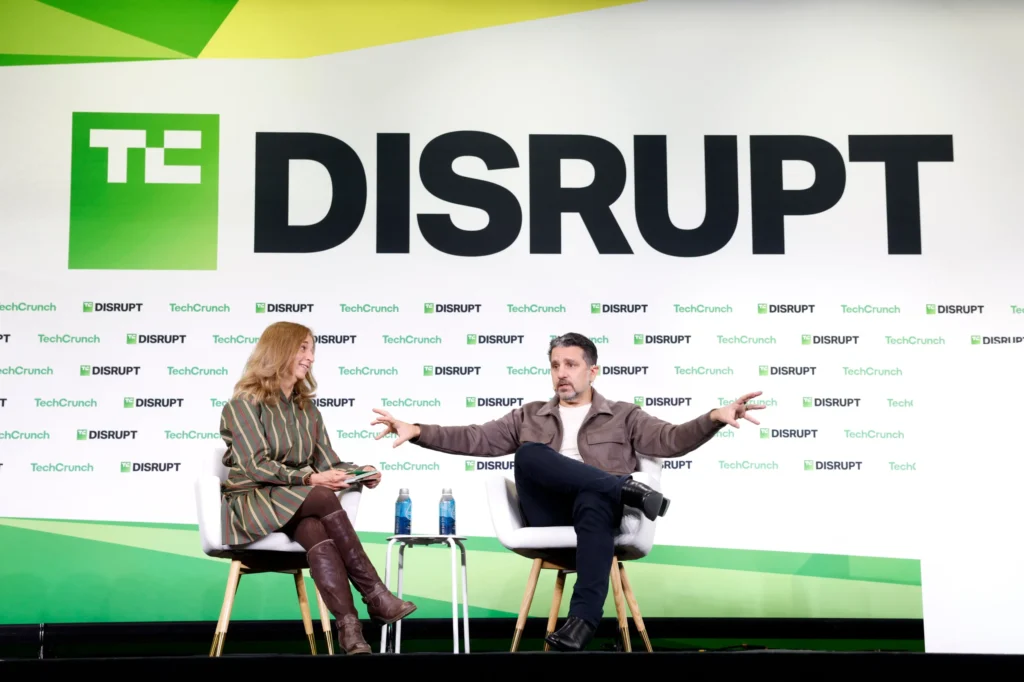
Speaking on the main stage at TechCrunch Disrupt in San Francisco, the long-time industry veteran offered a candid, counter-intuitive roadmap for startup founders: stop treating failure as an endpoint and start viewing it as a diagnostic tool. Drawing from his nineteen-year tenure at Microsoft, where he navigated the meteoric rise of the Surface line and the crushing weight of its early, expensive missteps, Panay argued that the ability to "harvest" lessons from disaster is the single greatest predictor of long-term success.
The Philosophy of Product Failure
Panay’s core thesis is simple yet difficult to execute: "You have to be willing to fail, and actually, not just willing, you actually have to go fail."
To Panay, if a founder reaches a certain stage in product development without encountering a significant setback, it is an indicator that they have not pushed the envelope far enough. "If you haven’t failed, you probably haven’t pushed the boundary," he told the audience. This perspective shifts the narrative of product development from a linear path of success to an iterative cycle of experimentation.
The danger, according to Panay, is not the failure itself, but the lack of ownership surrounding it. He warned against the common instinct to externalize blame or invent excuses when a product launch underperforms. Instead, he advocates for a rigorous, forensic examination of the decisions that preceded the collapse. "The failure wasn’t that moment [of public scrutiny]," he noted. "It was the decisions that led up to it two years before that."
Chronology of a Billion-Dollar Lesson: The Surface RT
To illustrate his point, Panay drew upon the most visible and painful chapter of his career: the launch of the Microsoft Surface RT. Today, the Surface is a pillar of Microsoft’s hardware business, but its genesis was fraught with turbulence.
2012: The Vision
Microsoft entered the tablet market with the Surface RT, aiming to bridge the gap between a portable slate and a productive workstation. It was an ambitious attempt to challenge the dominance of the iPad by offering a device that could run a familiar, if somewhat constrained, version of Windows.
2013: The Write-Down
The market reception was lukewarm, and the software ecosystem failed to keep pace with the hardware’s ambition. The result was a catastrophic financial outcome: a nearly $1 billion inventory write-down for Microsoft. For most executives, this would have been a career-ending event. Panay recalls the public humiliation vividly: "I remember being on the front cover of a newspaper, and it just said ‘Failure.’"
The Pivot and Recovery
Rather than retreating from the hardware space, Panay and his team doubled down on the original vision. They dissected the failures—identifying gaps in software readiness, inventory mismanagement, and retail strategy—and adjusted their vector. The subsequent iterations of the Surface product line didn’t just recover; they defined a new category of "2-in-1" devices, eventually turning the Surface into a multi-billion dollar business unit for the tech giant.
Supporting Data: Why "Learning" is a Competitive Advantage
The "fail fast, learn faster" mantra is a staple of startup culture, yet it is rarely practiced with the depth Panay describes. Data from venture capital research suggests that the majority of startups fail not because of a lack of talent or capital, but because of a failure to achieve "product-market fit."
Panay’s methodology aligns with modern agile development frameworks, which emphasize:

- Vector Correction: Instead of abandoning a project after a failed launch, founders should look for a "30-degree turn" rather than a "180-degree turn."
- Inventory and Logistics Discipline: As Panay noted, the failure of the Surface RT was largely operational. For modern founders, this underscores the importance of supply chain transparency and realistic production scaling.
- Vision Persistence: The most critical component of the recovery is maintaining the North Star. "You don’t let go of your vision," Panay stated. "You don’t break it."
The difference between a failed startup and a unicorn often lies in the "harvesting" of data. When a product fails to gain traction, the feedback loop—comprised of user complaints, return rates, and low engagement metrics—is essentially a map for the next version of the product. Ignoring this data to protect one’s ego is what leads to the "zombie" companies that refuse to die but cannot grow.
Official Responses and Strategic Implications
Panay’s shift to Amazon, where he now oversees Alexa and the broader "Leo" initiative, suggests that this philosophy of adaptive, high-stakes engineering is being exported to one of the world’s most significant hardware and AI ecosystems.
The Cost of Denial
Panay emphasized that the most dangerous founders are those who "hang on too long." This usually happens because they refuse to accept the initial failure, instead pouring more capital into a sinking ship in the hopes that sheer willpower will change the market’s mind.
"I believe there’s people that hang on too long, but it’s because they haven’t accepted the moment of failure at all," he said. Acceptance is the bridge between a disaster and a strategic pivot. By acknowledging the failure, the founder frees themselves from the burden of defending a broken model, allowing them to redirect their resources toward the elements of their vision that are actually resonating with users.
Implications for the Future of Innovation
As the tech industry moves deeper into the era of Generative AI and ubiquitous ambient computing, the pace of change is accelerating. Companies that prioritize "perfection" before launch often find themselves outmaneuvered by competitors who are willing to launch, learn, and iterate.
1. The Death of the "Big Bang" Launch
The traditional model of spending years in stealth mode to release a "perfect" product is increasingly obsolete. Panay’s experience suggests that transparency and the ability to admit fault publicly are signs of maturity, not weakness.
2. The Cultural Shift
For startup leaders, the implication is clear: build a culture that rewards the process of experimentation rather than the outcome of perfection. If an engineering team is terrified of failure, they will build safe, incremental products. If they are empowered to fail in service of a larger vision, they are capable of breakthroughs.
3. The "Vector" Approach to Strategy
Panay’s suggestion that most pivots are only 30 degrees suggests that founders should look for where they were "mostly right." Often, a failing product has a single feature or use case that is succeeding. By stripping away the bloat and focusing on the core value proposition, companies can often find their path to sustainability.
Conclusion: The Path Forward
Panos Panay’s appearance at TechCrunch Disrupt serves as a necessary reminder that at the highest levels of the technology industry, success is a messy, non-linear progression. Whether it is a trillion-dollar company like Amazon or a two-person startup in a garage, the mechanics of innovation remain the same.
The "failure" of the Surface RT was not a tragedy; it was an expensive tuition payment for the knowledge required to build a market-defining product. For those building in the current climate, the message is clear: if you are not failing, you are likely stagnating. The goal is to fail with purpose, analyze the wreckage with brutal honesty, and possess the courage to adjust your vector toward the vision you refuse to abandon.
In the end, the resilience of a founder is not measured by their ability to avoid failure, but by their ability to harvest the lessons from the ashes and transform them into the fuel for the next iteration. As Panay succinctly put it, "Take your lessons learned, change a little bit, adapt your vision where it needs to be, and then go."