Beyond the Check: Why Reciprocity Must Replace Generosity in Modern Philanthropy

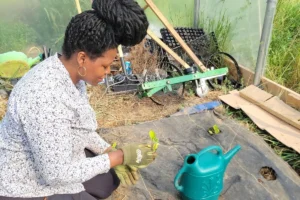
In the quiet, verdant yard of Willie Mae’s home, vegetables and flowers grew in such abundance that they seemed to defy the limits of a single household. To the outside observer, Willie Mae’s habit of distributing her surplus to neighbors, strangers, and anyone in need appeared to be a simple act of charity. However, for her granddaughter, the author of this reflection, the reality was far more profound. It was not a one-way transaction of benevolence; it was the physical manifestation of a social architecture known as reciprocity.
As the nonprofit sector grapples with an identity crisis—caught between the rigid, tax-driven requirements of the "business of philanthropy" and the more humanistic "culture of philanthropy"—the lessons from Willie Mae’s garden offer a necessary pivot. The transition from generosity to reciprocity is not merely a linguistic shift; it is a structural redesign of how we define power, community, and the nature of social investment.
The Structural Distinction: Centralization vs. Distribution
The fundamental tension in modern social impact work lies in the difference between being a benefactor and being a participant. Generosity, as traditionally practiced in the philanthropic industrial complex, keeps the giver at the center of the universe. The donor decides the "what," the "who," the "how much," and the "how long." This maintains a vertical hierarchy where the receiver remains eternally a recipient, defined by their lack rather than their agency.
Reciprocity, by contrast, dissolves that hierarchy entirely. In a reciprocal economy, the center is distributed. There is no singular benefactor because the flow of trust, obligation, and resources moves in every direction at once. When a grandmother spends a lifetime cultivating mutual trust, that circle of care extends to her descendants, even those who have done nothing to earn their inclusion other than to belong to the community.
This is the "structural" difference. While generosity creates a line—a distance—between the haves and the have-nots, reciprocity creates a circle. It is a network of interdependence that holds its members, regardless of their immediate material standing.
A Chronology of Discovery: From New York to the South Side
The author’s journey toward understanding this concept mirrors the trajectory of many modern professionals in the social sector, moving through stages of idealism, professionalization, and eventual disillusionment.
- The Early Idealism (Age 21): The author moved to New York City, working for a women’s leadership nonprofit. The initial lesson was stark: the nonprofit sector was often characterized by low wages for workers and a power imbalance that tilted heavily toward those controlling the capital.
- The Pursuit of Influence: Convinced that change required proximity to the source of power, the author joined the Peace Corps and later pursued a master’s degree to transition into the "funder side."
- The Confrontation with Reality: Within the halls of institutional philanthropy, the author discovered a bifurcated reality. There was the "business of philanthropy," driven by tax codes and the logic of perpetual capital accumulation, and the "culture of philanthropy," an ancient, deeper instinct that prioritized relationships and community building over strategic control.
- The Turning Point: While funding initiatives to curb gun violence, the author realized that while the research-driven, top-down policies were effective in a metrics-based sense, they were failing the communities on a human level. The mothers and young people affected by the violence were not asking for more "expert-designed" policy; they were asking for investment in the very community cohesion that had been systematically stripped away.
- The "Queenmakers" Experiment: Seeking to apply this learning, the author helped build a giving circle on the South Side of Chicago. By pooling resources and deferring to the leadership of the women closest to the issues, the circle transformed from a funding mechanism into a community-led network. Eight years later, the model remains a testament to the power of showing up over simply writing checks.
Supporting Data: The Economics of Belonging
The skepticism surrounding reciprocity often stems from a misunderstanding of value. In an era obsessed with "impact metrics," it is difficult to quantify the strength of a relationship. However, data from multiple disciplines suggest that the traditional model of accumulation is failing both the giver and the receiver.
According to research from the Federal Reserve, the average Black household holds roughly one-sixth the wealth of the average white household. Yet, despite this systemic gap, Black households consistently report higher rates of charitable giving as a percentage of their income than their white counterparts. This is not a coincidence; it is a legacy of survival. When the formal economy excludes a demographic, that demographic builds its own: church benevolence committees, rotating savings clubs, and mutual aid networks.

Furthermore, social science suggests that the "accumulation economy" is reaching a point of diminishing returns. Studies from institutions like Harvard indicate that the primary predictors of a long, healthy, and happy life are not wealth or professional status, but the quality of one’s relationships and a clear sense of purpose. Conversely, those with the highest levels of individual wealth often report the highest rates of social isolation. The pursuit of "generosity" as a form of control frequently leads to a lonely, illusory sense of security, whereas reciprocity builds the human capital necessary for genuine thriving.
Official Perspectives: The Shift Toward Trust-Based Practice
The nonprofit sector is beginning to acknowledge this shift through the rise of "trust-based philanthropy." While not yet universal, organizations are increasingly moving away from the "rigorous monitoring" model—which often treats grantees with suspicion—toward a partnership model that emphasizes long-term, unrestricted funding.
Advocates for this shift argue that the "business of philanthropy" is inherently exclusionary because it demands that the nonprofit sector replicate corporate structures. By contrast, the "culture of philanthropy" recognizes that a community knows its own needs best. When a foundation moves from "funder control" to "community partnership," the results are not just incremental—they are transformative. This requires donors to subject themselves to the same accountability as the rest of the community, a radical departure from the traditional, detached role of the benefactor.
The Implications: A Return to Human Connection
The implications for the future of the sector are clear: we must stop asking how generous we can be and start asking how large and how honest a circle we are willing to enter.
Reciprocity is not a new invention; it is an ancient, human way of existing that has been suppressed by the modern emphasis on individual accumulation. For the professional, this means moving beyond the transactional. It means staying in the room when the check is signed, listening to the needs of the community without filtering them through a pre-ordained strategy, and recognizing that one’s own well-being is inextricably linked to the well-being of the collective.
We are currently living in a society where the logic of accumulation has delivered many to a place of deep loneliness. The model provided by Willie Mae—a woman who didn’t see herself as a "philanthropist" but as a neighbor—offers a path back. In a reciprocal economy, nothing given away truly leaves; it merely circulates. When we invest in our communities, we are not losing assets; we are building the infrastructure of our own belonging.
The task ahead is not to innovate a new solution, but to return to a fundamental truth: we owe one another more than just a donation. We owe each other a seat in the circle. The question for the next generation of leaders, funders, and community members is simple: are we ready to stop being benefactors and start being neighbors?